

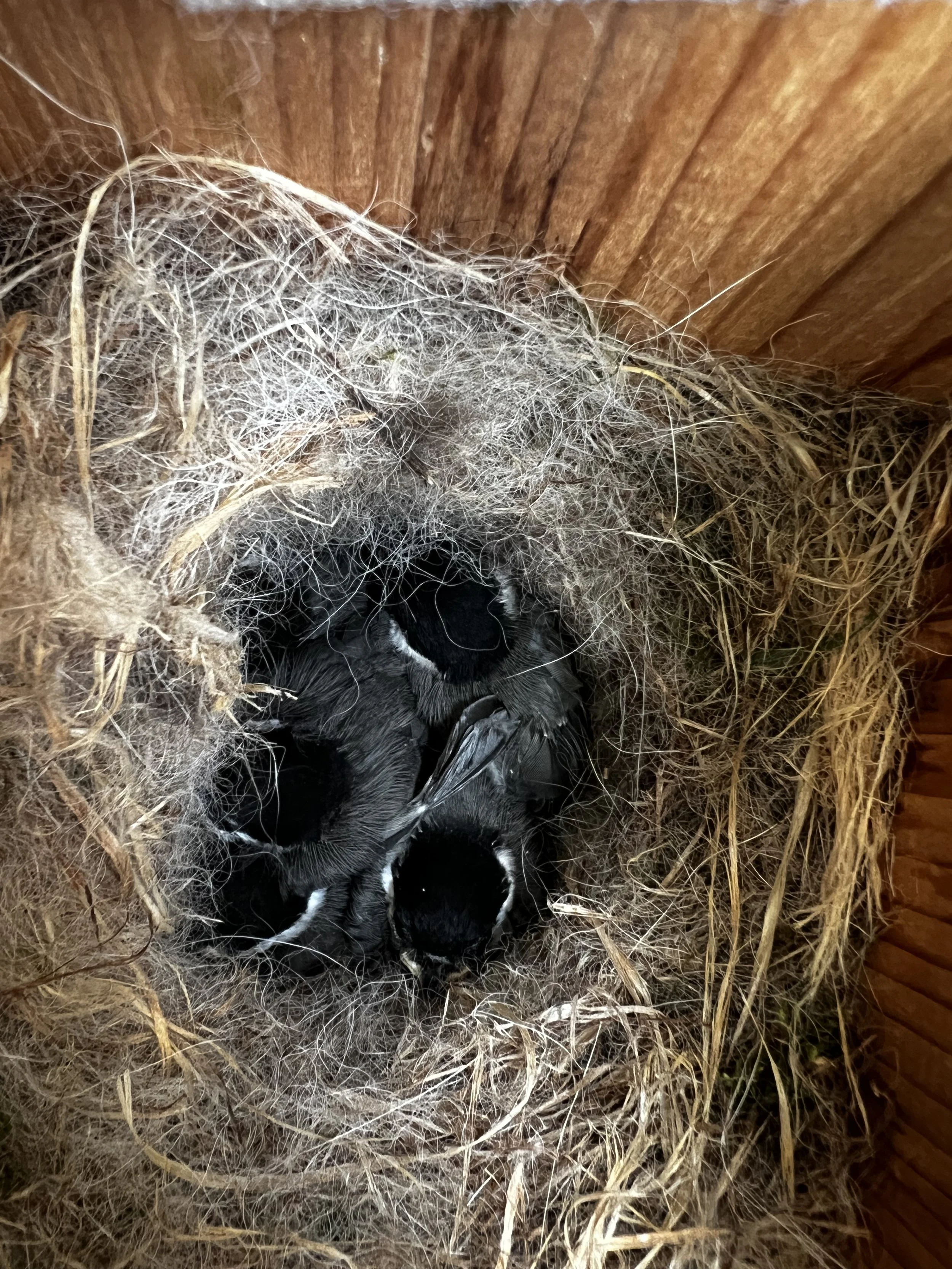
It takes 6,000 - 9,000 caterpillars to raise one clutch of Carolina Chickadees.
Carolina Chickadees
I’ve had several clutches of Carolina Chickadees fledge in my yard. With needing around 500 caterpillars per day, I’m honored they choose my yard for rearing their young.
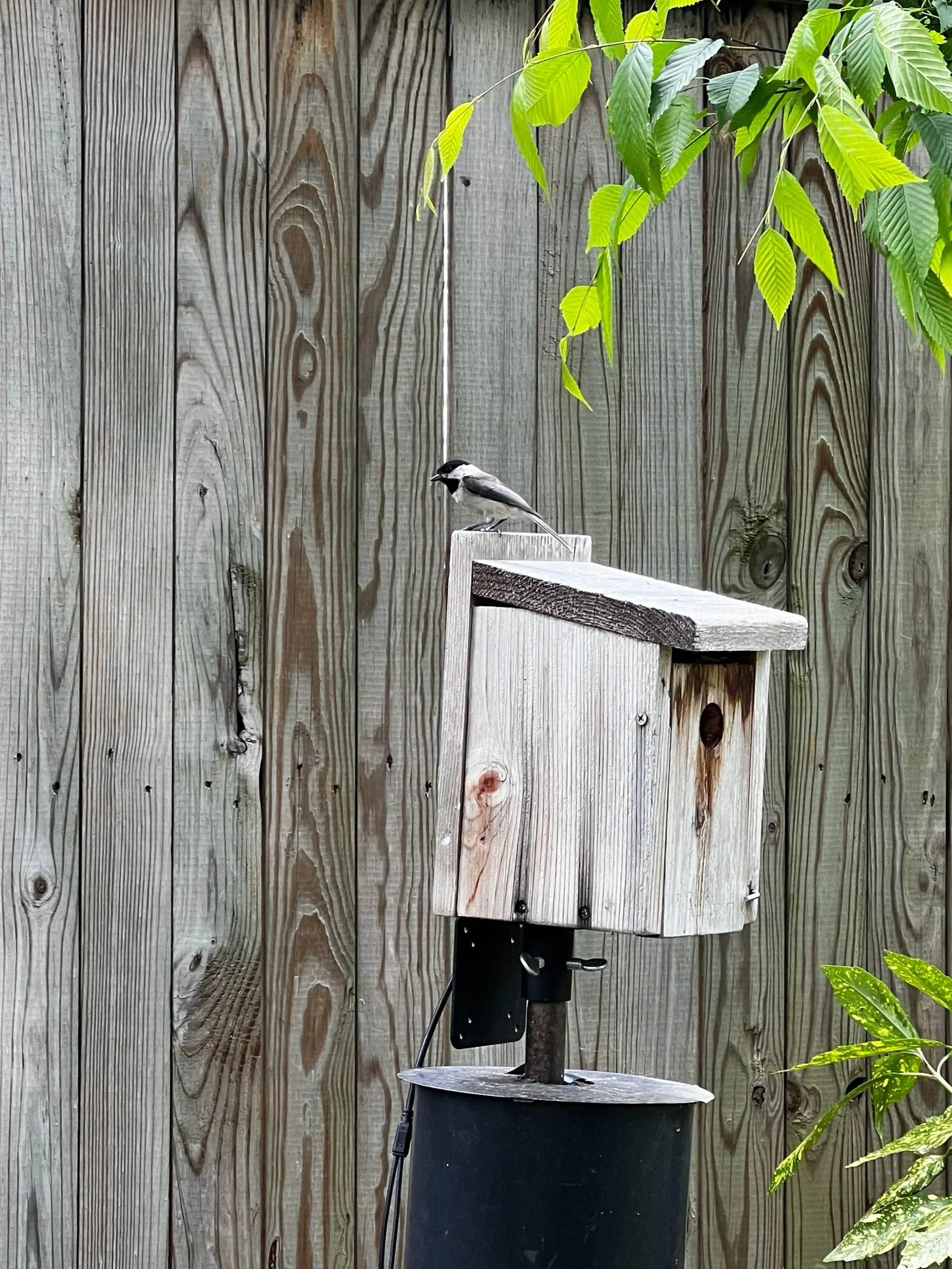
The exterior of the Carolina Chickadee nest box.
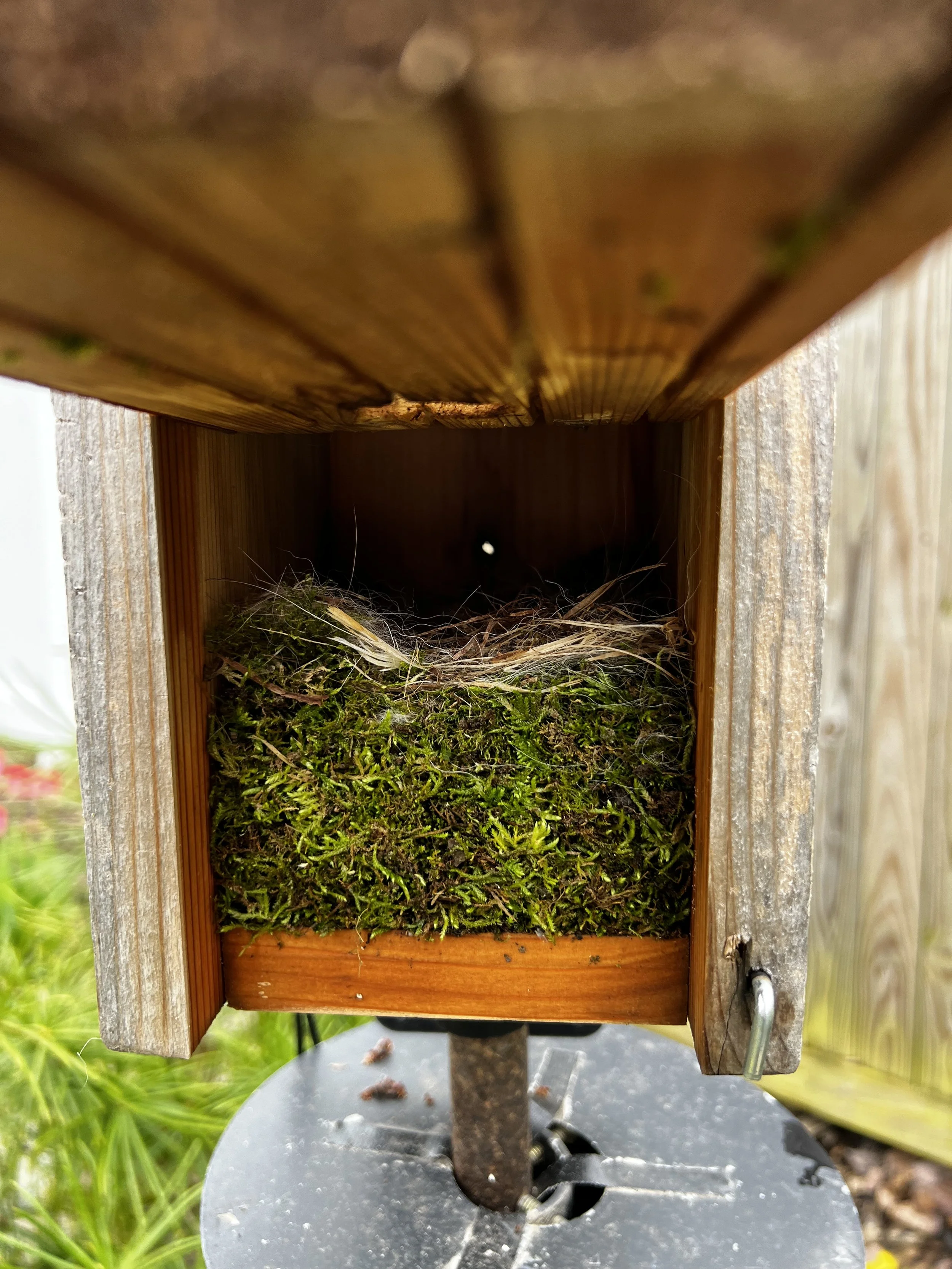
Chickadees use moss
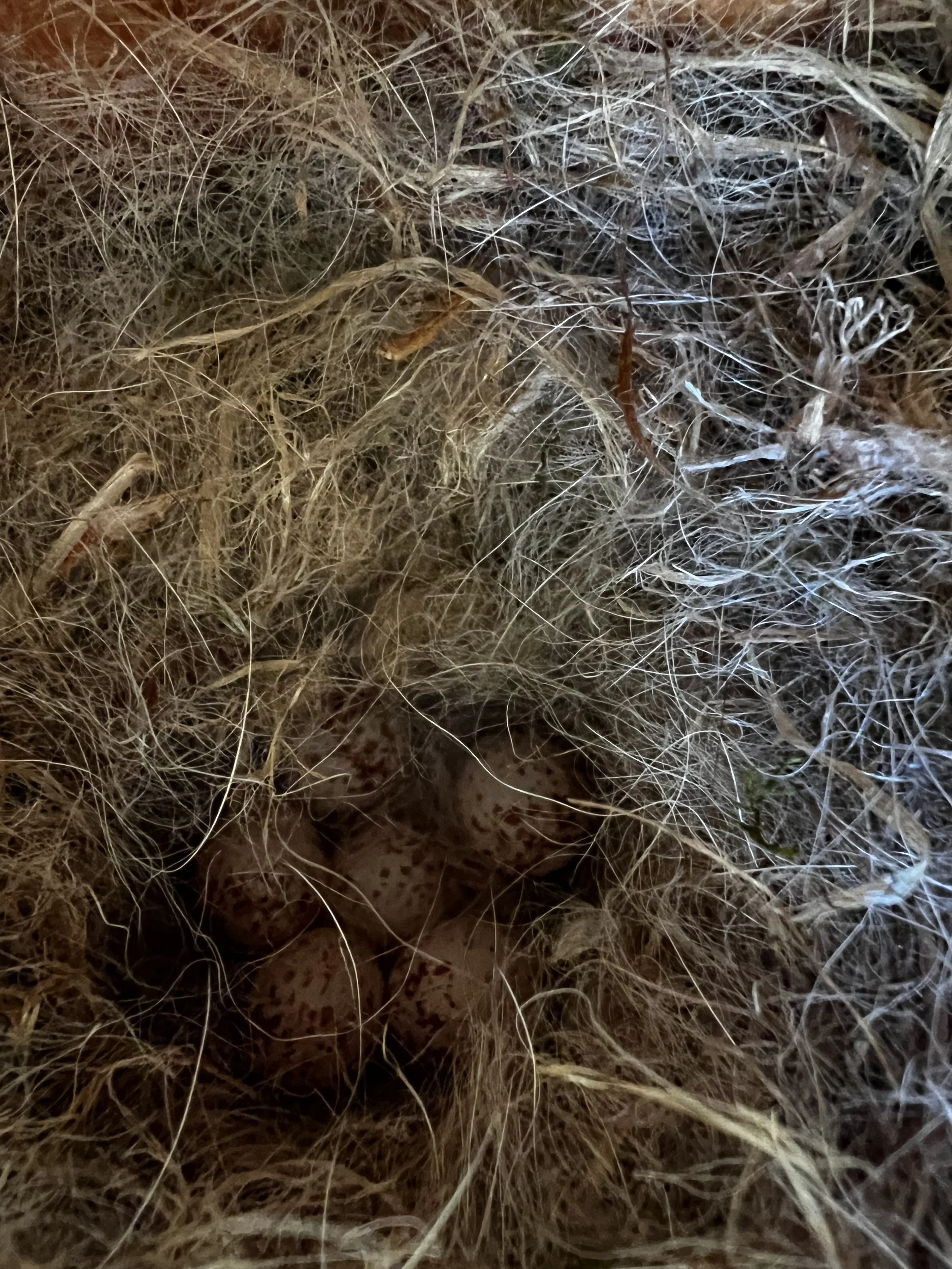
After the base layer of mosses, the chickadee adds a layer of insulation (animal fur and soft plant fibers).
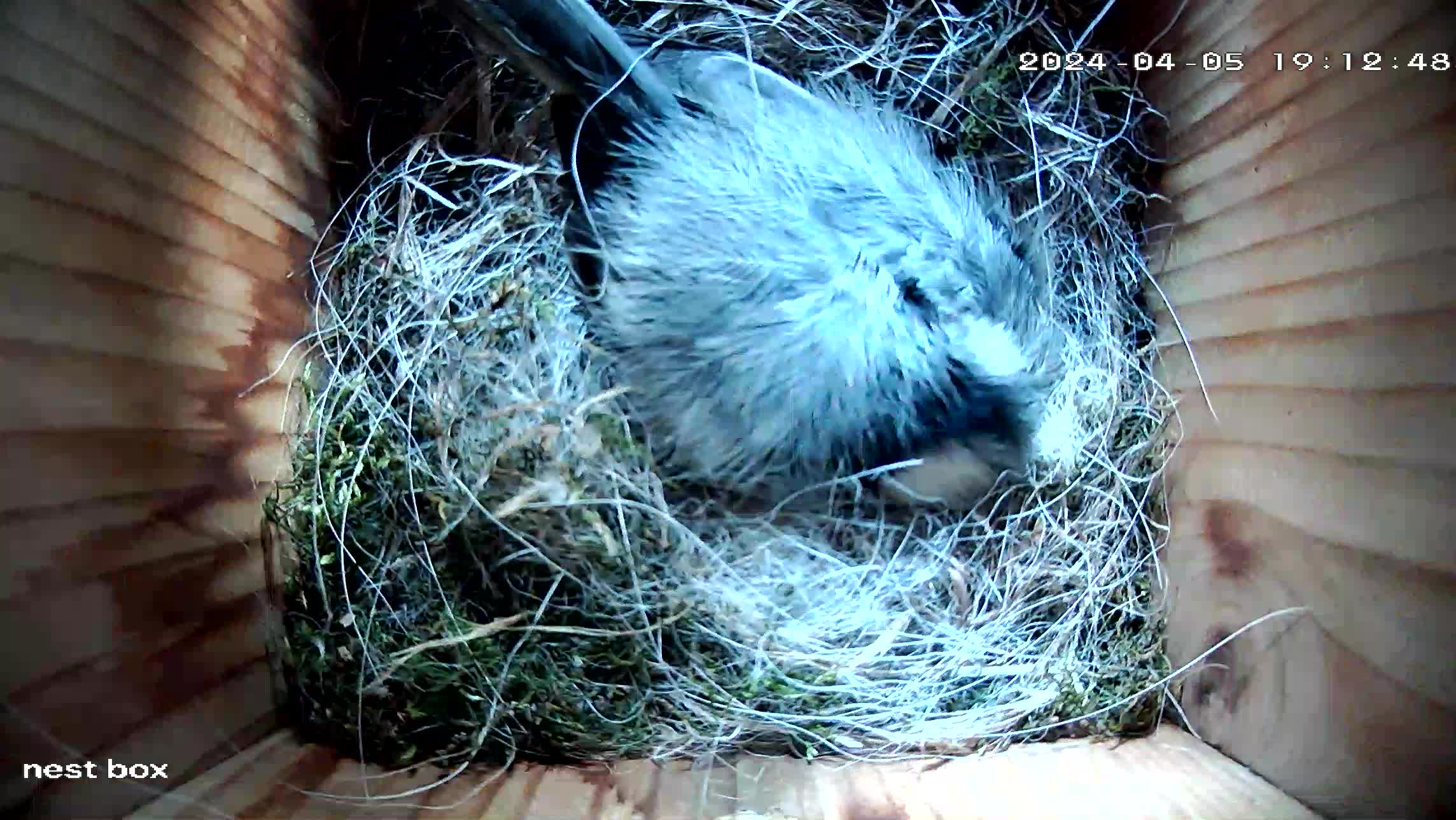
On a chilly May morning, the adult female sleeps puffed up with her beak under her wing to conserve body heat.
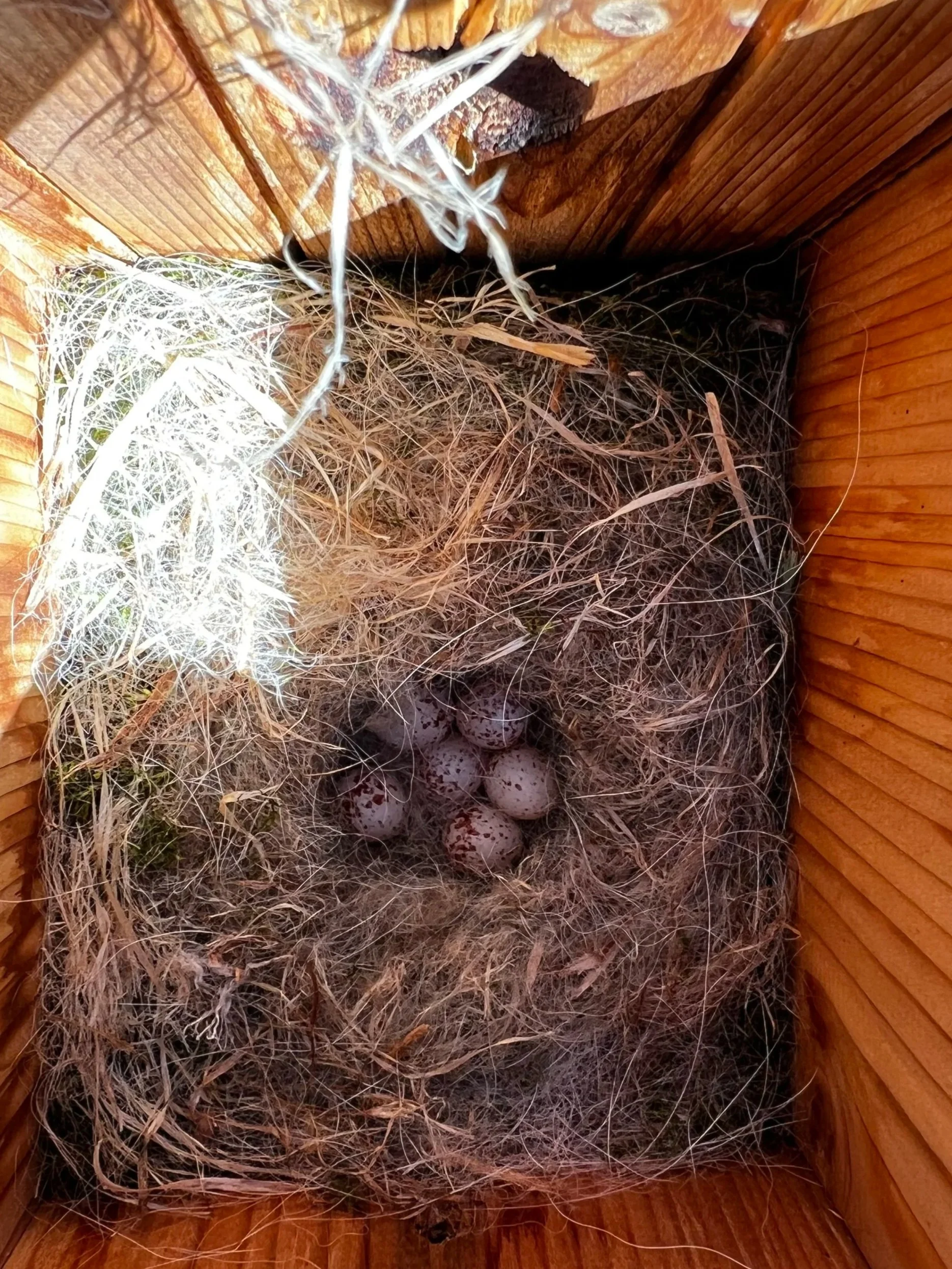
The female will lay one egg a day and cover her eggs with nesting material. At the end of her laying period, she will sit on the nest so the eggs will all incubate at the same rate.
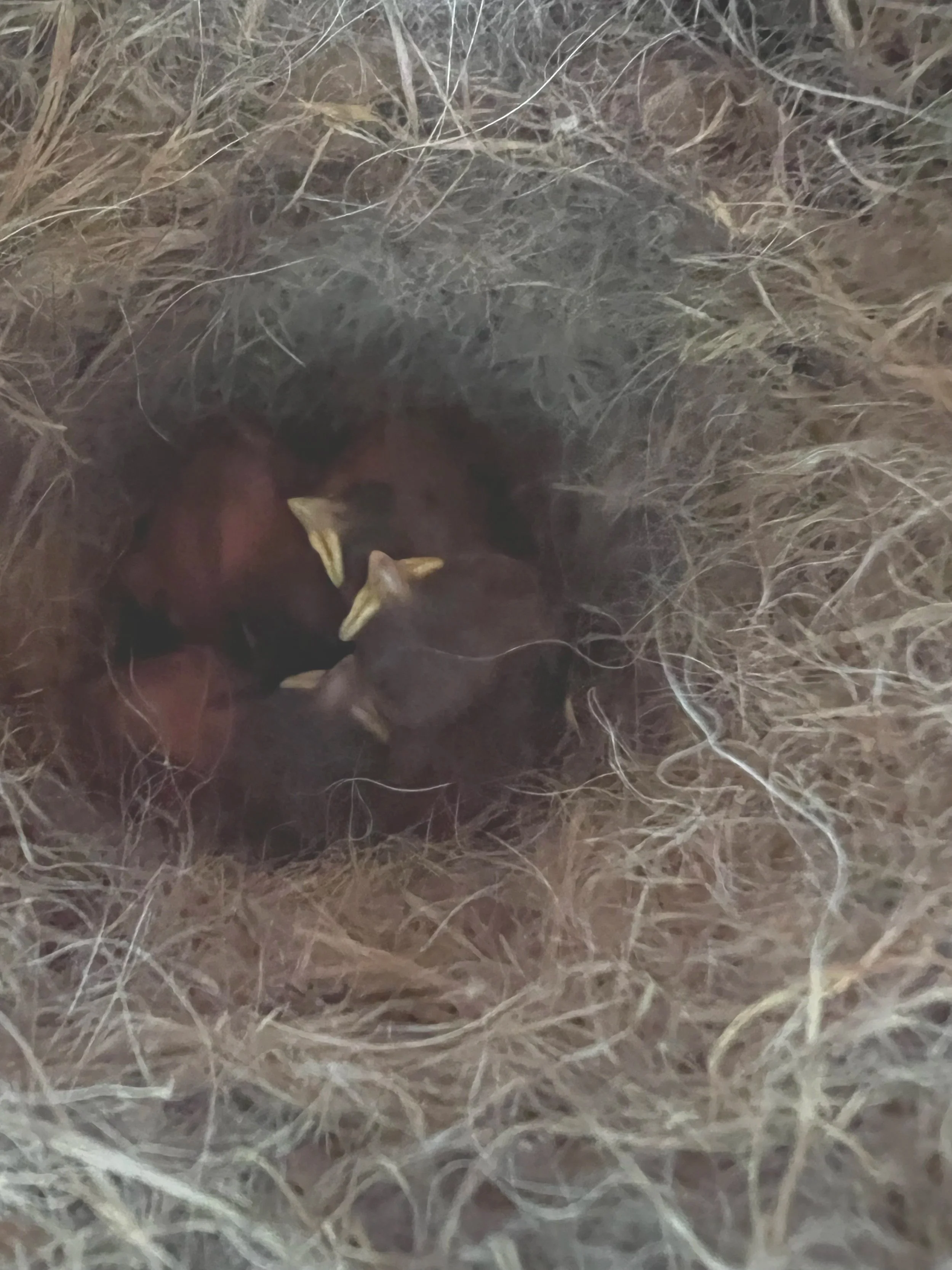
Newly hatched chicks. This cozy cup of animal fur and grasses is about the size of a one dollar coin.
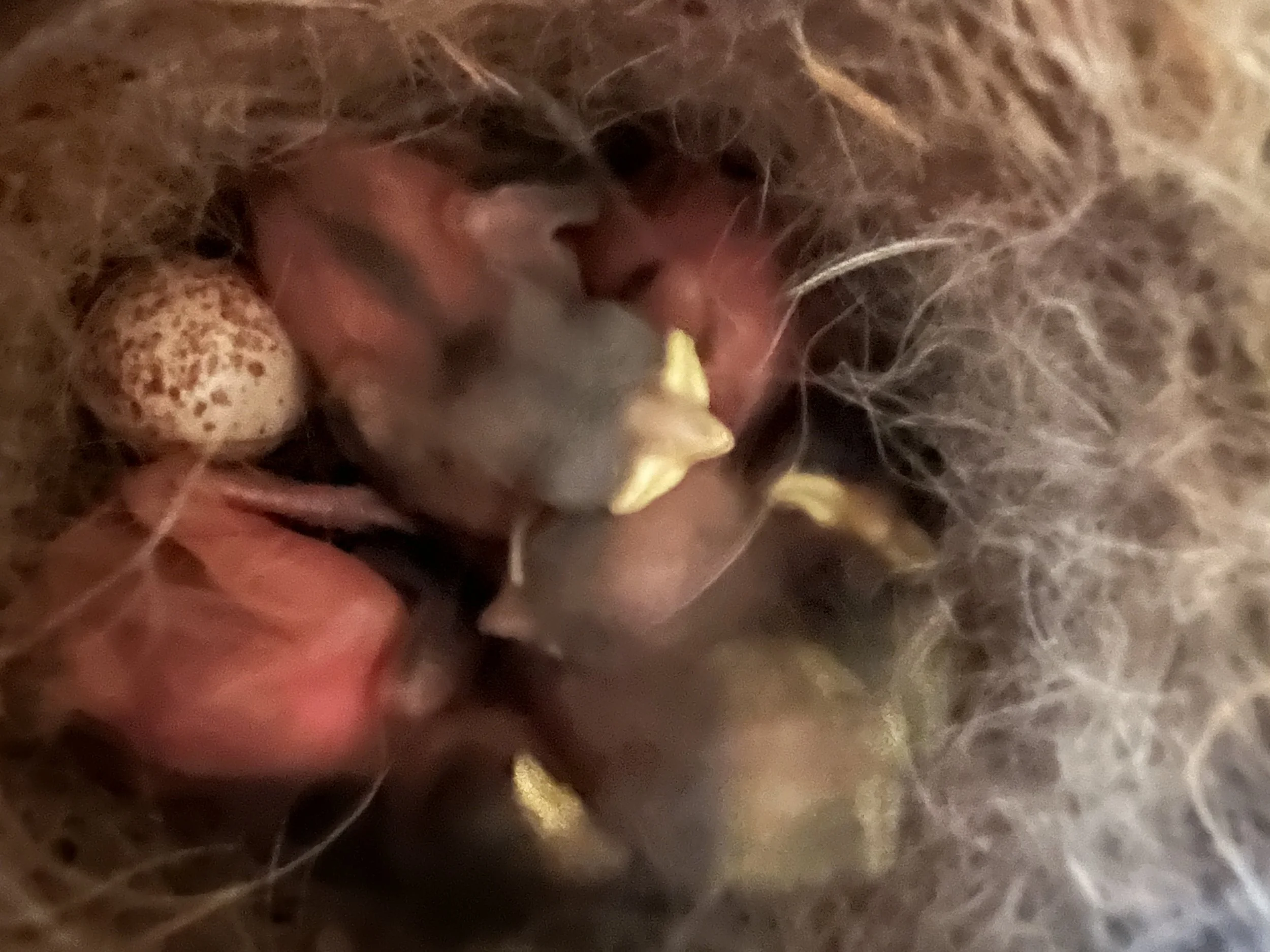
Four of the five eggs hatched in this clutch. It's not unusual for an egg to be unviable.
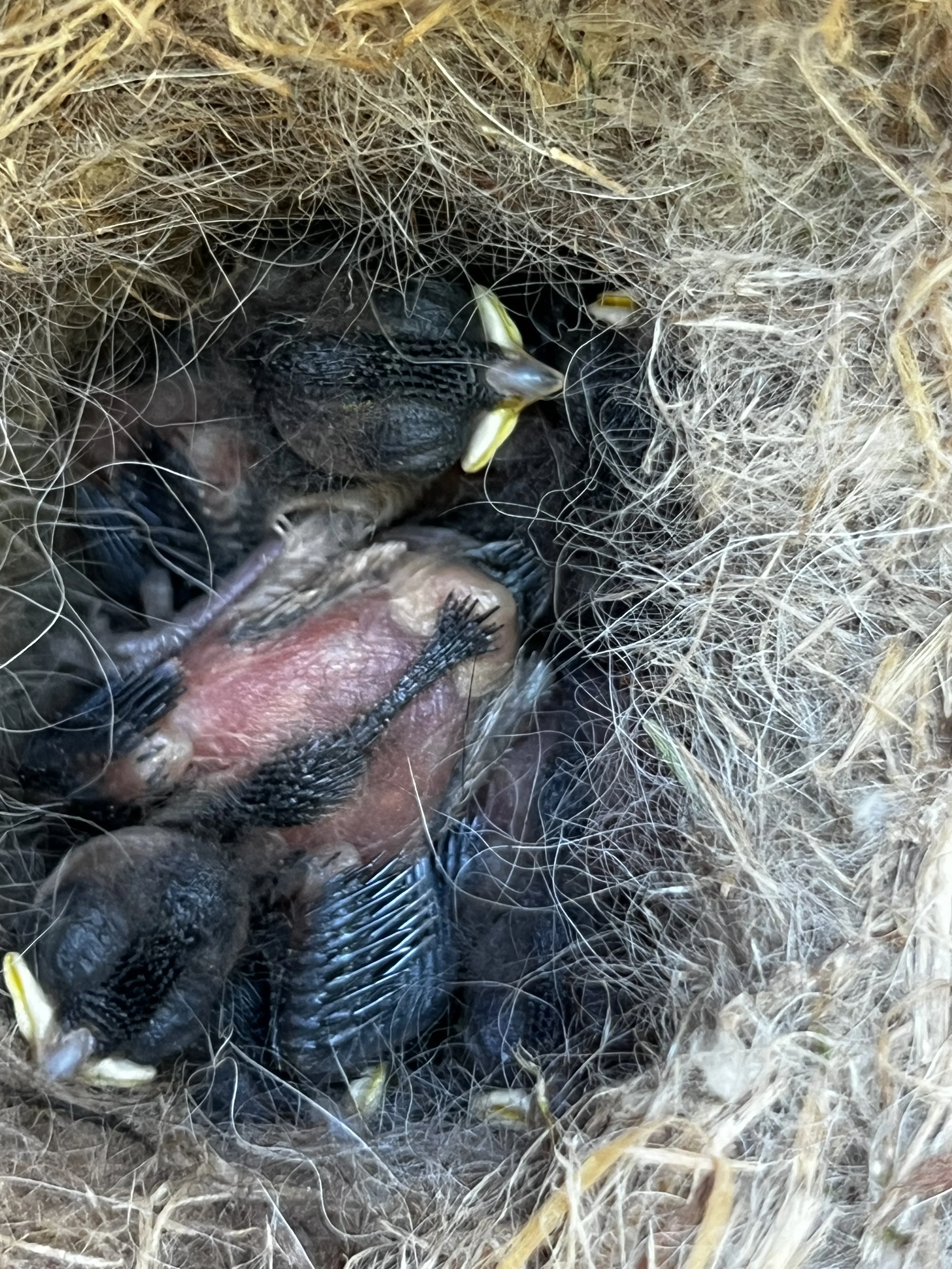
More feathers, but still in the ugly/cute stage.
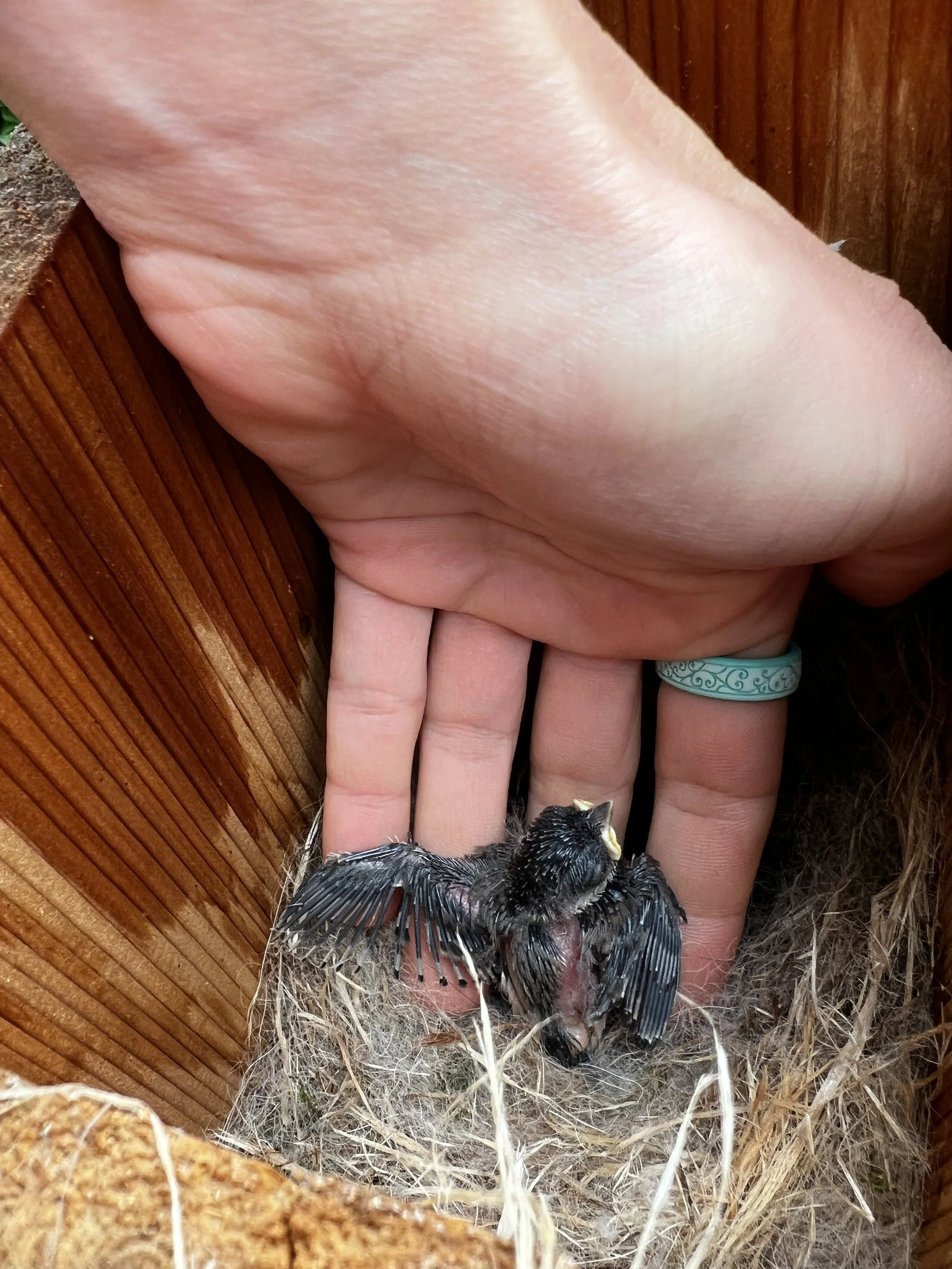
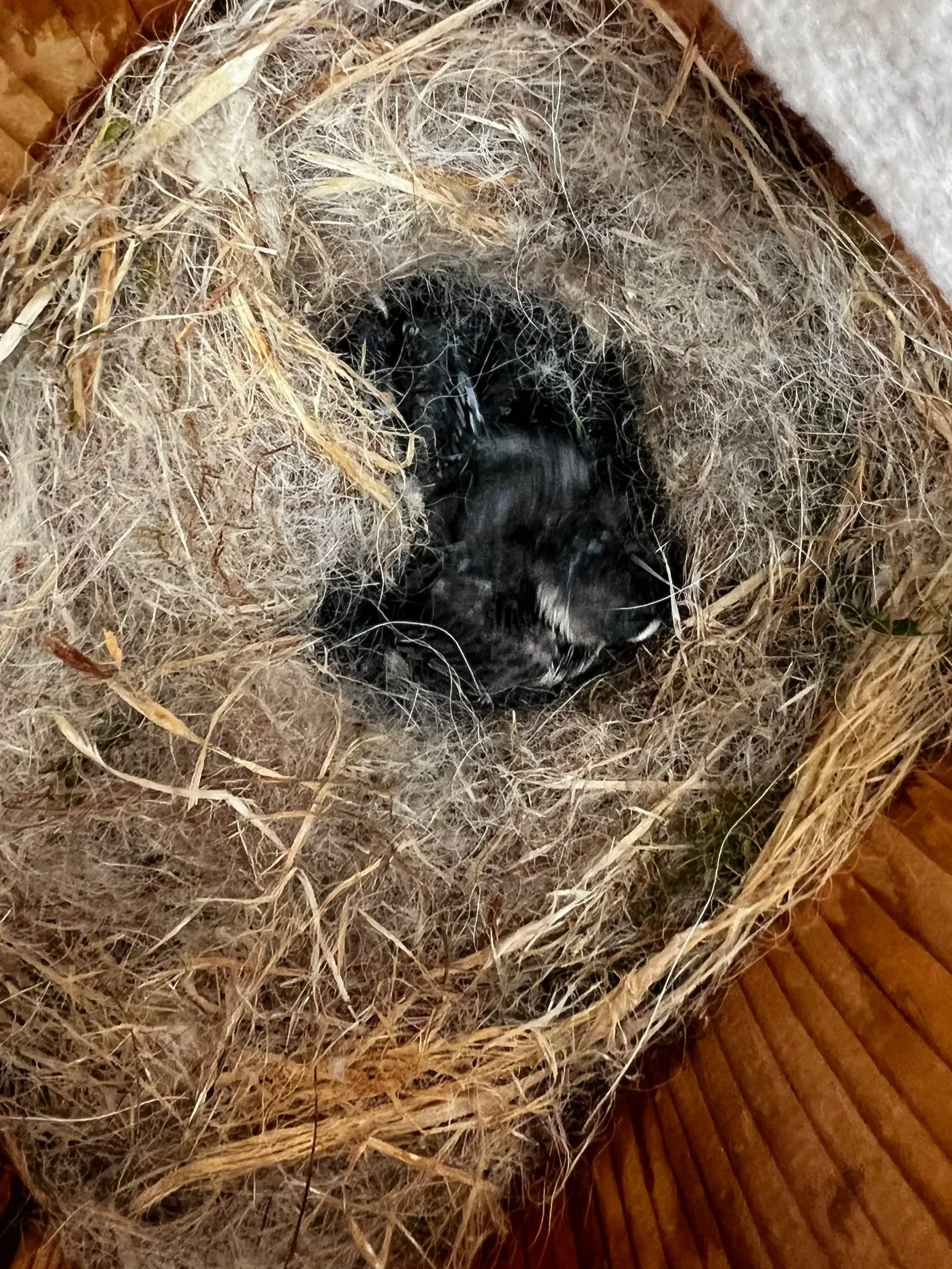
White cheek patches are starting to come in.
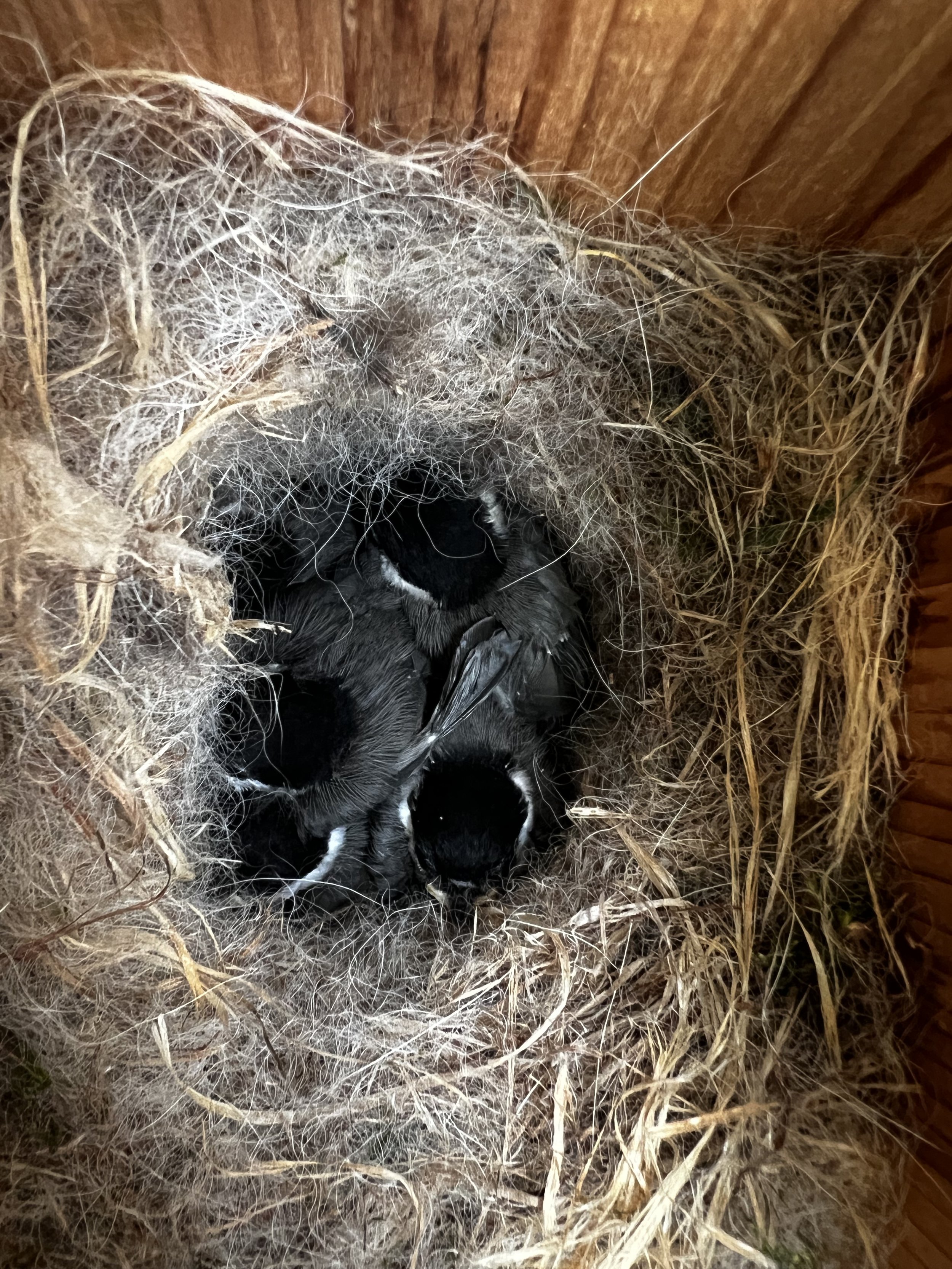
Looking like chickadees!
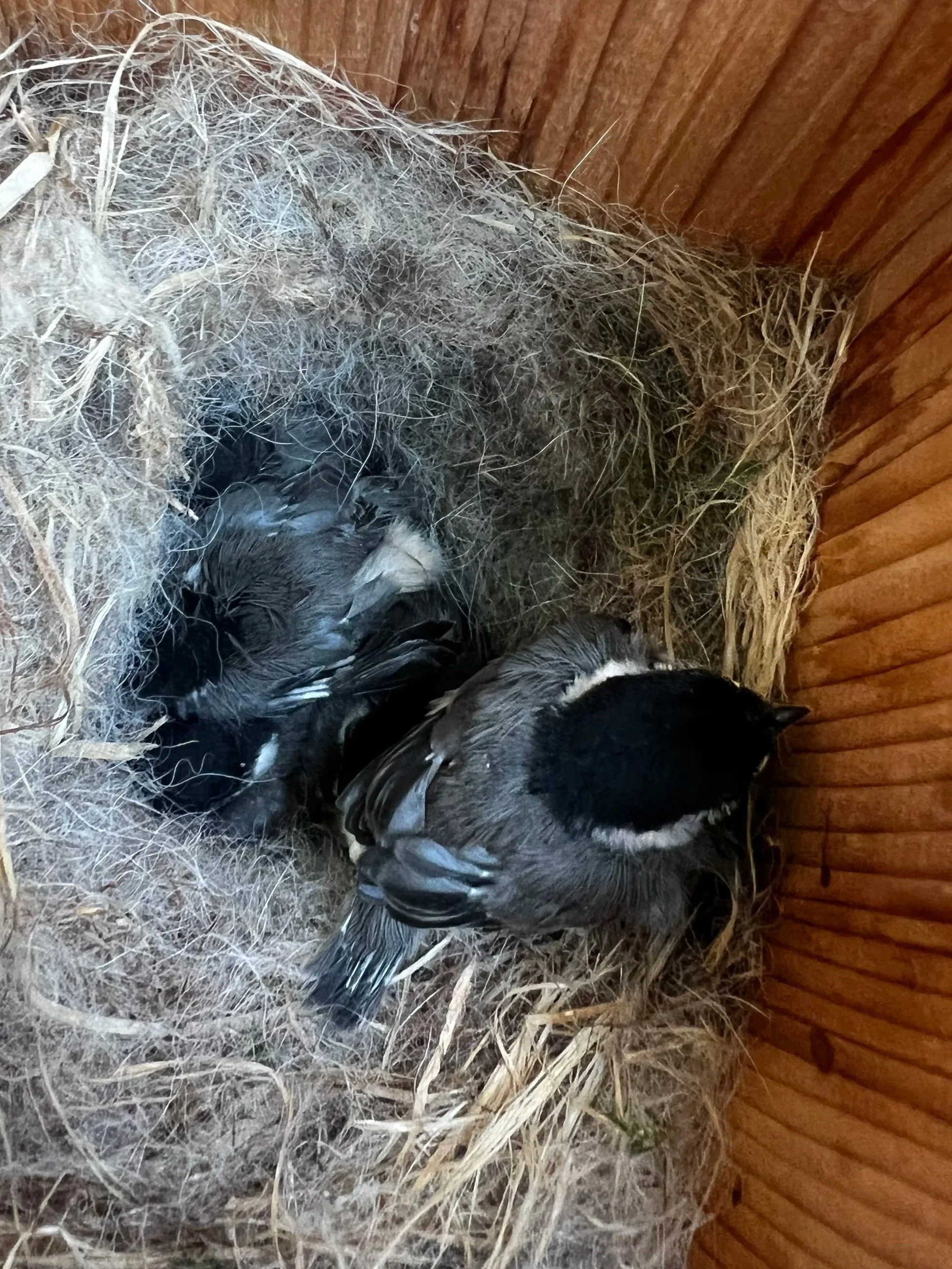
Trouble begins! A large rat snake is circling the nest box. The box is baffled but the parents don't know this and call to the chicks to abandon the nest.
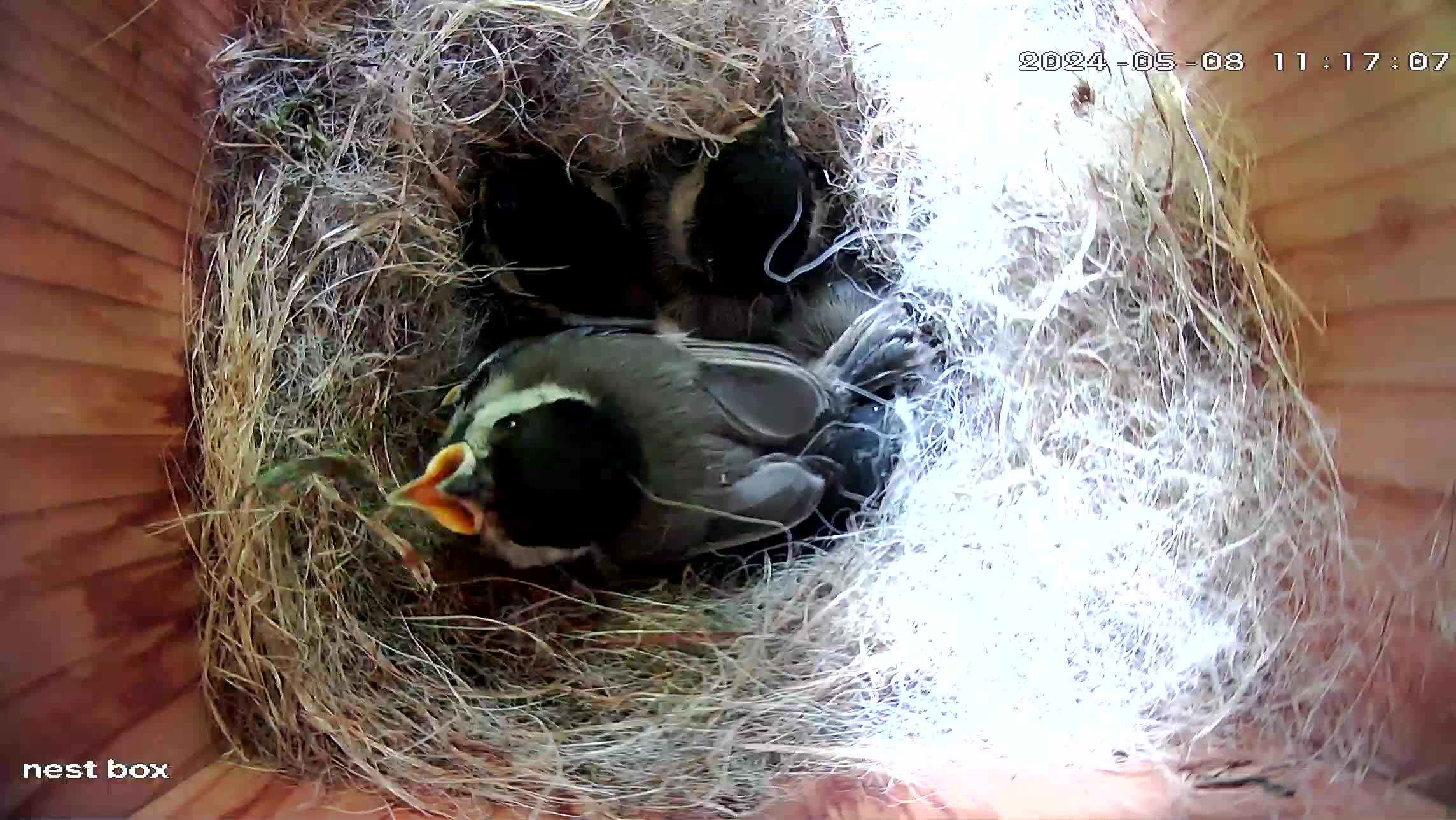
I safely relocate the snake but the chicks are disturbed and all leave the nest box - scattering themselves all over the lawn.
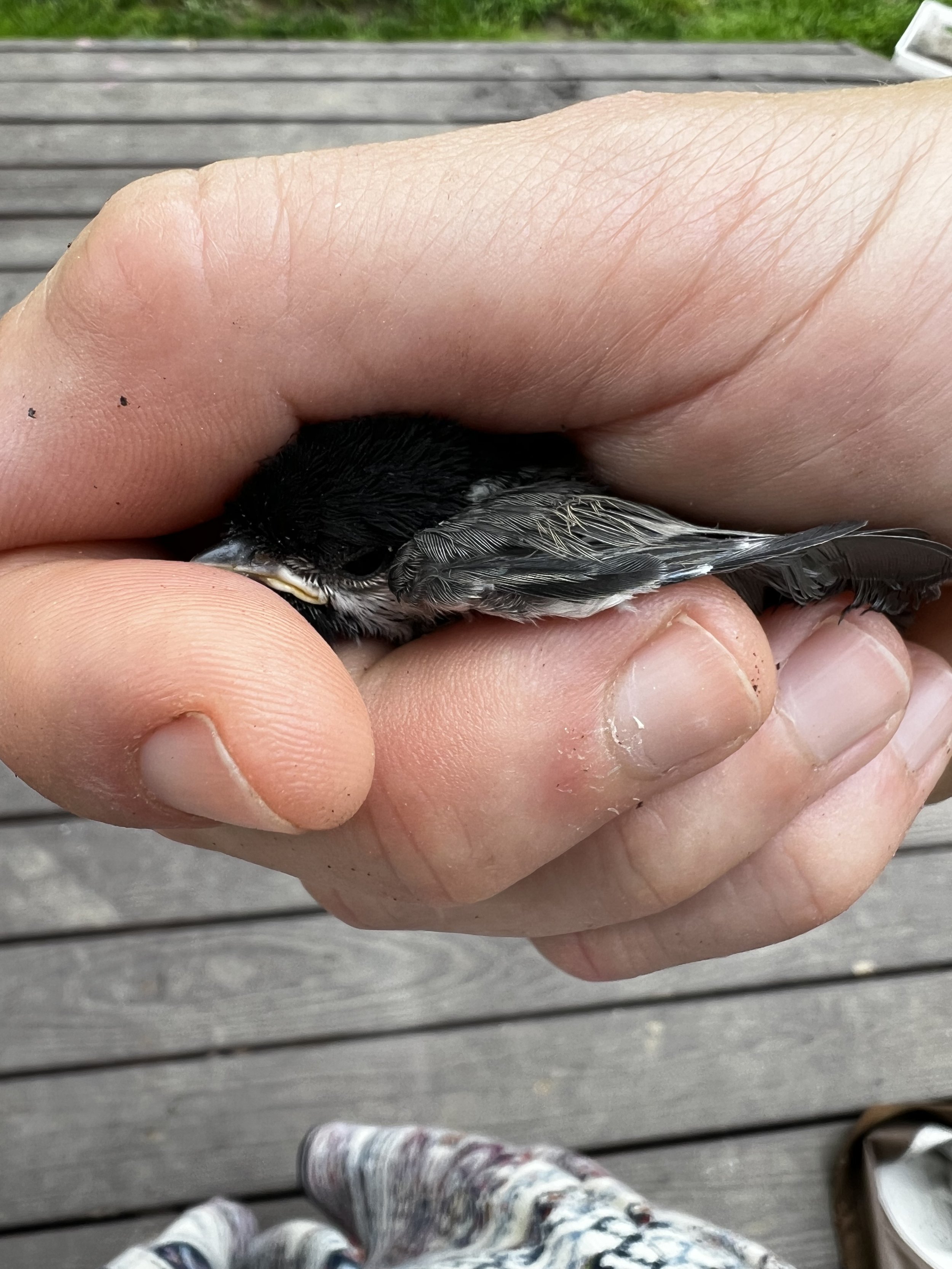
After several hours, all chicks are found. Two went into a neighbor's yard, one was on the patio and another under a bush.
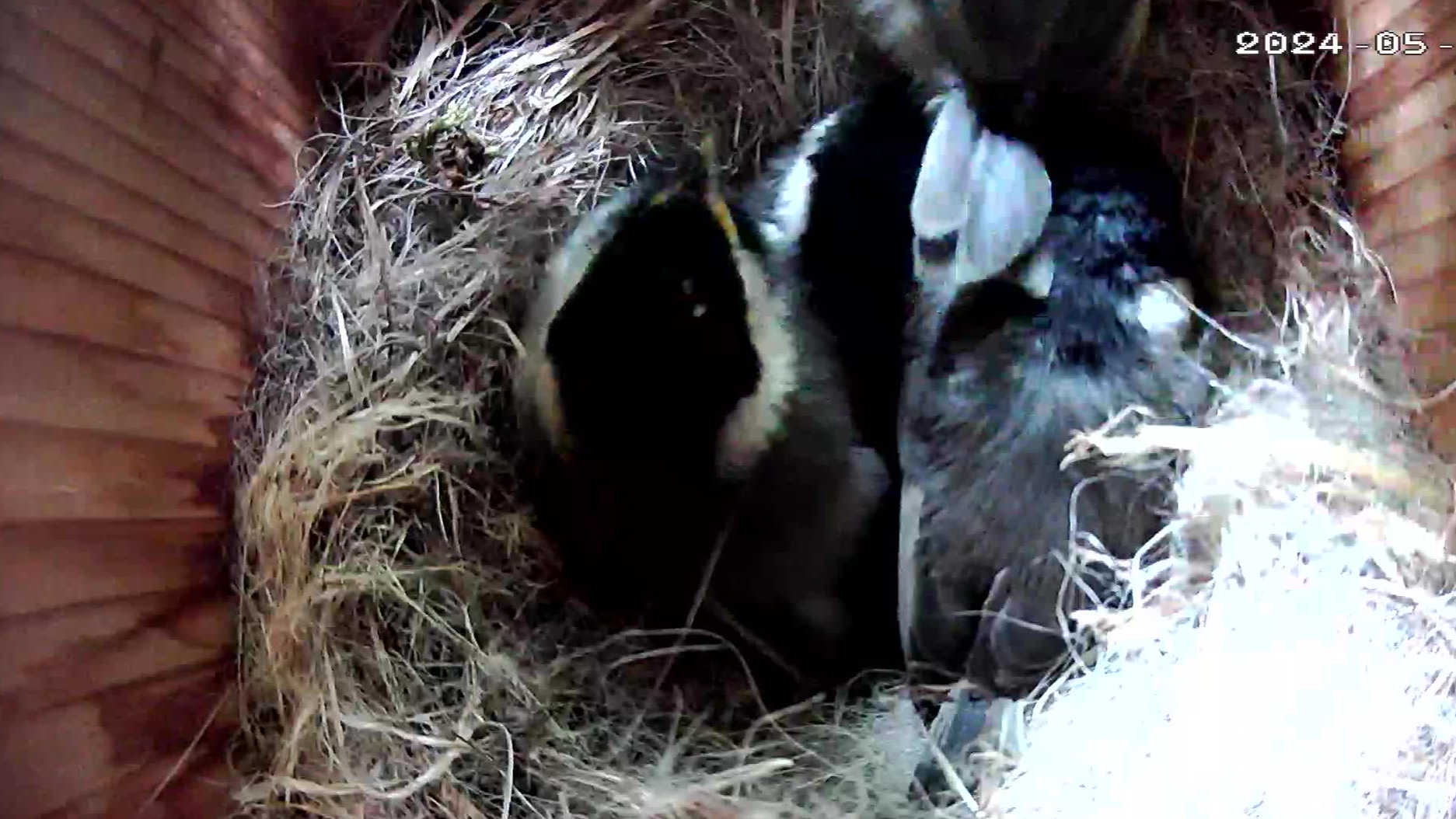
I shove each chick back into their next box and cover the entrance until they calm down. Then, I leave them alone.
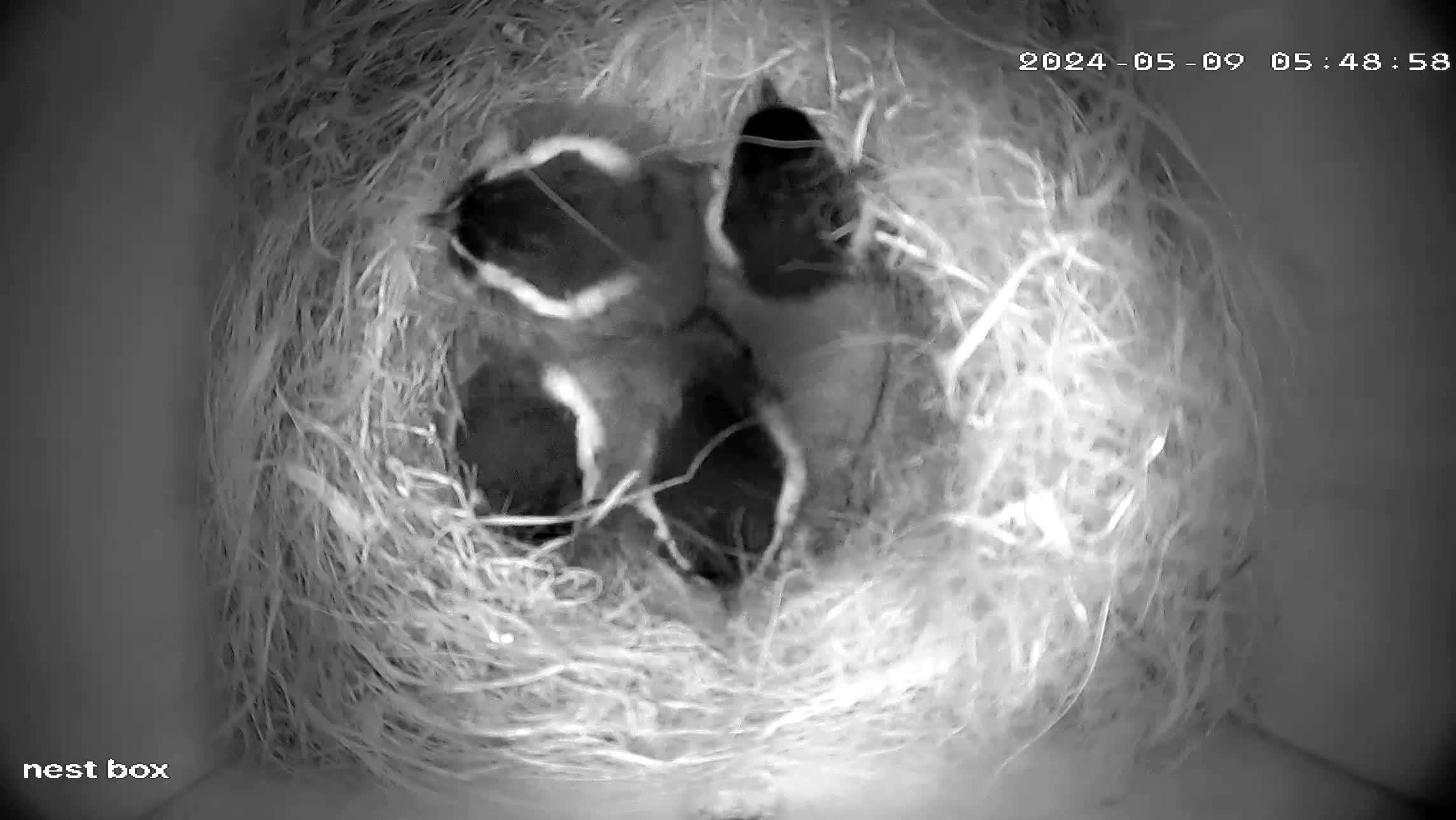
Night vision. Soon after I left the parents resumed feeding. These chicks stayed in the nest and fledged two days later.