

Annapolis is now zone 8a - but does it feel like it?
As of 2023, the USDA Hardiness Zone Map for Annapolis, Maryland is Zone 8a. For those of you who are keeping score - we used to be Zone 7b. This week, our temperatures will dip down to 12 degrees Fahrenheit. What gives? It’s SO COLD!
First, let’s have some context. Our coldest temperature on record was -8 F on Sunday, January 22, 1984. That year, you would have put us in a solid Zone 6a. Then, there was the “Great Freeze” of 1977 where the Chesapeake Bay froze over. "That was a brutal winter. We had something like 58 straight days of below freezing temperatures between mid-December and mid-February," said Chesapeake Bay Maritime Museum chief curator Pete Lesher.
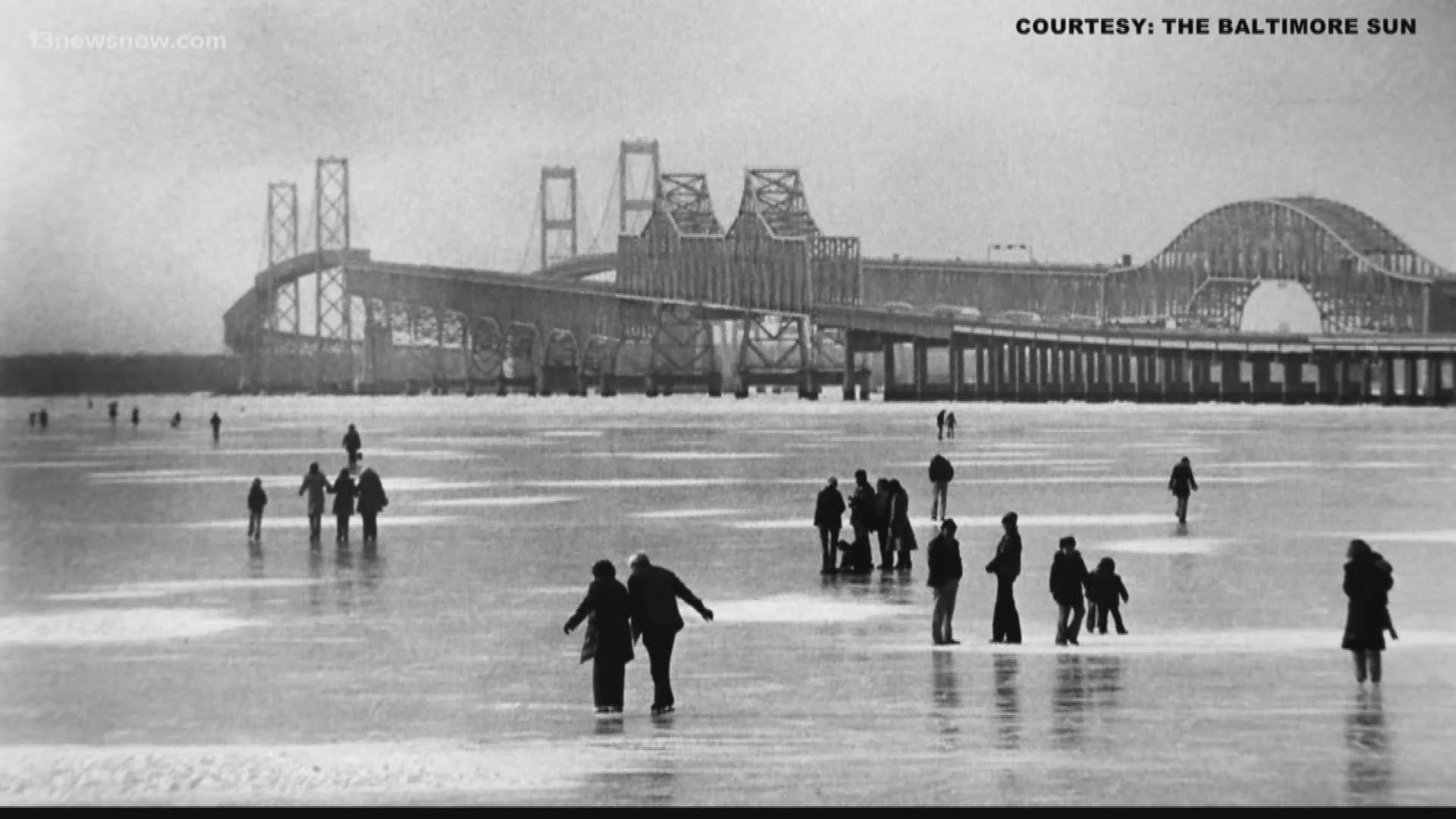
The “Great Freeze” of 1977
Our coldest winter in the past 10 years was 8 degrees F in 2022
Our coldest winter in the past 20 years was 3 degrees F in 2015
Our coldest winter in the past 30 years was 2 degrees F in 1996
Our coldest winter in the past 40 years was -1 degrees F in 1987 and 1989
Our coldest winter in the past 50 years was -8 degrees F in 1984
See this and other stats on Extreme Weather Watch.
There is defiantly a bit of a warming trend. Even though 12 degrees seems on the low end of what Zone 8a can handle.
What is Zone 8a? Zone 8a should chill out at 10-15 degrees Fahrenheit. And, only very specific portions of our area are classified as Zone 8a.
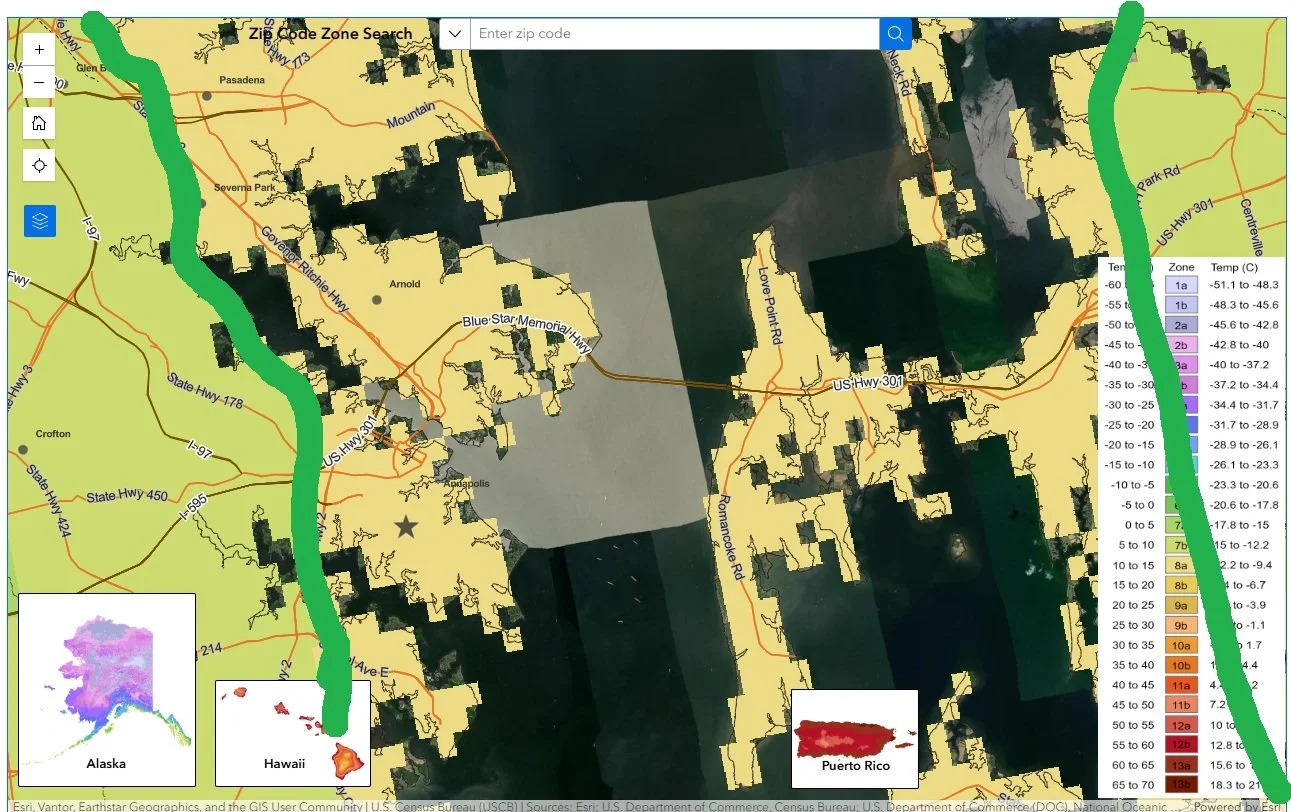
The light green of zone 7b and the yellow of zone 8a are tricky to distinguish. I’ve added a green line to simplify the map.
Why should all of this matter? As you might expect this broadens the list of plants that will overwinter in our area. This is two-fold. On the upside, we will be able to grow plants as perennials which, before this, have been considered annuals (such as Elephant Ear, varieties of fruit trees and Canna Lilly). However, we will need to be especially vigilant about new invasive species. Native plants are “trending” and I encourage these plantings as the backbone of your garden.
To keep things interesting, we are zone 6 for our heat map. (see below)
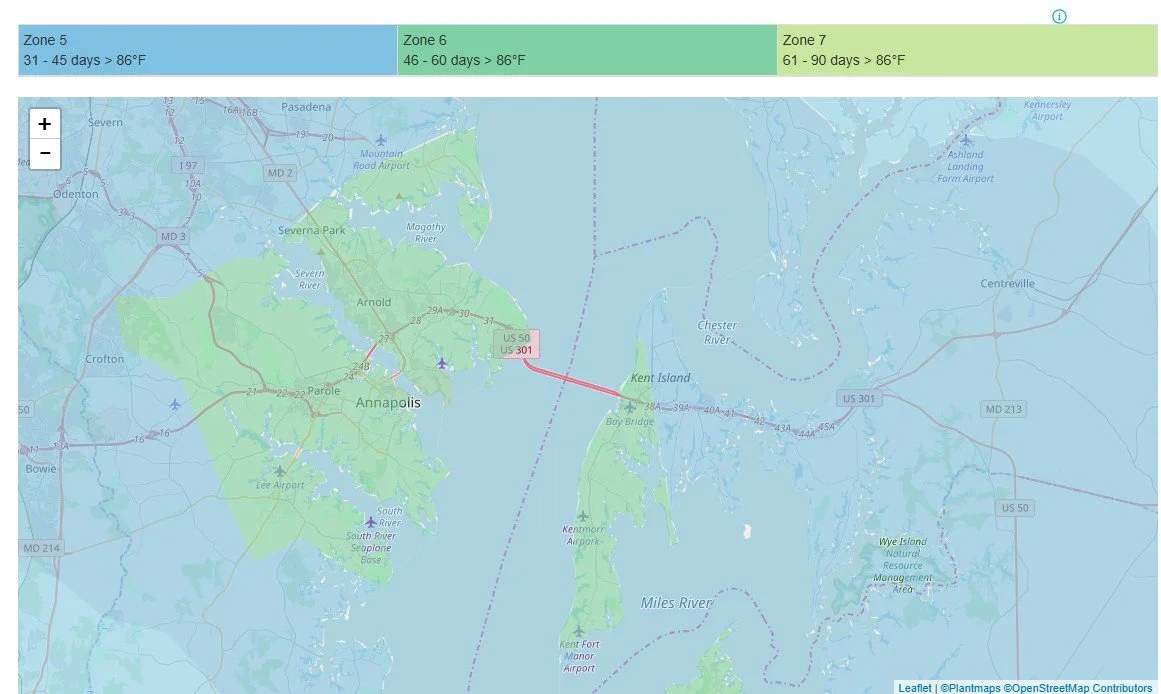
Annapolis, Maryland Heat Map
My conclusion is that Annapolis is a GREAT place to live for gardeners. The Chesapeake Bay keeps our temperatures steady. But, it’s good to be aware of the latest research as you plan your garden this spring. (Just avoid invasive plants like the plague that they are).
