

 Image 1 of 2
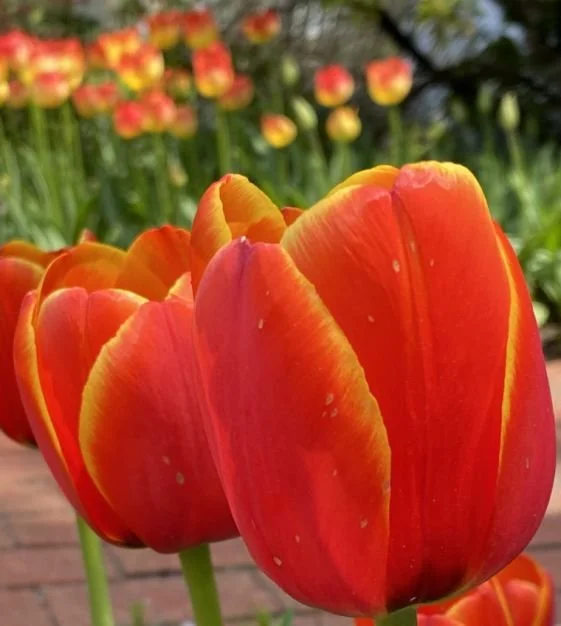 Image 2 of 2
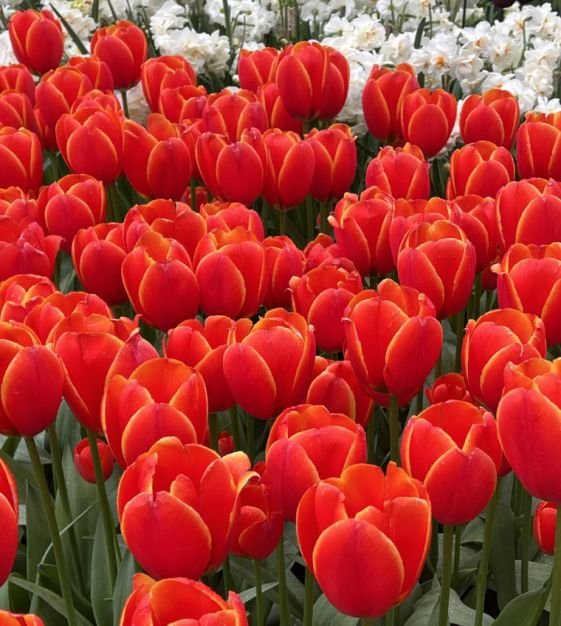
This award-winning, gleaming powerhouse has strong, huge, tomato-red flowers with golden-yellow petal edges and an interior yellow spotlight base. (Garden visitors may secretly feel the flower petals to see if they are silk or real~they are perfect flowers.) Tulip Class: Giant Darwin Hybrid. Bulb size: 12 cm/up. Mid-April. HZ: 3-7. Height: 18".
Drainage is the most important soil factor for perennial tulips. Bulbs sitting in waterlogged soil rot, and this is probably the most common reason tulips don’t come back after the first year. If your soil is heavy clay or stays wet after rain, you’ll need to improve it before planting.
Work compost into the planting area to improve the structure. Raised beds are another option if your native soil just doesn’t drain well enough. The goal is soil that lets water pass through rather than pooling around the bulbs, especially during summer dormancy when the bulbs are resting and most vulnerable to rot.
Another tip is to plant the bulbs slightly deeper than the standard recommendation. About eight inches deep tends to produce better results for perennializing than the more common six inches. Deeper planting keeps the bulbs cooler in summer, protects them from squirrels, and encourages stronger root development.
This award-winning, gleaming powerhouse has strong, huge, tomato-red flowers with golden-yellow petal edges and an interior yellow spotlight base. (Garden visitors may secretly feel the flower petals to see if they are silk or real~they are perfect flowers.) Tulip Class: Giant Darwin Hybrid. Bulb size: 12 cm/up. Mid-April. HZ: 3-7. Height: 18".
Drainage is the most important soil factor for perennial tulips. Bulbs sitting in waterlogged soil rot, and this is probably the most common reason tulips don’t come back after the first year. If your soil is heavy clay or stays wet after rain, you’ll need to improve it before planting.
Work compost into the planting area to improve the structure. Raised beds are another option if your native soil just doesn’t drain well enough. The goal is soil that lets water pass through rather than pooling around the bulbs, especially during summer dormancy when the bulbs are resting and most vulnerable to rot.
Another tip is to plant the bulbs slightly deeper than the standard recommendation. About eight inches deep tends to produce better results for perennializing than the more common six inches. Deeper planting keeps the bulbs cooler in summer, protects them from squirrels, and encourages stronger root development.