

 Image 1 of 2
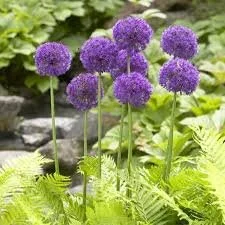 Image 2 of 2
Allium 'Purple Sensation'
Ornamental onion
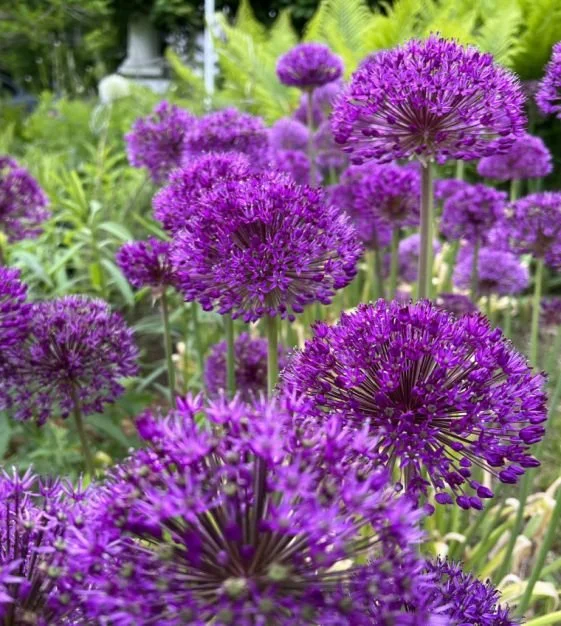
'Purple Sensation' produces a 4-5 inch ball of vivid violet-purple flowers on 24-30 inch stalks.
Blooms early spring
Full to part sun
Care:
Remove spent leaves and flowers as desired. Often, the dried seed heads add extended interest in the garden.
Easily grown in average, dry to medium moisture, well-drained soils in full sun to part shade. Best in full sun, but appreciates some light afternoon shade in hot summer climates. Tolerates a wide range of soils. Performs well in sandy soils. Bulbs are best planted in fall.
The genus Allium contains over 700 species of bulbous or rhizomatous plants. All possess oniony smelling flowers and foliage. Some species are grown for culinary purposes and others for ornamental purposes. Plants typically produce showy flower umbels on naked scapes rising above a clump of linear grass-like leaves. Ornamental alliums generally range in height from 3” to 4-6’ tall.
Genus name comes from the classical Latin name for garlic.
Bulb rot may occur in overly moist soils. Deer and rabbits tend to avoid this plant.
Allium 'Purple Sensation'
Ornamental onion
'Purple Sensation' produces a 4-5 inch ball of vivid violet-purple flowers on 24-30 inch stalks.
Blooms early spring
Full to part sun
Care:
Remove spent leaves and flowers as desired. Often, the dried seed heads add extended interest in the garden.
Easily grown in average, dry to medium moisture, well-drained soils in full sun to part shade. Best in full sun, but appreciates some light afternoon shade in hot summer climates. Tolerates a wide range of soils. Performs well in sandy soils. Bulbs are best planted in fall.
The genus Allium contains over 700 species of bulbous or rhizomatous plants. All possess oniony smelling flowers and foliage. Some species are grown for culinary purposes and others for ornamental purposes. Plants typically produce showy flower umbels on naked scapes rising above a clump of linear grass-like leaves. Ornamental alliums generally range in height from 3” to 4-6’ tall.
Genus name comes from the classical Latin name for garlic.
Bulb rot may occur in overly moist soils. Deer and rabbits tend to avoid this plant.