

 Image 1 of 3
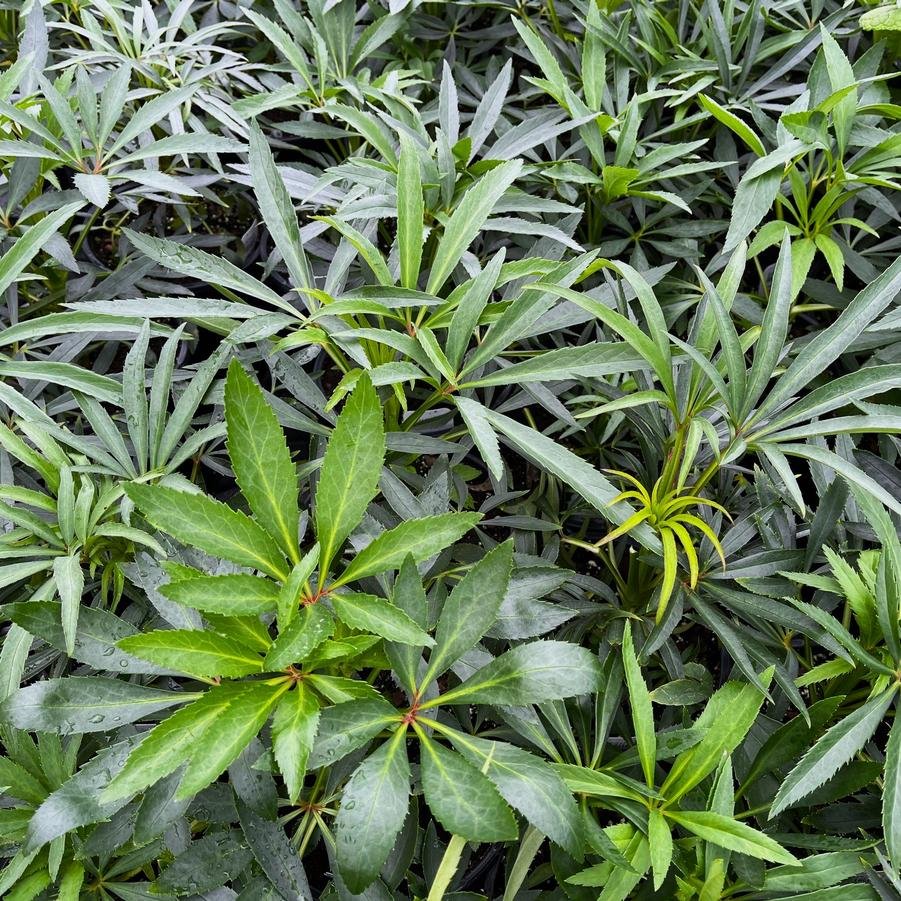 Image 2 of 3
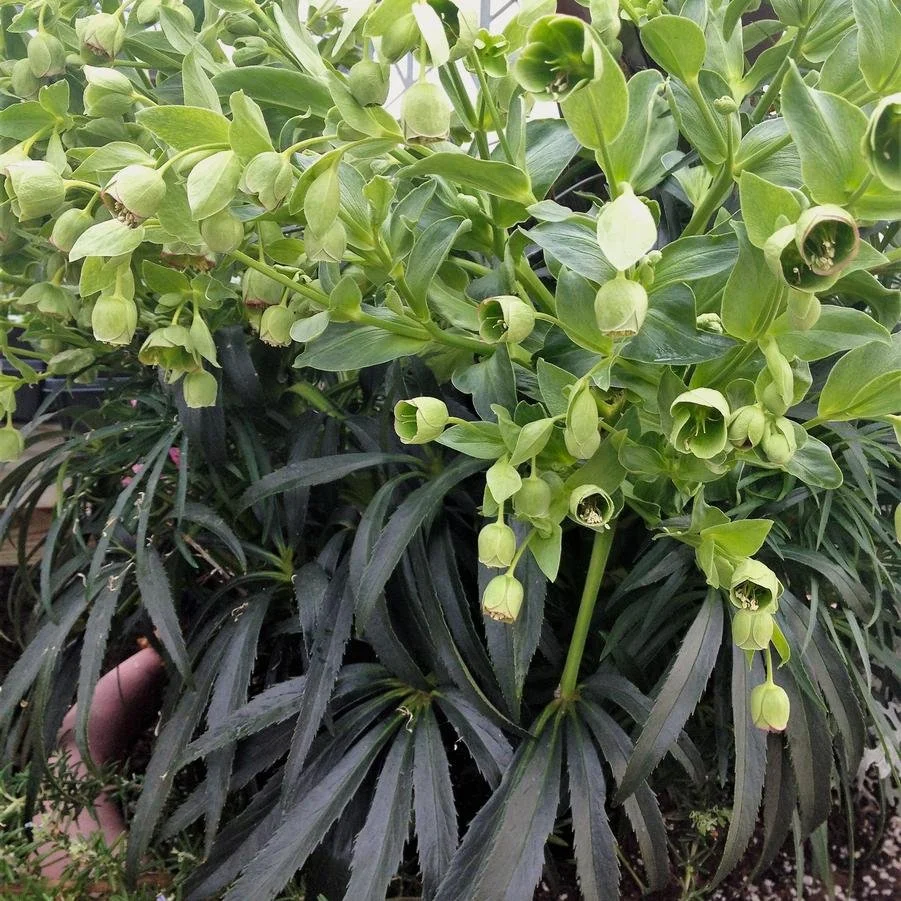 Image 3 of 3
Helleborus foetidus
Category: Perennials
Hardiness Zone: 5-9
Height: 12-30 in
Spread: 12-18 in
Bloom Color: Light Green
Foliage Color: Gray-green
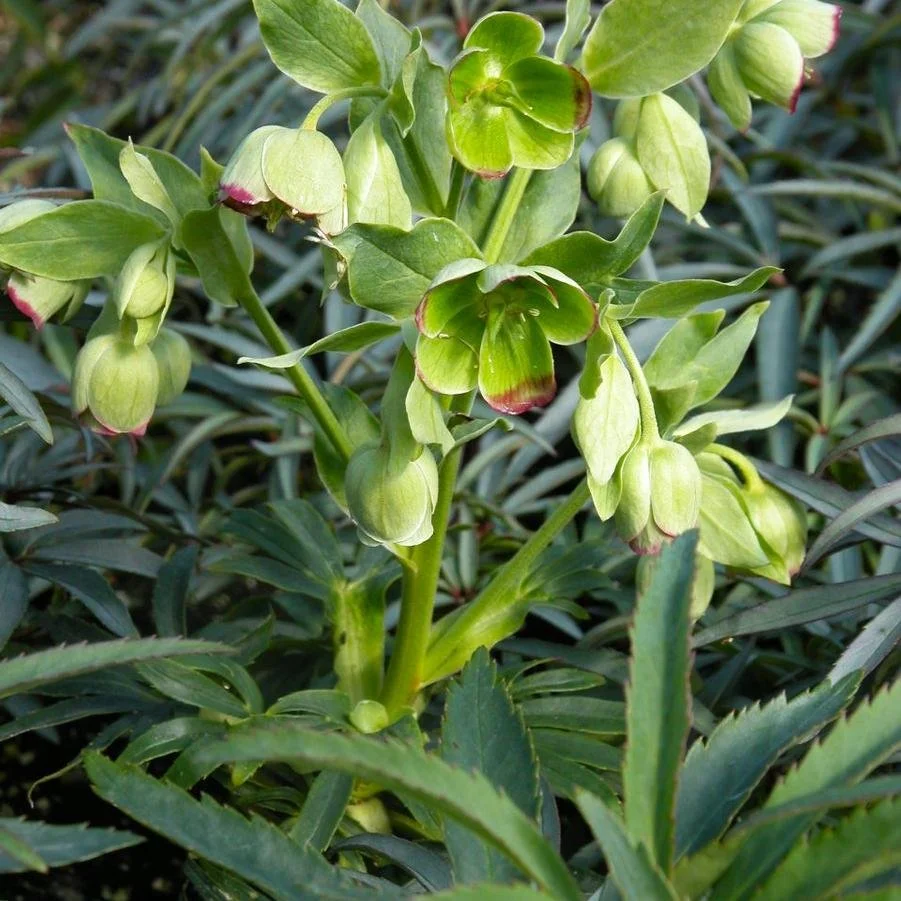
Pale green cup-shaped clusters of flowers with purple margins
Dark green, palmate foliage that creates a tropical like look
Easily grown in organically rich, humusy, alkaline, medium moisture, well-drained soils in part shade to full shade. Prefers light to moderate shade. Locate plants in areas protected from cold winter winds. May self-seed once established in the garden. Cut back flowering stems after bloom to promote new foliage growth. This is an evergreen plant that takes two years to bloom when grown from seed.
Helleborus foetidus, commonly called stinking hellebore, is an evergreen perennial that typically grows to 24” tall and is noted for its deeply divided dark green foliage and late winter to early spring bloom (February – April). Leaves are deeply lobed and divided into 7-10, narrow, lance-shaped to elliptic, usually-toothed segments. Clusters (cymes) of drooping, bell-shaped, greenish-white flowers (to 1” diameter) subtended by pale green bracts bloom at the tips of leafy stems commencing in February. Flowers and bruised foliage are unpleasantly aromatic (foeditus meaning fetid), thus giving rise to a number of somewhat hyperbolic common names for the species including stinking hellebore, stinkwort and dungwort. Many gardeners consider the actual aroma to be more unpleasant or unusual than fetid. Leaf shape gives rise to an additional common name of bear’s foot. Leaves, stems and roots are poisonous. Although foliage is evergreen, it may become scorched and tattered in extremely harsh winters, particularly if not insulated by snow cover.
Genus name comes from the Greek words bora meaning "food" and helein meaning "injures/destroys" in reference to the plant’s toxic leaves, stems and roots which are poisonous to humans if ingested.
Specific epithet of foeditus means fetid.
No serious insect or disease problems. Crown rot and leaf spot are occasional problems.
Helleborus foetidus
Category: Perennials
Hardiness Zone: 5-9
Height: 12-30 in
Spread: 12-18 in
Bloom Color: Light Green
Foliage Color: Gray-green
Pale green cup-shaped clusters of flowers with purple margins
Dark green, palmate foliage that creates a tropical like look
Easily grown in organically rich, humusy, alkaline, medium moisture, well-drained soils in part shade to full shade. Prefers light to moderate shade. Locate plants in areas protected from cold winter winds. May self-seed once established in the garden. Cut back flowering stems after bloom to promote new foliage growth. This is an evergreen plant that takes two years to bloom when grown from seed.
Helleborus foetidus, commonly called stinking hellebore, is an evergreen perennial that typically grows to 24” tall and is noted for its deeply divided dark green foliage and late winter to early spring bloom (February – April). Leaves are deeply lobed and divided into 7-10, narrow, lance-shaped to elliptic, usually-toothed segments. Clusters (cymes) of drooping, bell-shaped, greenish-white flowers (to 1” diameter) subtended by pale green bracts bloom at the tips of leafy stems commencing in February. Flowers and bruised foliage are unpleasantly aromatic (foeditus meaning fetid), thus giving rise to a number of somewhat hyperbolic common names for the species including stinking hellebore, stinkwort and dungwort. Many gardeners consider the actual aroma to be more unpleasant or unusual than fetid. Leaf shape gives rise to an additional common name of bear’s foot. Leaves, stems and roots are poisonous. Although foliage is evergreen, it may become scorched and tattered in extremely harsh winters, particularly if not insulated by snow cover.
Genus name comes from the Greek words bora meaning "food" and helein meaning "injures/destroys" in reference to the plant’s toxic leaves, stems and roots which are poisonous to humans if ingested.
Specific epithet of foeditus means fetid.
No serious insect or disease problems. Crown rot and leaf spot are occasional problems.