

 Image 1 of 2
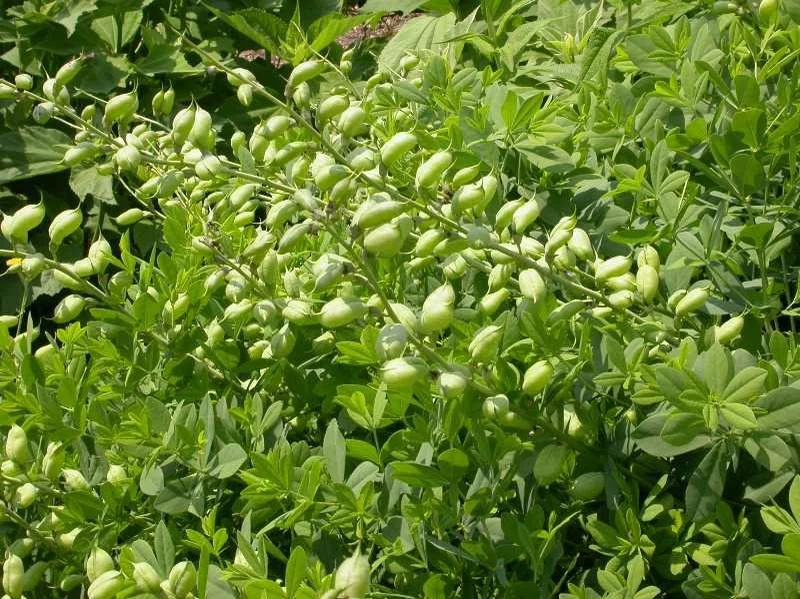 Image 2 of 2
Baptisia australis
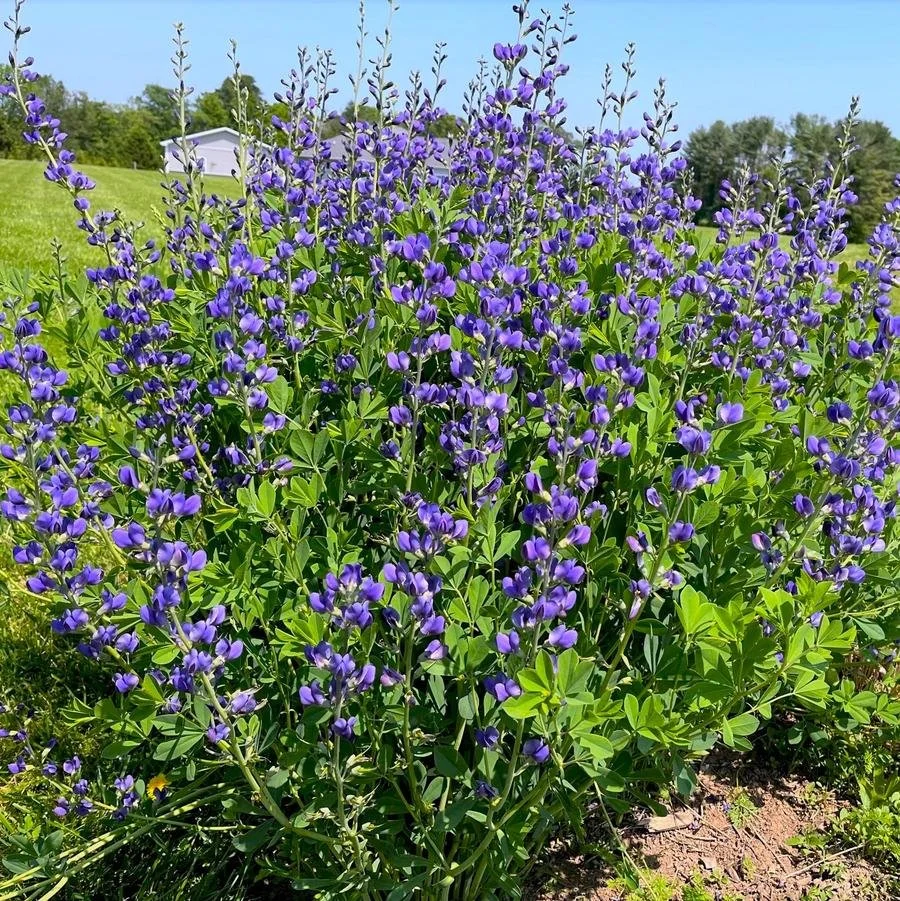
Upright, shrub like growth habit with small blue-purple pea- like flowers in May-June.
Natural habitat: dry to moist open woods, river banks and sandy floodplains
Special value to bumble bees and other native bees
2010 PPA PERENNIAL PLANT OF THE YEAR
Category: Perennials, Natives, MD Native Plants
Height: 36-48 in
Bloom Color: Blue- Purple
Easily grown in average, dry to medium, well-drained soil in full sun to part shade. Best in full sun. Tolerates drought and poor soils. Over time, plants develop slowly expanding clumps with deep and extensive root systems, and should not be disturbed once established. May be grown from seed, but takes several years to establish. Plants take on more of a shrubby appearance and tend to open up after bloom.
Baptisia australis, commonly called blue false indigo, is an upright perennial which typically grows 3-4' tall and occurs in rich woods, thickets and along streambanks from Pennsylvania south to North Carolina and Tennessee. It features purple, lupine-like flowers in erect racemes (to 12") atop flower spikes extending well above a foliage mound of clover-like, trifoliate, bluish-green leaves (leaflets to 2" long). Blooms in spring. Flowers give way to inflated seed pods (to 2.5" long) which turn charcoal black when ripe and have considerable ornamental interest. Seeds rattle around in the blackened pods which were once popularly used by children as rattles. Stems with seed pods are valued additions to dried flower arrangements.
The genus name Baptisia comes from the Greek word bapto meaning "to dye".
Specific epithet means southern.
The common name of false indigo refers to the use of certain native baptisias by early American colonists as a substitutes, albeit inferior, for true indigo (genus Indigofera) in making dyes.
No serious insect or disease problems. Taller plants may need support, particularly when grown in part shade locations. Sensitive to juglone. Tends to perform poorly when planted close to black walnut trees.
Baptisia australis
Upright, shrub like growth habit with small blue-purple pea- like flowers in May-June.
Natural habitat: dry to moist open woods, river banks and sandy floodplains
Special value to bumble bees and other native bees
2010 PPA PERENNIAL PLANT OF THE YEAR
Category: Perennials, Natives, MD Native Plants
Height: 36-48 in
Bloom Color: Blue- Purple
Easily grown in average, dry to medium, well-drained soil in full sun to part shade. Best in full sun. Tolerates drought and poor soils. Over time, plants develop slowly expanding clumps with deep and extensive root systems, and should not be disturbed once established. May be grown from seed, but takes several years to establish. Plants take on more of a shrubby appearance and tend to open up after bloom.
Baptisia australis, commonly called blue false indigo, is an upright perennial which typically grows 3-4' tall and occurs in rich woods, thickets and along streambanks from Pennsylvania south to North Carolina and Tennessee. It features purple, lupine-like flowers in erect racemes (to 12") atop flower spikes extending well above a foliage mound of clover-like, trifoliate, bluish-green leaves (leaflets to 2" long). Blooms in spring. Flowers give way to inflated seed pods (to 2.5" long) which turn charcoal black when ripe and have considerable ornamental interest. Seeds rattle around in the blackened pods which were once popularly used by children as rattles. Stems with seed pods are valued additions to dried flower arrangements.
The genus name Baptisia comes from the Greek word bapto meaning "to dye".
Specific epithet means southern.
The common name of false indigo refers to the use of certain native baptisias by early American colonists as a substitutes, albeit inferior, for true indigo (genus Indigofera) in making dyes.
No serious insect or disease problems. Taller plants may need support, particularly when grown in part shade locations. Sensitive to juglone. Tends to perform poorly when planted close to black walnut trees.