

 Image 1 of 2
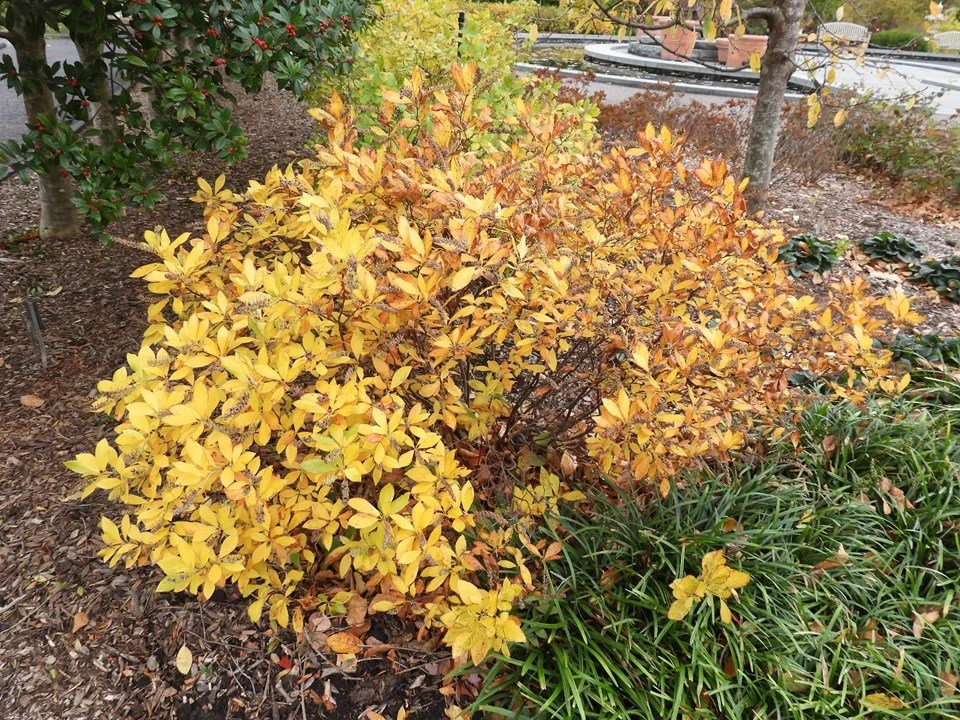 Image 2 of 2
Clethra alnifolia ‘Sugartina’
Type: Native Deciduous shrub
Height: 2-3 feet
Spread: 3-4 feet
Bloom Time: July to August
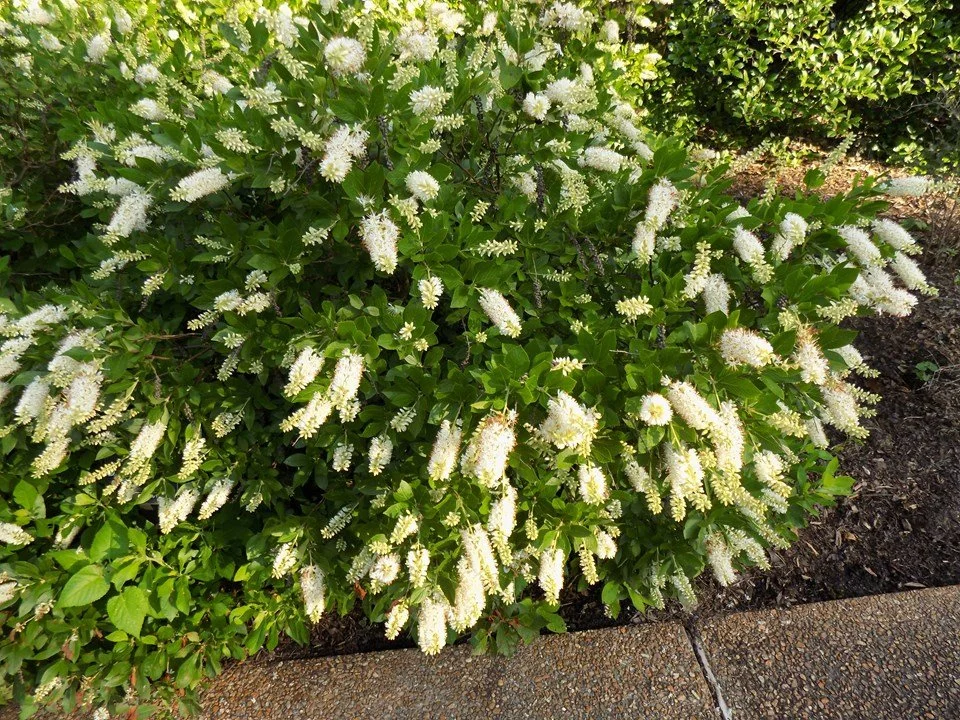
Bloom Description: White
Sun: Full sun to part shade
Water: Medium to wet
Maintenance: Low
Flower: Showy, Fragrant
Leaf: Good Fall
Attracts: Butterflies/ hummingbirds
Tolerate: Erosion, Clay Soil, Wet Soil
Easily grown in average, medium to wet soils in full sun to part shade. Prefers part shade and consistently moist, acidic, sandy soils. Soils should not be allowed to dry out. Tolerates clay soils. Tolerates full shade. Promptly remove root suckers unless naturalized look is desired. Propagate by cuttings. Prune if needed in late winter.
Clethra alnifolia, commonly called summersweet, is a deciduous shrub that is native to swampy woodlands, wet marshes, stream banks and seashores, often in sandy soils, along the coast from Maine to Florida and west to Texas. It is a rounded, suckering, densely-branched, deciduous shrub that typically grows to 3-6’ (less frequently to 8’) tall and is noted for producing a mid to late summer bloom of sweetly fragrant white flowers which appear in narrow, upright panicles (racemes to 2-6" long). Flowers give way to dark brown seed capsules (1/8" diameter) which may persist into winter. Mature stems have scaly, dark gray to brown black bark. Serrate, obovate to oblong, glossy dark green leaves (to 3-4” long) turn variable but generally attractive shades of yellow to golden brown in fall. Flowers are very attractive to butterflies and bees.
Genus name comes from the Greek klethra the name for alder of which the leaves resemble.
Specific epithet means leaves like alder.
No serious insect or disease problems. Spider mites may be a concern in dry conditions.
Clethra alnifolia ‘Sugartina’
Type: Native Deciduous shrub
Height: 2-3 feet
Spread: 3-4 feet
Bloom Time: July to August
Bloom Description: White
Sun: Full sun to part shade
Water: Medium to wet
Maintenance: Low
Flower: Showy, Fragrant
Leaf: Good Fall
Attracts: Butterflies/ hummingbirds
Tolerate: Erosion, Clay Soil, Wet Soil
Easily grown in average, medium to wet soils in full sun to part shade. Prefers part shade and consistently moist, acidic, sandy soils. Soils should not be allowed to dry out. Tolerates clay soils. Tolerates full shade. Promptly remove root suckers unless naturalized look is desired. Propagate by cuttings. Prune if needed in late winter.
Clethra alnifolia, commonly called summersweet, is a deciduous shrub that is native to swampy woodlands, wet marshes, stream banks and seashores, often in sandy soils, along the coast from Maine to Florida and west to Texas. It is a rounded, suckering, densely-branched, deciduous shrub that typically grows to 3-6’ (less frequently to 8’) tall and is noted for producing a mid to late summer bloom of sweetly fragrant white flowers which appear in narrow, upright panicles (racemes to 2-6" long). Flowers give way to dark brown seed capsules (1/8" diameter) which may persist into winter. Mature stems have scaly, dark gray to brown black bark. Serrate, obovate to oblong, glossy dark green leaves (to 3-4” long) turn variable but generally attractive shades of yellow to golden brown in fall. Flowers are very attractive to butterflies and bees.
Genus name comes from the Greek klethra the name for alder of which the leaves resemble.
Specific epithet means leaves like alder.
No serious insect or disease problems. Spider mites may be a concern in dry conditions.