

 Image 1 of 3
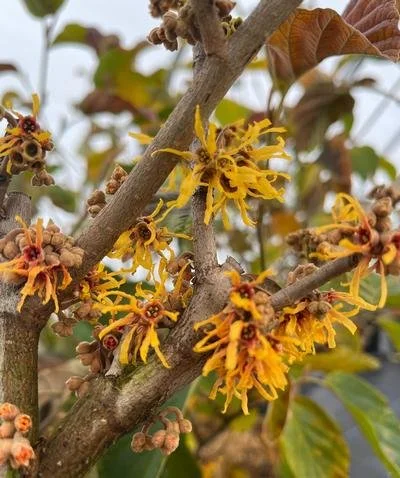 Image 2 of 3
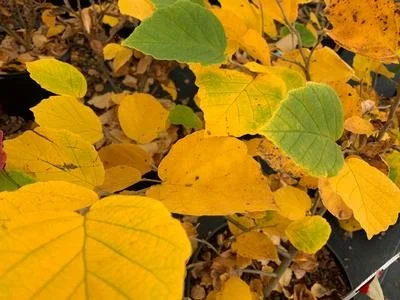 Image 3 of 3
Hamamelis virginiana 'Winter Champagne'
Category: Woody Ornamentals
Alternate Cultivar: Winter Champagne
Hardiness Zone: 3
Height: 12 Feet
Spread: 12 Feet
Native
Sun: Full to part sun
Little pruning is required. Prune in early spring if necessary.
Promptly remove suckers to prevent colonial spread - as desired.
Easily grown in average, medium moisture, well-drained soils in full sun to part shade. Best flowering in full sun. Prefers moist, acidic, organically rich soils. Tolerates heavy clay soils.
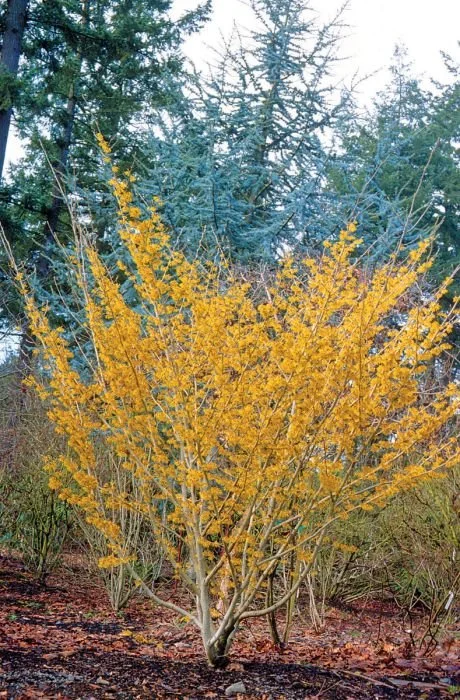
‘Winter Champagne’ Common Witchhazel is an introduction by Tim Brotzman of Madison Ohio from seedlings he got from Harald Neubauer of Tennessee. It produces fragrant flowers of a light champagne orange starting in December, continuing through January. Because of the later bloom period Tim thinks this may be a spontaneous virginiana/vernalis cross. Hamamelis ‘Winter Champagne’ is a vigorous native that brightens up the winter landscape, and provides food for winter pollinators.
Hamamelis virginiana, known as common witch hazel, is a fall-blooming, deciduous shrub or small tree that is native to woodlands, forest margins and stream banks in eastern North America. Stem-hugging clusters of fragrant bright yellow flowers, each with four crinkly, ribbon-shaped petals, appear along the branches in winter, usually after leaf drop but sometimes at the time of fall color. Fertilized flowers will form fruit over a long period extending through winter and into the following growing season. Fruits are greenish seed capsules that become woody with age and mature to light brown. Each seed capsule splits open in fall of the following year, exploding the 1-2 black seeds within for up to 30 feet. Oval to obovate, medium to dark green leaves (to 6” long) with dentate to wavy margins turn quality shades of yellow in fall.
Genus name comes from the Greek words hama meaning at same time and melon meaning apple or fruit in reference to the occurrence of both fruit and flowers at the same time on this shrub (particularly in the case of fall flowering members of the genus).
Specific epithet means from Virginia.
Caterpillars and Japanese beetles may chew on the leaves. Watch for gall aphids, scale, leafroller and leafminer. Potential diseases include powdery mildew and occasionally leaf spots. Insect and disease issues are typically not serious and rarely warrant chemical control.
Hamamelis virginiana 'Winter Champagne'
Category: Woody Ornamentals
Alternate Cultivar: Winter Champagne
Hardiness Zone: 3
Height: 12 Feet
Spread: 12 Feet
Native
Sun: Full to part sun
Little pruning is required. Prune in early spring if necessary.
Promptly remove suckers to prevent colonial spread - as desired.
Easily grown in average, medium moisture, well-drained soils in full sun to part shade. Best flowering in full sun. Prefers moist, acidic, organically rich soils. Tolerates heavy clay soils.
‘Winter Champagne’ Common Witchhazel is an introduction by Tim Brotzman of Madison Ohio from seedlings he got from Harald Neubauer of Tennessee. It produces fragrant flowers of a light champagne orange starting in December, continuing through January. Because of the later bloom period Tim thinks this may be a spontaneous virginiana/vernalis cross. Hamamelis ‘Winter Champagne’ is a vigorous native that brightens up the winter landscape, and provides food for winter pollinators.
Hamamelis virginiana, known as common witch hazel, is a fall-blooming, deciduous shrub or small tree that is native to woodlands, forest margins and stream banks in eastern North America. Stem-hugging clusters of fragrant bright yellow flowers, each with four crinkly, ribbon-shaped petals, appear along the branches in winter, usually after leaf drop but sometimes at the time of fall color. Fertilized flowers will form fruit over a long period extending through winter and into the following growing season. Fruits are greenish seed capsules that become woody with age and mature to light brown. Each seed capsule splits open in fall of the following year, exploding the 1-2 black seeds within for up to 30 feet. Oval to obovate, medium to dark green leaves (to 6” long) with dentate to wavy margins turn quality shades of yellow in fall.
Genus name comes from the Greek words hama meaning at same time and melon meaning apple or fruit in reference to the occurrence of both fruit and flowers at the same time on this shrub (particularly in the case of fall flowering members of the genus).
Specific epithet means from Virginia.
Caterpillars and Japanese beetles may chew on the leaves. Watch for gall aphids, scale, leafroller and leafminer. Potential diseases include powdery mildew and occasionally leaf spots. Insect and disease issues are typically not serious and rarely warrant chemical control.