

 Image 1 of 2
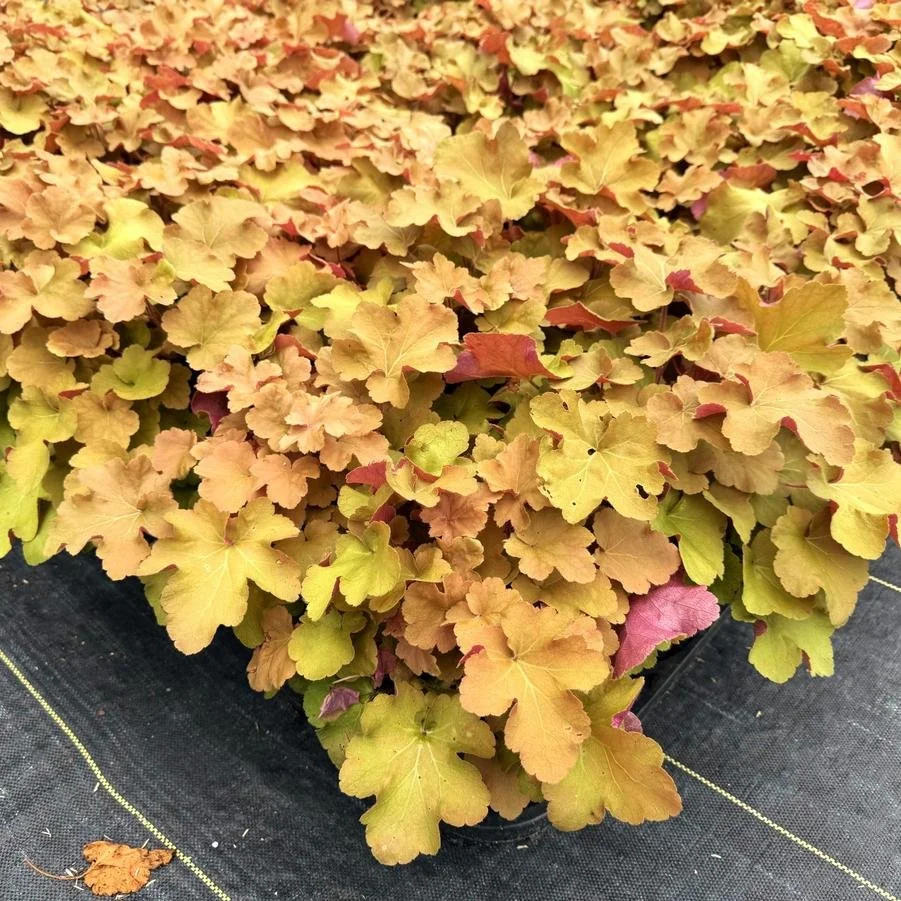 Image 2 of 2
Heuchera villosa ‘Caramel’
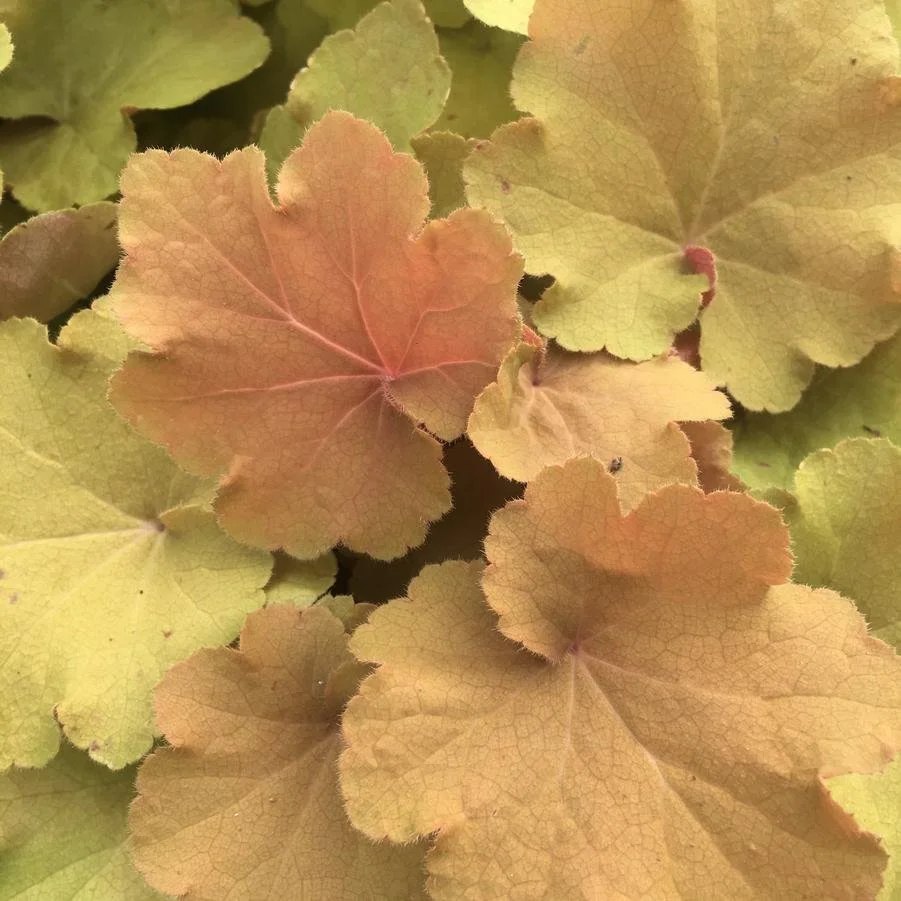
Apricot-amber colored foliage with reddish-purple undersides
Slight fuzzy texture
Light pink-cream fluffy flower spikes bloom June-July
Best in fertile, moist, well drained soil
Category: Perennials, Native Selection
Patent: PP16560
Height: 12-18 in
Spread: 18 in
Foliage Color: Multi-Color, Amber
Heucheras are best grown in organically rich, humusy, medium moisture, well-drained soils in part shade.
Heuchera, commonly called coral bells or alumroot, is a genus consisting of about 55 species of evergreen to semi-evergreen herbaceous perennials which are all native to North America. Plants grow in a variety of different habitats including woodland areas, Appalachian seeps, prairies, rocky cliffs and alpine slopes. Plants range in size from dwarf alpine plants with flower spikes rising to only 5” tall to much larger woodland plants with flower spikes towering to 36” tall.
The first significant hybrid heucheras were introduced into commerce around 1980. Hybrids are now very common in cultivation.
Genus name honors Johann Heinrich von Heucher (1677-1747), physician, botanist and medicinal plant expert at Wittenberg University, Germany.
Common name of coral bells is in reference to the red bell-shaped flowers produced by Heuchera sanguina. Common name of alumroot is in reference to the medicinal use of some species plants as an astringent to stop bleeding.
‘Caramel’ is a vigorous, clump-forming coral bells cultivar that features unique apricot foliage and light pink flowers. In 2002, it was discovered as a chance seedling (parents unknown) in Hantay, France. The lobed, rounded leaves form a basal mound (to 8” tall) which may spread to 20” wide. Leaves emerge gray-red in spring and mature to golden-yellow green (apricot/caramel) by summer. Tiny, light pink flowers appear in spires in early summer (later than most heucheras) on slender stems rising above the foliage mound, typically to 18” tall. The patent owner suspects that Heuchera villosa ‘Autumn Pride’ is a probable parent, and some nurseries are currently selling ‘Caramel’ as a cultivar of H. villosa, a southeastern U. S. native known for its tolerance to hot and humid summers. U. S. Plant Patent PP16,560 was issued May 23, 2006.
Frost heaving of roots may occur when winter temperatures fluctuate widely. Potential disease problems include powdery mildew, rust, and bacterial leaf spot. Potential insect problems include weevils and foliar nematodes.
Mass or plant in groups. Rock gardens, borders and open woodland gardens. Effective as an edger along paths or walkways.
Heuchera villosa ‘Caramel’
Apricot-amber colored foliage with reddish-purple undersides
Slight fuzzy texture
Light pink-cream fluffy flower spikes bloom June-July
Best in fertile, moist, well drained soil
Category: Perennials, Native Selection
Patent: PP16560
Height: 12-18 in
Spread: 18 in
Foliage Color: Multi-Color, Amber
Heucheras are best grown in organically rich, humusy, medium moisture, well-drained soils in part shade.
Heuchera, commonly called coral bells or alumroot, is a genus consisting of about 55 species of evergreen to semi-evergreen herbaceous perennials which are all native to North America. Plants grow in a variety of different habitats including woodland areas, Appalachian seeps, prairies, rocky cliffs and alpine slopes. Plants range in size from dwarf alpine plants with flower spikes rising to only 5” tall to much larger woodland plants with flower spikes towering to 36” tall.
The first significant hybrid heucheras were introduced into commerce around 1980. Hybrids are now very common in cultivation.
Genus name honors Johann Heinrich von Heucher (1677-1747), physician, botanist and medicinal plant expert at Wittenberg University, Germany.
Common name of coral bells is in reference to the red bell-shaped flowers produced by Heuchera sanguina. Common name of alumroot is in reference to the medicinal use of some species plants as an astringent to stop bleeding.
‘Caramel’ is a vigorous, clump-forming coral bells cultivar that features unique apricot foliage and light pink flowers. In 2002, it was discovered as a chance seedling (parents unknown) in Hantay, France. The lobed, rounded leaves form a basal mound (to 8” tall) which may spread to 20” wide. Leaves emerge gray-red in spring and mature to golden-yellow green (apricot/caramel) by summer. Tiny, light pink flowers appear in spires in early summer (later than most heucheras) on slender stems rising above the foliage mound, typically to 18” tall. The patent owner suspects that Heuchera villosa ‘Autumn Pride’ is a probable parent, and some nurseries are currently selling ‘Caramel’ as a cultivar of H. villosa, a southeastern U. S. native known for its tolerance to hot and humid summers. U. S. Plant Patent PP16,560 was issued May 23, 2006.
Frost heaving of roots may occur when winter temperatures fluctuate widely. Potential disease problems include powdery mildew, rust, and bacterial leaf spot. Potential insect problems include weevils and foliar nematodes.
Mass or plant in groups. Rock gardens, borders and open woodland gardens. Effective as an edger along paths or walkways.