

 Image 1 of 3
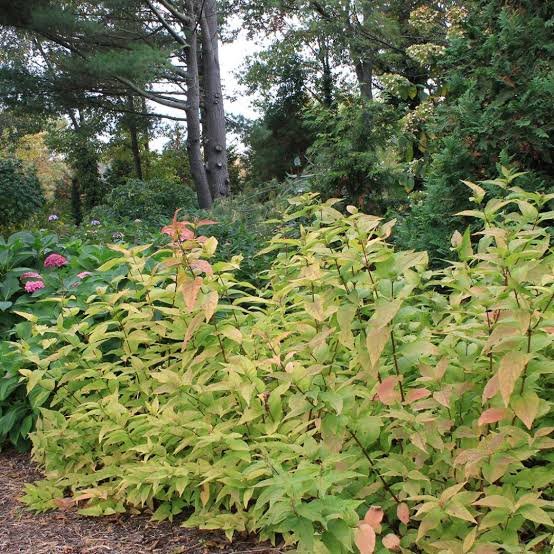 Image 2 of 3
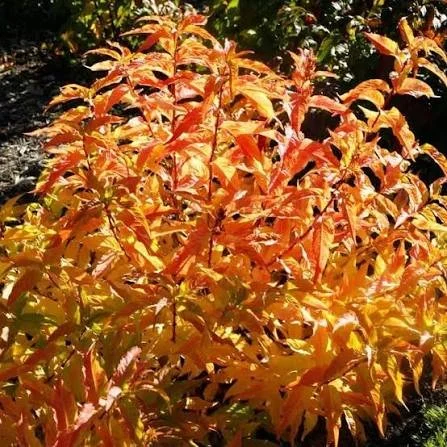 Image 3 of 3
3-4 feet tall and wide at maturity
Hardy in zones 3-8, be sure to check your USDA zone to ensure success
Plant in shade to sun, but foliage color and bloom count will be best in a few hours of direct sunlight
Space plants 3-4 feet apart for best results
Produces bright yellow flowers in summer
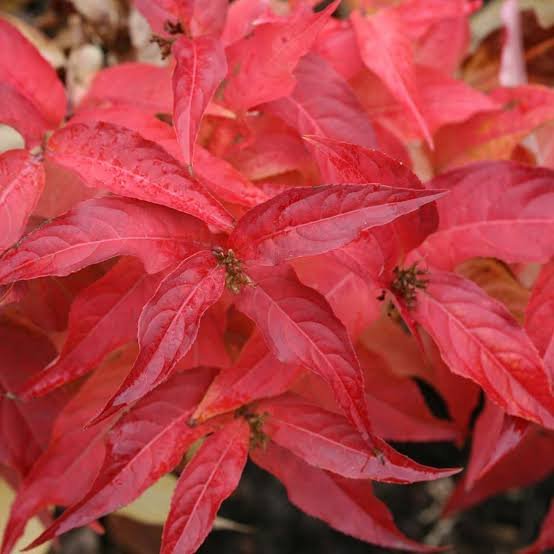
Maintains gorgeous foliage that emerges reddish-brown before aging to green throughout summer and then erupting in vivid red-orange in fall
Great for hedges, landscapes, mass planting and cut flower/foliage
Attracts bees, butterflies and hummingbirds
Native to North America, drought tolerant, fall interest
Looking for bold fall color without any negative ecological impact? Meet Kodiak® Orange Diervilla—a North American native that brings brilliant, fiery foliage and pollinator-friendly blooms to your landscape. In spring, new growth emerges in a rich russet tone, setting the stage for a summer show of bright yellow flowers that attract bees and butterflies. As temperatures cool, Kodiak® Orange transforms into a blaze of glowing orange, rivaling the best autumn displays. Fast-growing and adaptable, it thrives in sun or shade, is pest and disease resistant, and requires little to no maintenance. From slopes to borders, sun to shade, Kodiak® Orange Diervilla delivers bold color and lasting performance.
Easily grown in average, medium moisture, well-drained soils in full sun to part shade. Tolerant of a wide range of growing conditions including clay, drier soils, occasional drought and shade. Cultivars with colorful foliage are best grown with plenty of sun. Plants will spread by underground runners or stolons. Freely suckers. Plants may be propagated by transplanting suckers. Prune as needed immediately after flowering.
Diervilla is a genus of 3 species of deciduous shrubs from North America. They are grown for their attractive form and yellow flowers. They are commonly called bush honeysuckle.
Genus name honors a French surgeon named Dierville or Diereville who observed with great interest a North American native bush-honeysuckle growing in Canada during an extensive trip he took to that country in 1699-1700. Upon his return to France, he introduced the shrub to European culture, with the bush-honeysuckle genus eventually being named in memory of him. Linnaeus subsequently listed the observed Canadian plant as Diervilla lonicera.
The common name bush honeysuckle refers to the growth habit of this plant, as well as the appearance of the flowers which resemble those of plants in the genus Lonicera (honeysuckles). Diervilla and Lonicera are both in the Caprifoliaceae family. This plant should not to be confused with L. maackii which shares the common name bush honeysuckle and is an exotic invasive species to Missouri and the Midwest.
'G2X88544' is a vigorous, hybrid selection of bush honeysuckle that features colorful foliage and clusters of small, pale yellow flowers. Mature plants will reach around 4' tall with a similar spread and take on a rounded to spreading habit with upright stems. The broadly lanceolate to ovate leaves are 2.5-5" long and 0.75-2" wide, emerging in spring with coppery tones before maturing to green in summer and finally turning shades of bright orange-red in fall. The clusters of 0.25" long, tubular flowers bloom at the ends of the stems from early to mid-summer and are attractive to hummingbirds, butterflies, and other insect pollinators. Commonly sold at nurseries and garden centers under the name KODIAK ORANGE. This plant is protected by patent number PP27548.
No serious insect or disease problems. Leaf spot and powdery mildew may occur. Deer tend to avoid this plant.