

 Image 1 of 2
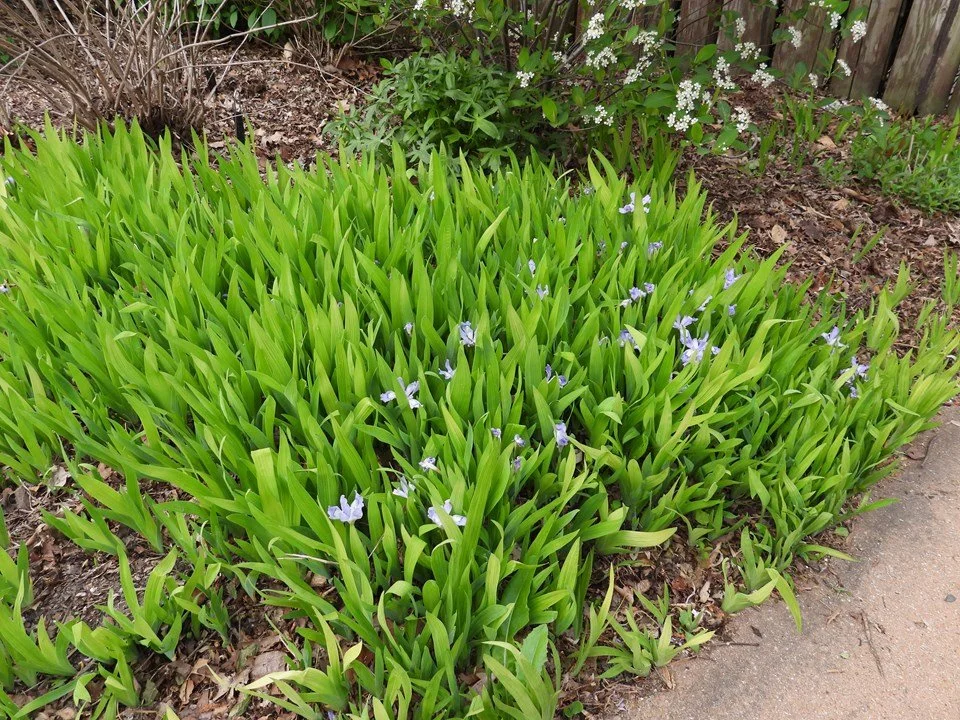 Image 2 of 2
Iris cristata
Type: Herbaceous perennial
Native Range: Northeastern United States
Height: 0.50 to 0.75 feet
Spread: 0.50 to 1.00 feet
Bloom Time: April
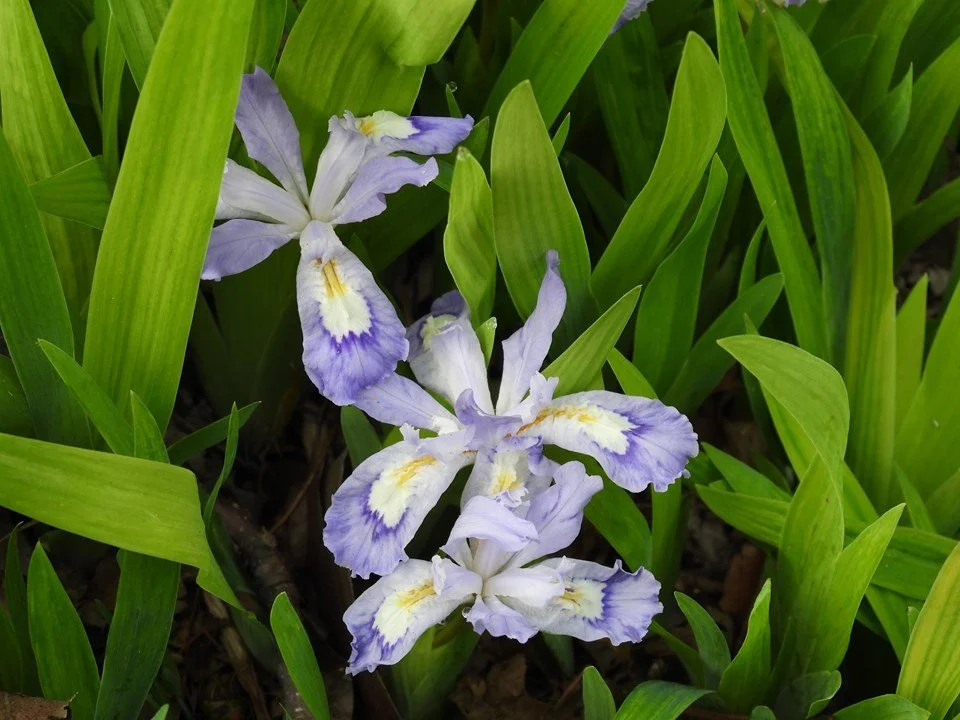
Bloom Description: Pale blue with gold-crested falls
Sun: Full sun to part shade
Water: Medium
Maintenance: Medium
Suggested Use: Ground Cover, Naturalize
Tolerate: Deer, Drought
Best grown in organically rich, medium moisture, well-drained soils in part shade. Will tolerate close to full shade. If grown in full sun, the soil must be kept consistently moist. Grows well on well-drained slopes. Plants will quickly naturalize by branching rhizomes.
Iris cristata, commonly called dwarf crested iris, is a low-growing, rapidly spreading plant that typically grows to 3-6” tall. Found growing in rich soil on wooded ravines or bluffs in portions of the eastern and southern United States. It features pale blue, lilac or lavender iris flowers with three parallel, golden, crested ridges on the falls (sepals). Flowers are borne on very short stems, often appearing nearly stemless. Narrow, sword-shaped, yellowish-green to medium green leaves (to 6” long) arise from a network of branching rhizomes. Spreads quickly and forms dense colonies in optimum growing conditions. When in flower, a well-developed bed can produce a spectacular drift of blue color.
Genus named for the Greek goddess of the rainbow.
Specific epithet means crested, in reference to the crested ridges on the sepals of this species.
Snails and slugs can be significant problems. Keep a watch and control as needed.
Iris cristata
Type: Herbaceous perennial
Native Range: Northeastern United States
Height: 0.50 to 0.75 feet
Spread: 0.50 to 1.00 feet
Bloom Time: April
Bloom Description: Pale blue with gold-crested falls
Sun: Full sun to part shade
Water: Medium
Maintenance: Medium
Suggested Use: Ground Cover, Naturalize
Tolerate: Deer, Drought
Best grown in organically rich, medium moisture, well-drained soils in part shade. Will tolerate close to full shade. If grown in full sun, the soil must be kept consistently moist. Grows well on well-drained slopes. Plants will quickly naturalize by branching rhizomes.
Iris cristata, commonly called dwarf crested iris, is a low-growing, rapidly spreading plant that typically grows to 3-6” tall. Found growing in rich soil on wooded ravines or bluffs in portions of the eastern and southern United States. It features pale blue, lilac or lavender iris flowers with three parallel, golden, crested ridges on the falls (sepals). Flowers are borne on very short stems, often appearing nearly stemless. Narrow, sword-shaped, yellowish-green to medium green leaves (to 6” long) arise from a network of branching rhizomes. Spreads quickly and forms dense colonies in optimum growing conditions. When in flower, a well-developed bed can produce a spectacular drift of blue color.
Genus named for the Greek goddess of the rainbow.
Specific epithet means crested, in reference to the crested ridges on the sepals of this species.
Snails and slugs can be significant problems. Keep a watch and control as needed.