

 Image 1 of 2
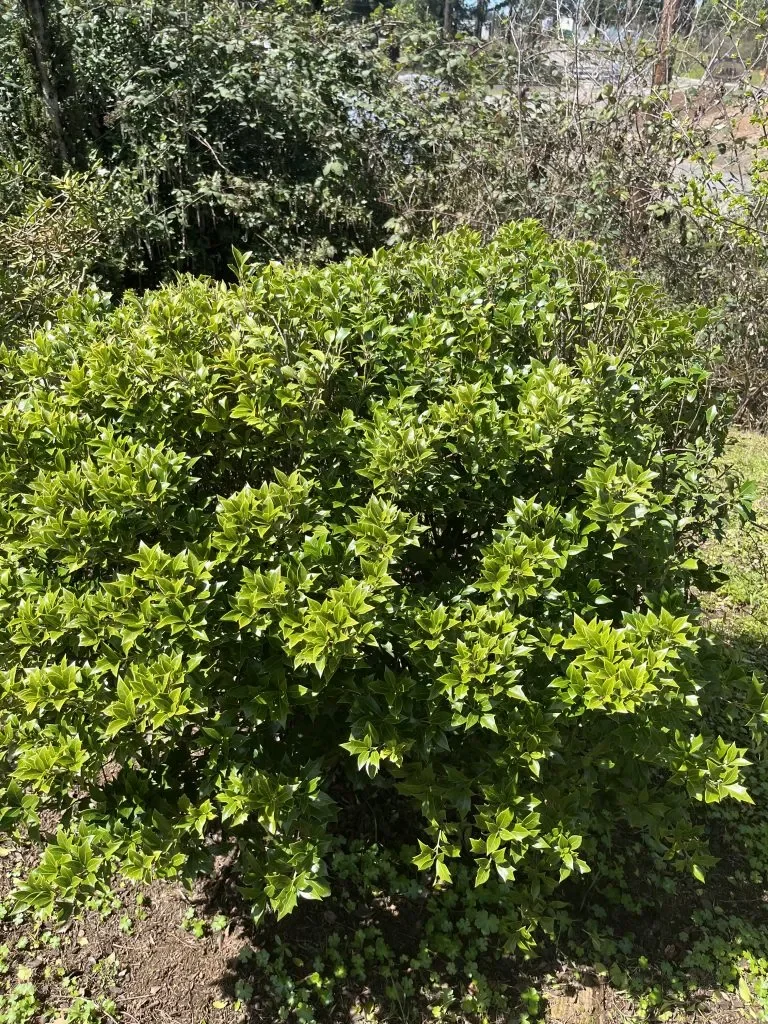 Image 2 of 2
Osmanthus heterophyllus ‘Fastigiata’ East Coast form
Size: 4’ x4’
Sun: Full to part sun
Booms: October - November with white flowers
Form: Dense round ball
No pruning necessary Culture
It is best grown in rich, consistently moist, well-drained garden soils in full sun to part shade. Best with part afternoon shade in hot summer climates. Tolerates heavy clays. Drought tolerant once established. Clip off growing tips to maintain compact size and to encourage bushiness.
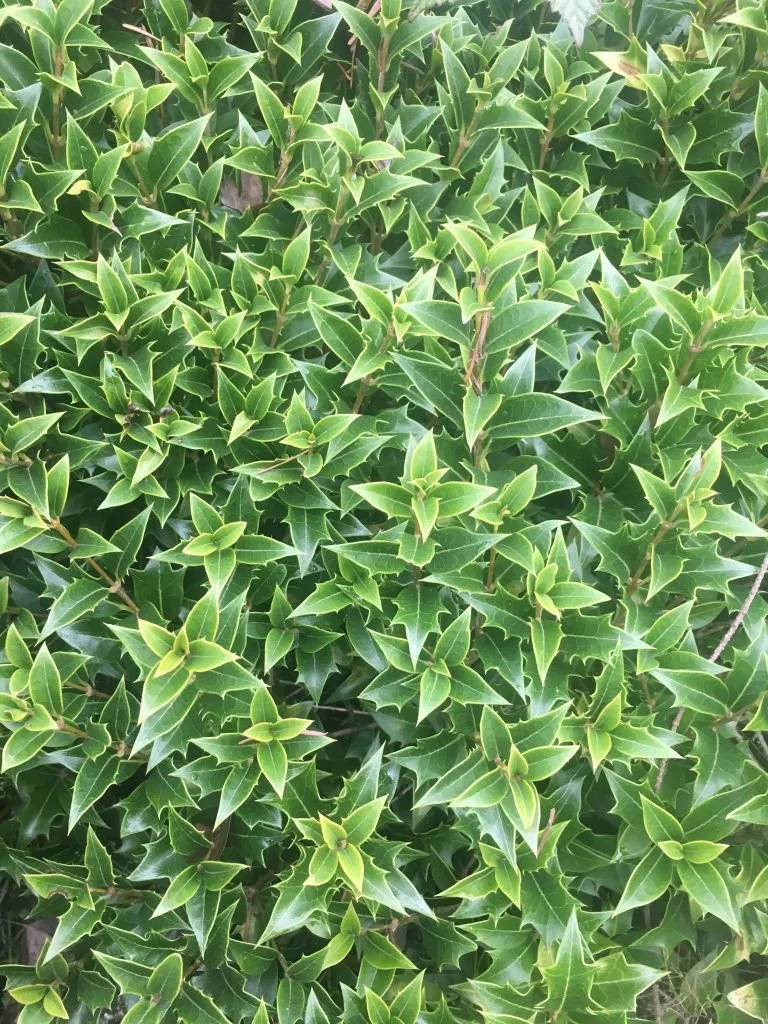
It is noted for producing leathery, ovate to elliptic, deep green leaves (to 2 1/2" long) which vary in shape: juvenile leaves typically have holly-like spiny margins (often 3-5 spiny teeth per side with a single tooth at the apex) and adult leaves typically are entire. The amount of toothing per leaf often varies considerably on the same shrub. Although the spiny juvenile leaves resemble the leaves of some hollies, holly olive leaves are opposite and holly leaves are alternate. Tiny fragrant 4-petaled white flowers bloom from the leaf axils in small clusters in fall. Plants are dioecious (male and female flowers on separate plants). Flowers are often hidden in the foliage. Fruits (5/8" long) on female plants ripen in the year after flowering, but are usually not produced in cultivation.
Genus name comes from the Greek words osme meaning fragrant and anthos meaning flower.
Specific epithet comes from the Greek hetero meaning different and phyllus meaning leaf in recognition of the leaf variations.
No serious insect or disease problems. Watch for scale and aphids.
Where winter hardy, holly olive forms an excellent screen or hedge. Shrub border.