

 Image 1 of 2
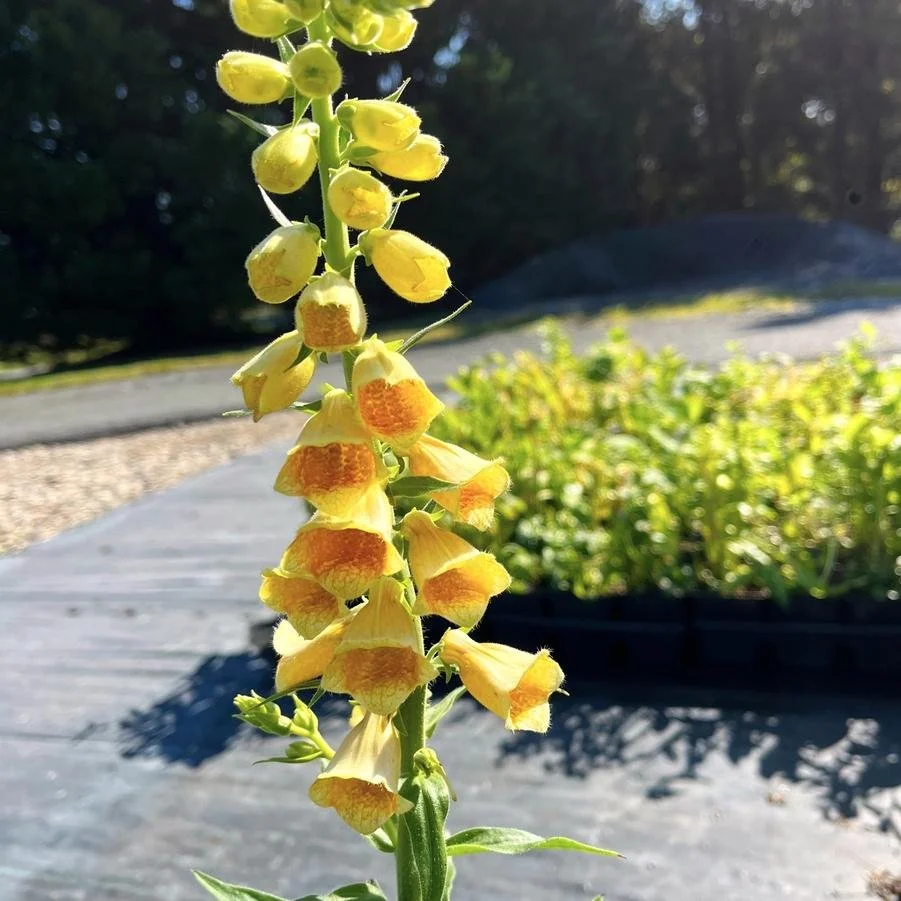 Image 2 of 2
Digitalis grandiflora
One of the hardier, more cold tolerant Foxglove.
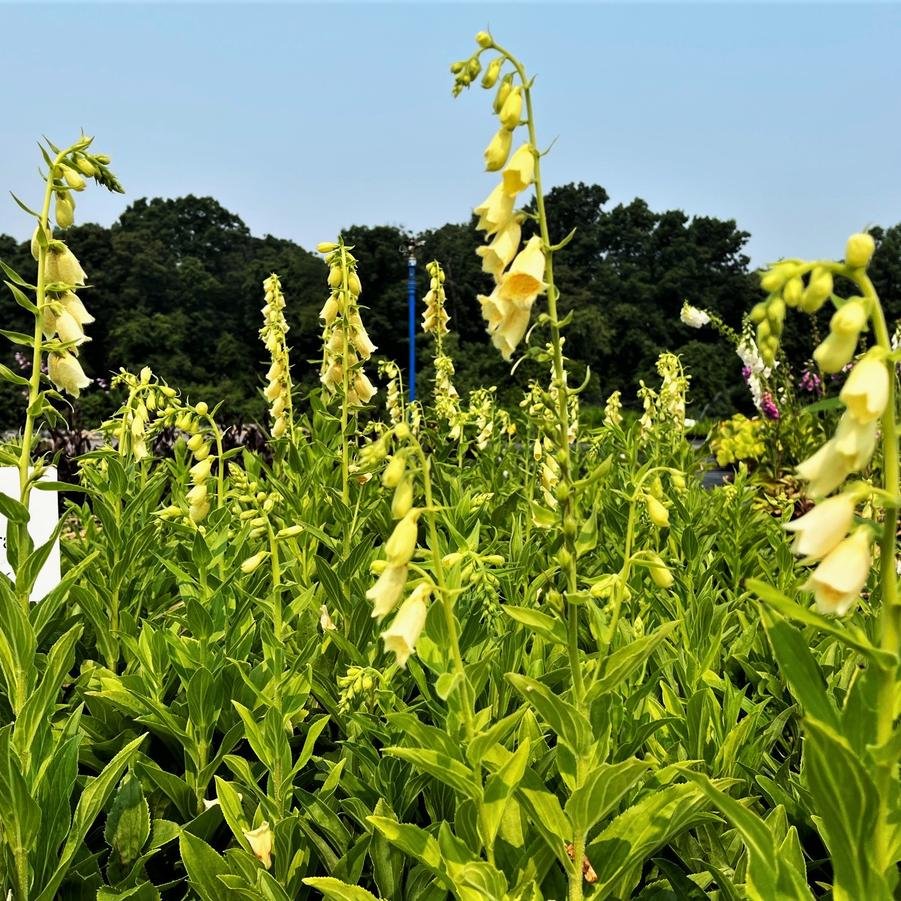
Flowers yellow with brown spots in June/ July.
Will rebloom in early autumn if deadheaded.
CAUTION: Toxic if eaten
Deer resistant
Category: Perennials
Height: 24-36 in
Spread: 12-24 in
Bloom Color: Yellow
Foliage Color: Green
Once flowering and seeding is completed, cut back all stems to the basal foliage. Basal foliage is basically evergreen, but damaged leaves should be removed in early spring.
Easily grown in average, medium moisture, well-drained soils in part shade. Prefers organically rich soils with consistent and regular moisture. Wet soils in winter can be fatal. Removal of flower spikes after bloom will encourage a secondary bloom. If flower spikes are left in place after flowering, plants may self-seed.
Digitalis grandiflora, commonly called yellow foxglove, is a clump-forming perennial that is native to woods and stream banks from central Europe to Turkey and Siberia. Large, tubular, funnel-shaped, pendulous, soft yellow flowers (to 2” long) with interior brown markings bloom in late spring to early summer in terminal racemes (to 12” long) atop upright leafy stems rising to 2-3’ tall. Finely-toothed, medium green, ovate-lanceolate leaves (to 10” long and 2” wide) appear in basal rosettes and alternately up the stems. Leaves in the basal rosettes are largest, becoming smaller as they rise up the stems. Individual flowers resemble the snipped-off fingers of a glove. Digitalis leaves are highly toxic to humans if ingested. Synonymous with Digitalis ambigua.
Genus name comes from the Latin digitus meaning "finger" for the flower shape.
Specific epithet is in reference to the large flowers of this species.
No serious insect or disease problems. Powdery mildew and leaf spot, if left untreated, can depreciate foliage considerably by early to mid-summer. Dense woody crowns may rot in soggy, poorly-drained winter soils. Potential insect pests include aphids, mealy bugs, slugs and Japanese beetle. Black spot may appear. Plants in the wild are becoming increasingly uncommon due to a combination of factors including habitat destruction and unlawful collection.
Digitalis grandiflora
One of the hardier, more cold tolerant Foxglove.
Flowers yellow with brown spots in June/ July.
Will rebloom in early autumn if deadheaded.
CAUTION: Toxic if eaten
Deer resistant
Category: Perennials
Height: 24-36 in
Spread: 12-24 in
Bloom Color: Yellow
Foliage Color: Green
Once flowering and seeding is completed, cut back all stems to the basal foliage. Basal foliage is basically evergreen, but damaged leaves should be removed in early spring.
Easily grown in average, medium moisture, well-drained soils in part shade. Prefers organically rich soils with consistent and regular moisture. Wet soils in winter can be fatal. Removal of flower spikes after bloom will encourage a secondary bloom. If flower spikes are left in place after flowering, plants may self-seed.
Digitalis grandiflora, commonly called yellow foxglove, is a clump-forming perennial that is native to woods and stream banks from central Europe to Turkey and Siberia. Large, tubular, funnel-shaped, pendulous, soft yellow flowers (to 2” long) with interior brown markings bloom in late spring to early summer in terminal racemes (to 12” long) atop upright leafy stems rising to 2-3’ tall. Finely-toothed, medium green, ovate-lanceolate leaves (to 10” long and 2” wide) appear in basal rosettes and alternately up the stems. Leaves in the basal rosettes are largest, becoming smaller as they rise up the stems. Individual flowers resemble the snipped-off fingers of a glove. Digitalis leaves are highly toxic to humans if ingested. Synonymous with Digitalis ambigua.
Genus name comes from the Latin digitus meaning "finger" for the flower shape.
Specific epithet is in reference to the large flowers of this species.
No serious insect or disease problems. Powdery mildew and leaf spot, if left untreated, can depreciate foliage considerably by early to mid-summer. Dense woody crowns may rot in soggy, poorly-drained winter soils. Potential insect pests include aphids, mealy bugs, slugs and Japanese beetle. Black spot may appear. Plants in the wild are becoming increasingly uncommon due to a combination of factors including habitat destruction and unlawful collection.