

 Image 1 of 2
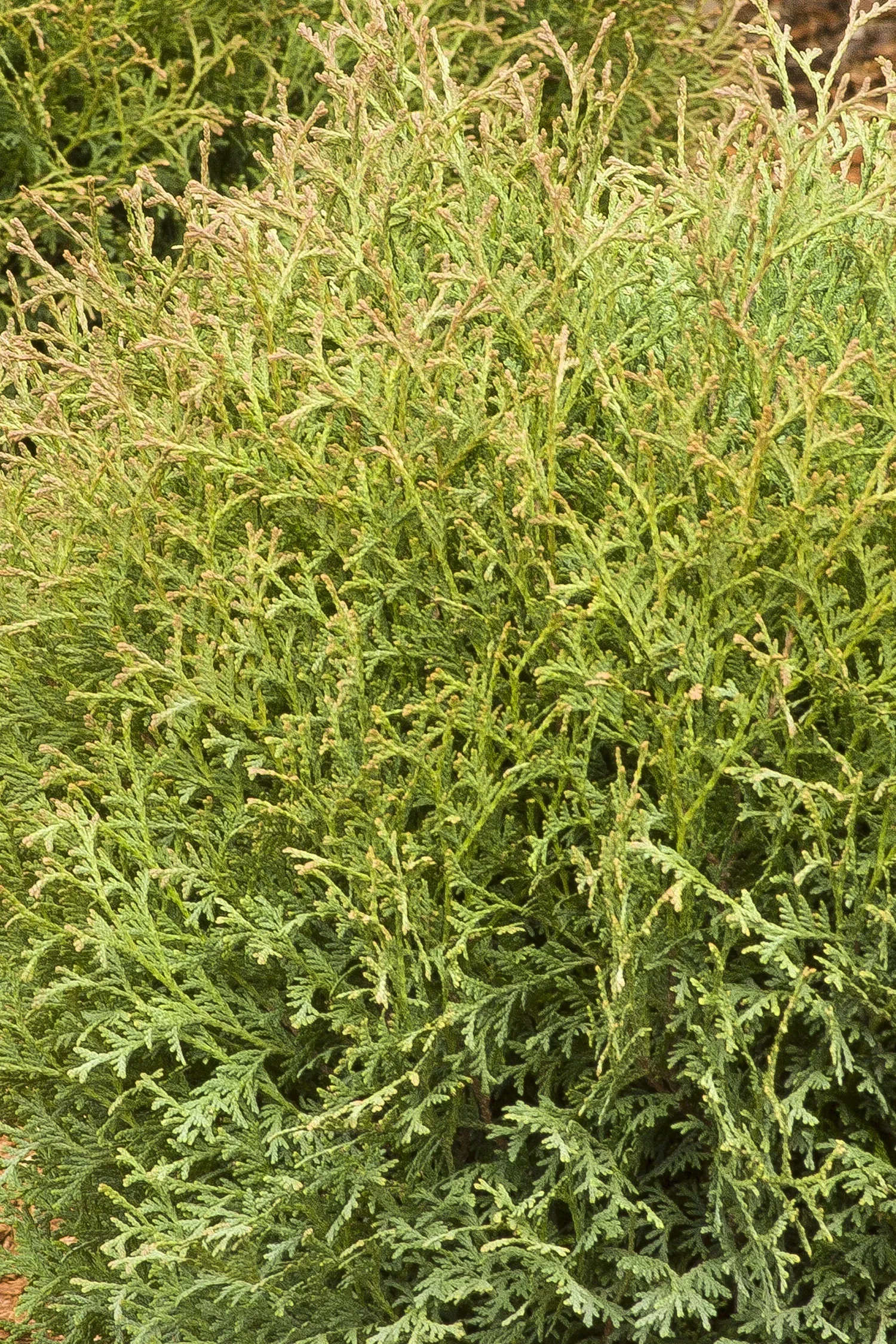 Image 2 of 2
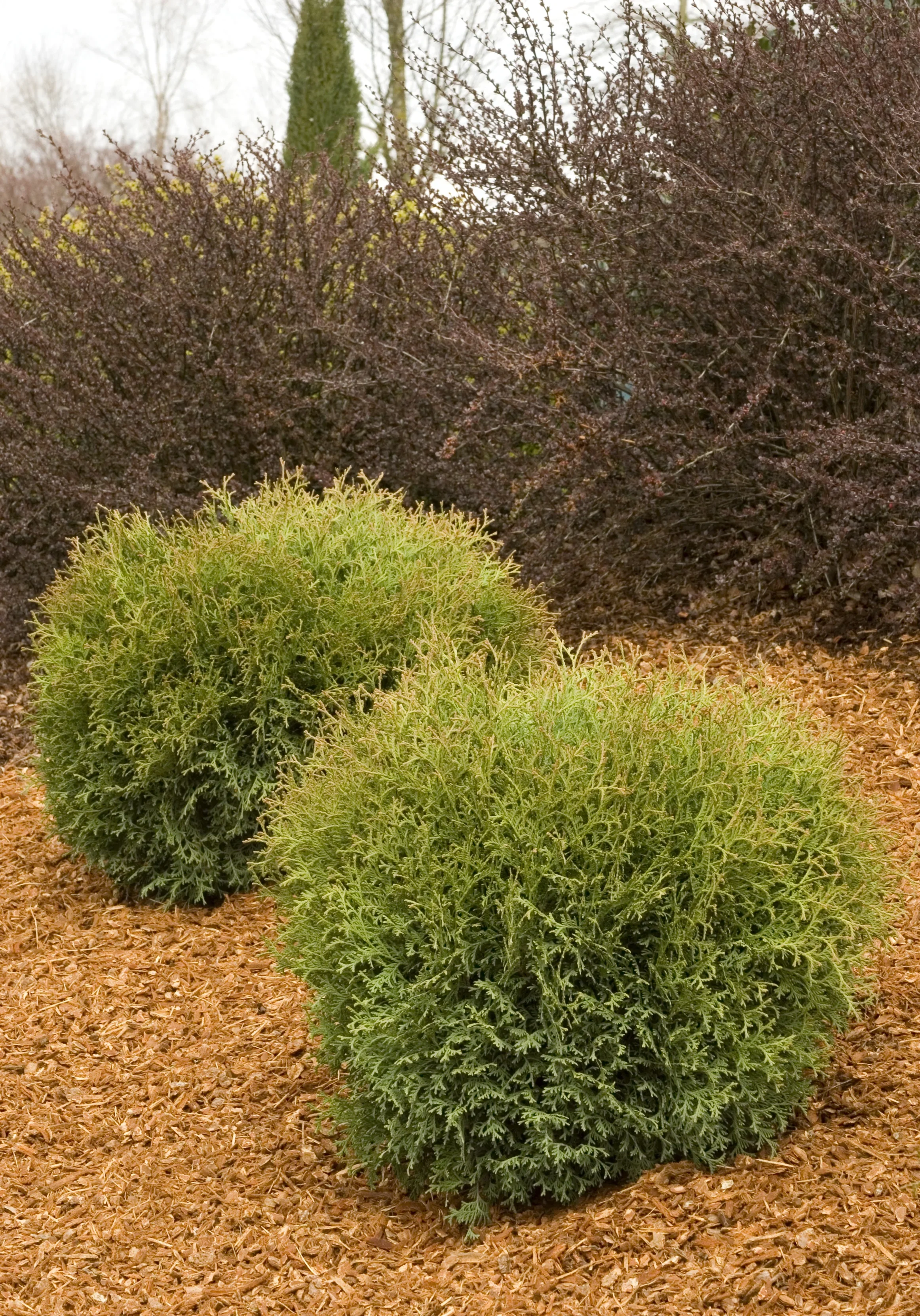
Thuja occidentalis 'Hetz Mid.'
LIGHT: Full sun, Partial sun
WATER: Water when top 2 inches of soil is dry.
SIZE: Slow growing; reaches 3 to 4 ft. tall and wide.
Evergreen shrub
A small evergreen shrub with a dense, naturally globe-shaped growth habit. Rich green scale-like foliage is arranged in flat layered sprays. The compact form makes this a popular accent plant for mixed borders or containers. A very adaptable, tough, durable plant.
Care Instructions Thrives in enriched, evenly moist, loamy, well-drained soils; dislikes dry conditions. Mulch around root zone and shelter from drying winds. Water deeply, regularly during first few growing seasons to establish an extensive root system. Fertilize before new growth begins in spring. For a tidy appearance, prune annually to shape.
HistoryThese shrubs are members of the cypress family with characteristically scented wood and foliage. The genus was so named from the Greek for resin bearing tree. There are five species native to North American and eastern Asia with only two in cultivation. T. occidentalis is native to the eastern half of North America and was brought into cultivation early on in the 16th century. Hetz Midget was discovered as a seedling in 1928 at Fairview Nurseries, Fairview, PA, but not introduced until 1942.
LoreCypress wood is valued for its resistance to decomposition and as such is used for fence posts and other examples of earth-to-wood contact. Leaves and twigs produce a camphor-like essential oil.