

 Image 1 of 2
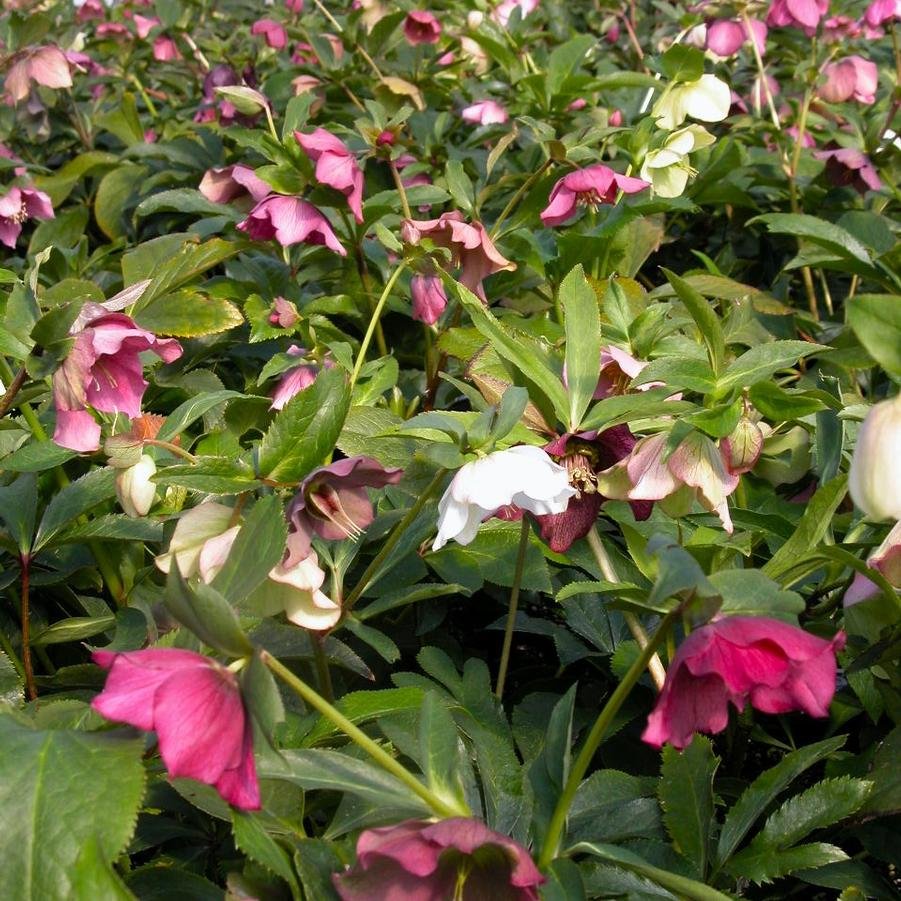 Image 2 of 2
Helleborus hyb. 'Pine Knot Select'
Category: Perennials
Hardiness Zone: 5-9
Height: 12-18 in
Spread: 12-18 in
Bloom Color: Multi-Color
Helleborus hybridus 'Pine Knot Select'.
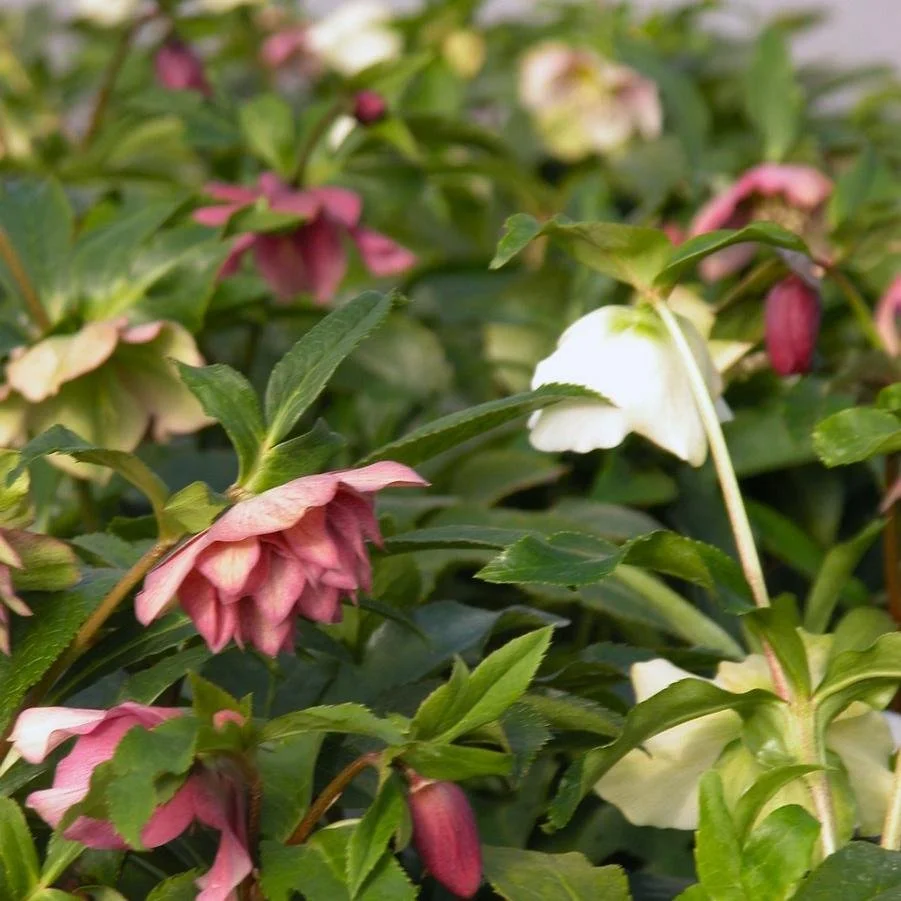
Variety of colors of both single and semi-double hybrids
Yellows, whites, pinks, reds, purples will continually delight any gardener
Developed by Judith and Dick Tyler at Pine Knot Farms
Although the foliage is evergreen, it may become scorched and tattered in extremely harsh winters, particularly if not sited in locations protected from cold winter winds and/or insulated by snow cover. Cut back flowering stems after bloom to promote new foliage growth. Established plants that become congested may be divided in late summer to early fall. Hybrid hellebores are often grown from seed (some come true and some don’t), but plants will take two years to bloom when grown from seed.
‘Pine Knot Best Strain’ is a selection of unbloomed seedlings in mixed colors of the best single and semi-double hybrid hellebores which have been developed by Judith and Dick Tyler of Pine Knot Farms in Clarksville, Virginia. Large variety of color combinations and patterns. Plants typically grow to 16” tall. Seedlings are sold in cell packs.
Hybrid hellebores, sometimes commonly called hybrid Lenten roses or hybrid winter roses, are bushy, clump-forming perennials which typically grow to 12-15” tall. They are noted for producing single, cup-shaped flowers (typically 2-3” diameter) with five showy, usually overlapping petals (technically sepals), but sometimes come in a double flowered form. Flowers bloom in a large variety of colors, including various shades and tints of white, pink, red, purple, and yellow, and sometimes have inside spotting. Bloom typically commences in mid to late winter extending into early spring. Flowers appear at the tips of branched stems clad with evergreen dark green leaves which are divided into glossy, leathery, deeply-lobed, often toothed, lanceolate to elliptic segments.
Genus name comes from the Greek words bora meaning "food" and helein meaning "injures/destroys" in reference to the plant’s toxic leaves, stems and roots which are poisonous to humans if ingested.
No serious insect or disease problems. Crown rot and leaf spot are occasional problems. Leaves, stems and roots are poisonous.
Helleborus hyb. 'Pine Knot Select'
Category: Perennials
Hardiness Zone: 5-9
Height: 12-18 in
Spread: 12-18 in
Bloom Color: Multi-Color
Helleborus hybridus 'Pine Knot Select'.
Variety of colors of both single and semi-double hybrids
Yellows, whites, pinks, reds, purples will continually delight any gardener
Developed by Judith and Dick Tyler at Pine Knot Farms
Although the foliage is evergreen, it may become scorched and tattered in extremely harsh winters, particularly if not sited in locations protected from cold winter winds and/or insulated by snow cover. Cut back flowering stems after bloom to promote new foliage growth. Established plants that become congested may be divided in late summer to early fall. Hybrid hellebores are often grown from seed (some come true and some don’t), but plants will take two years to bloom when grown from seed.
‘Pine Knot Best Strain’ is a selection of unbloomed seedlings in mixed colors of the best single and semi-double hybrid hellebores which have been developed by Judith and Dick Tyler of Pine Knot Farms in Clarksville, Virginia. Large variety of color combinations and patterns. Plants typically grow to 16” tall. Seedlings are sold in cell packs.
Hybrid hellebores, sometimes commonly called hybrid Lenten roses or hybrid winter roses, are bushy, clump-forming perennials which typically grow to 12-15” tall. They are noted for producing single, cup-shaped flowers (typically 2-3” diameter) with five showy, usually overlapping petals (technically sepals), but sometimes come in a double flowered form. Flowers bloom in a large variety of colors, including various shades and tints of white, pink, red, purple, and yellow, and sometimes have inside spotting. Bloom typically commences in mid to late winter extending into early spring. Flowers appear at the tips of branched stems clad with evergreen dark green leaves which are divided into glossy, leathery, deeply-lobed, often toothed, lanceolate to elliptic segments.
Genus name comes from the Greek words bora meaning "food" and helein meaning "injures/destroys" in reference to the plant’s toxic leaves, stems and roots which are poisonous to humans if ingested.
No serious insect or disease problems. Crown rot and leaf spot are occasional problems. Leaves, stems and roots are poisonous.