

 Image 1 of 2
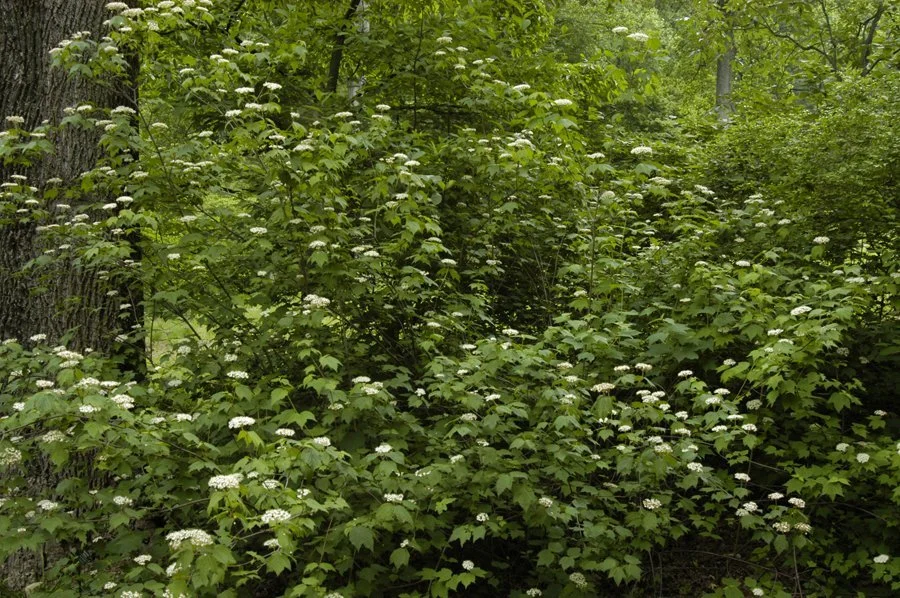 Image 2 of 2
Viburnum acerifolium
Maryland Distribution: throughout the state; primarily upland woods, including dry hillsides
Height: 3 to 6 feet tall
Flowers: clusters of white flowers from white or pink buds; May-June; insect-pollinated
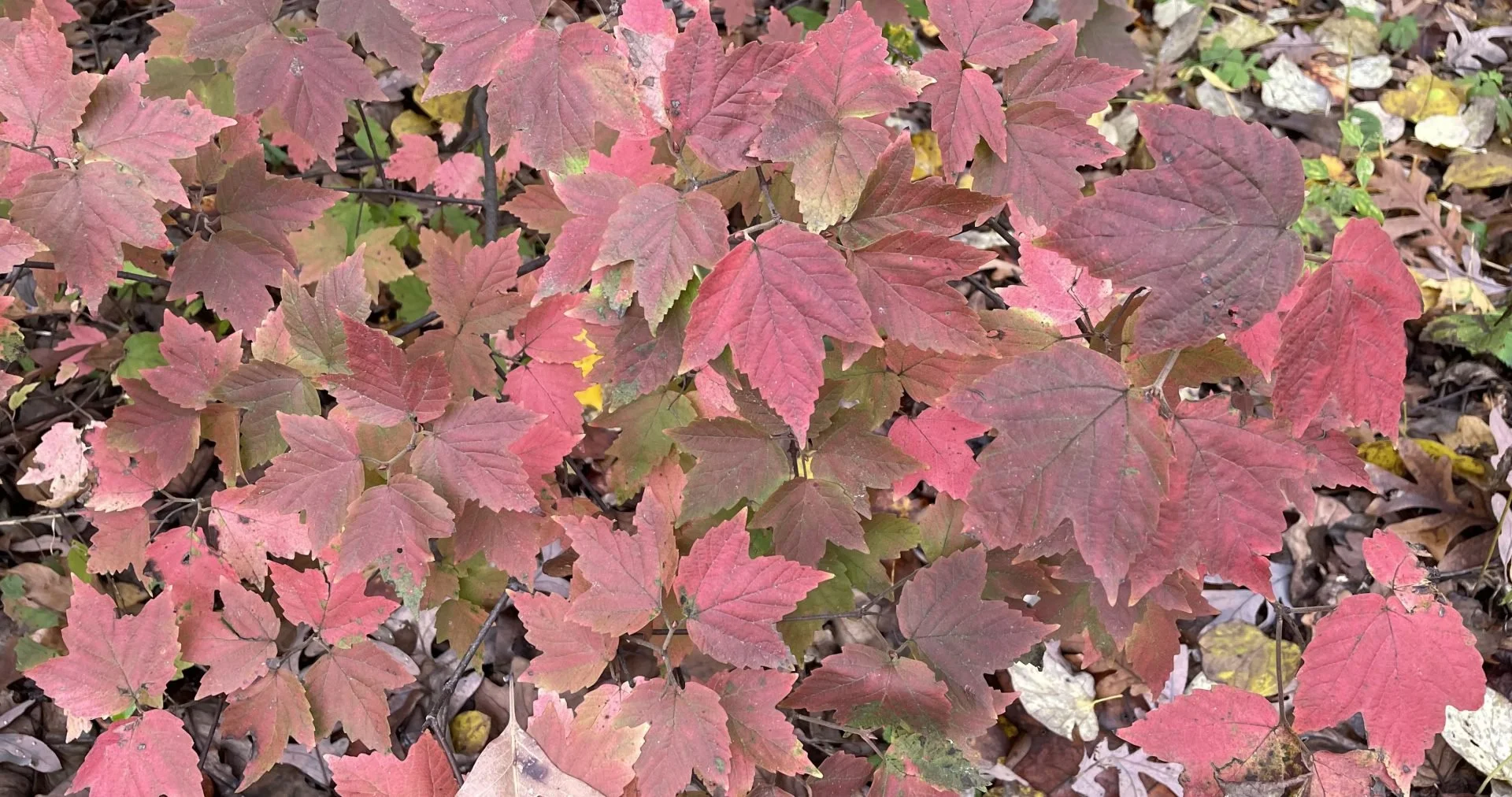
Fall color: variable, though often pinkish-red; may be pale to fluorescent rosy-pink, smoky burgundy, purplish, golden yellow, or occasionally bronzy-orange
Sun: part sun to shade
Soil: moist to dry; unbothered by rocky soils; acidic (pH below 6.0)
Easily grown in average, medium moisture, well-drained soil in full sun to part shade. This shrub is generally more shade tolerant than many of the other species of Viburnum. Prefers moist loams, but tolerates a wide range of soils. Established plants have some drought tolerance.
Viburnum acerifolium, commonly called mapleleaf viburnum, is native to eastern North America. It is a relatively small, rounded, suckering, deciduous, woodland shrub that typically grows to 3-6’ tall and 2-4’ wide. It produces dull to medium green maple-like leaves (2-5” long) which are opposite, ovate to rounded, coarsely toothed and three-lobed. Leaves usually have small black spotting on the undersides. Tiny white flowers in long-stalked, flat-topped cymes (to 3” across) bloom in mid to late spring. Flowers give way to pea-sized fruit the ripen to bluish-black in late summer. Leaves produce excellent reddish-purple to magenta fall color.
Genus name comes from the Latin name of a species plant.
Specific epithet means leaves like those of maple Acer.
No serious insect or disease problems.
Naturalize in open woodland areas. Also may be used in shrub borders, foundations or hedges.
Viburnum acerifolium
Maryland Distribution: throughout the state; primarily upland woods, including dry hillsides
Height: 3 to 6 feet tall
Flowers: clusters of white flowers from white or pink buds; May-June; insect-pollinated
Fall color: variable, though often pinkish-red; may be pale to fluorescent rosy-pink, smoky burgundy, purplish, golden yellow, or occasionally bronzy-orange
Sun: part sun to shade
Soil: moist to dry; unbothered by rocky soils; acidic (pH below 6.0)
Easily grown in average, medium moisture, well-drained soil in full sun to part shade. This shrub is generally more shade tolerant than many of the other species of Viburnum. Prefers moist loams, but tolerates a wide range of soils. Established plants have some drought tolerance.
Viburnum acerifolium, commonly called mapleleaf viburnum, is native to eastern North America. It is a relatively small, rounded, suckering, deciduous, woodland shrub that typically grows to 3-6’ tall and 2-4’ wide. It produces dull to medium green maple-like leaves (2-5” long) which are opposite, ovate to rounded, coarsely toothed and three-lobed. Leaves usually have small black spotting on the undersides. Tiny white flowers in long-stalked, flat-topped cymes (to 3” across) bloom in mid to late spring. Flowers give way to pea-sized fruit the ripen to bluish-black in late summer. Leaves produce excellent reddish-purple to magenta fall color.
Genus name comes from the Latin name of a species plant.
Specific epithet means leaves like those of maple Acer.
No serious insect or disease problems.
Naturalize in open woodland areas. Also may be used in shrub borders, foundations or hedges.