

 Image 1 of 2
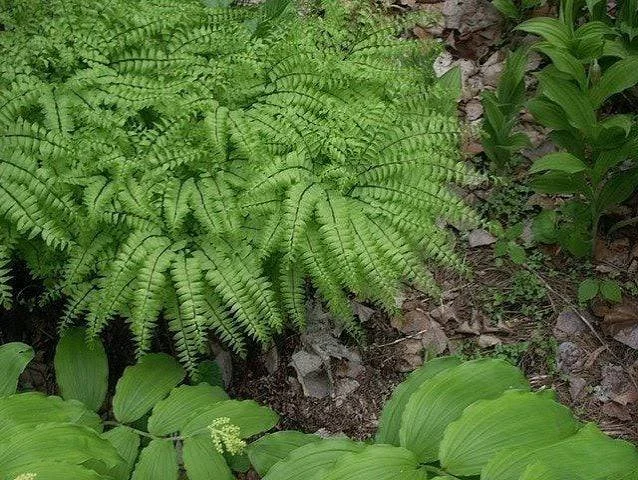 Image 2 of 2
Adiantum pedatum
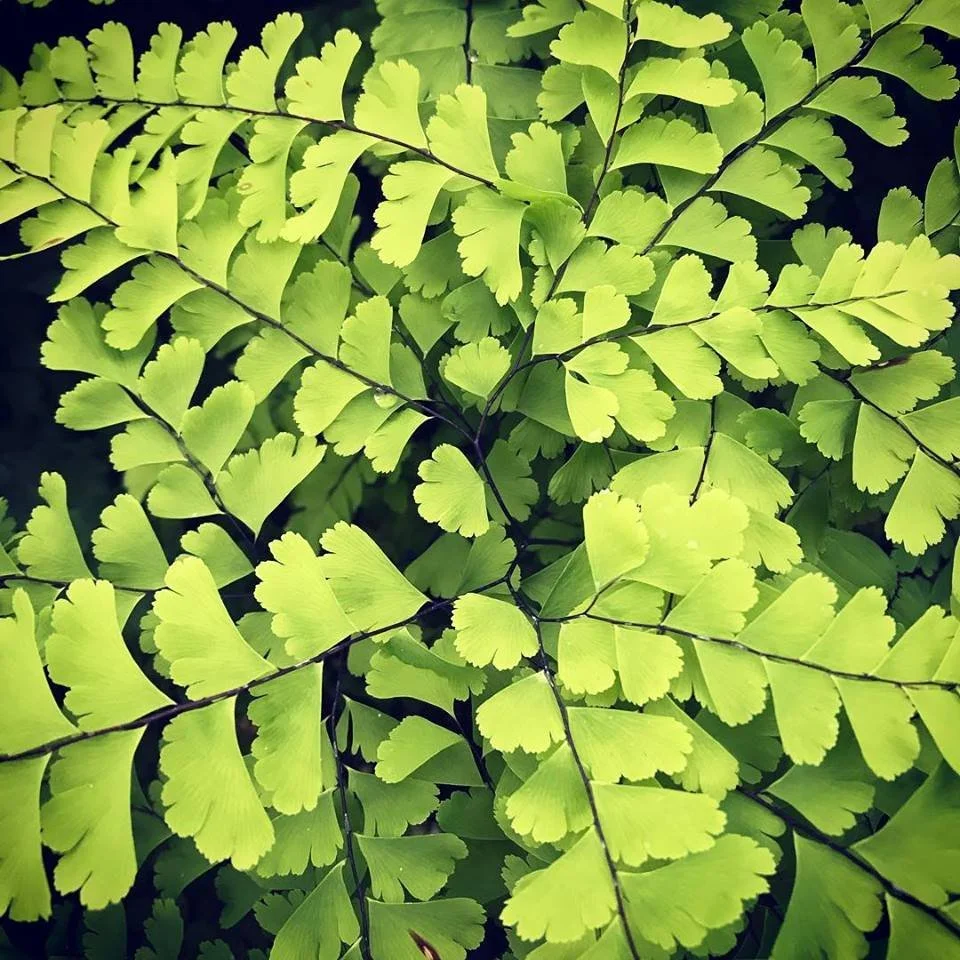
Light green delicate leaves on shiny dark stems
Burgundy red fiddle-heads appear in early spring, reproduces by spores in June- August
Good ground cover for the woodland garden
Forms colonies by means of creeping rhizomes
Prefers moist , well drained soil, nutrient - rich soils, not drought tolerant
Natural habitat: mountains
Provides shelter for toads and lizards
Category: Ferns, Natives, MD Native Plants
Height: 8-20 in
Spread: 1-2 ft
Spacing: 18-24 in
Bloom Color: Non-Flowering
Foliage Color: Green
Easily grown in average, medium, well-drained soil in part shade to full shade. Prefers moist, humusy, acidic soils in full shade. Spreads slowly by creeping, branching rhizomes to form large colonies over time.
Adiantum pedatum, commonly called northern maidenhair fern, is a deciduous, clump-forming, native fern which typically grows 1.5 to 2' tall and is most frequently found on rich wooded slopes, ravine bottoms and damp shady woods. Features finely-textured, somewhat frilly fronds which have curved stalks and are palmately-divided (i.e., fronds divide into finger-like projections). Wiry stems are reddish-brown to black. Crosiers (coiled young fiddleheads) emerge pink in spring.
Genus name comes from the Greek word adiantos meaning unwetted in reference to the water repellent foliage.
Specific epithet means cut like a bird's foot in reference to the fronds.
No serious insect or disease problems. High summer heat may cause fronds to brown by mid to late summer, particularly if good soil moisture is not maintained and/or plants are grown in too much sun.
Adiantum pedatum
Light green delicate leaves on shiny dark stems
Burgundy red fiddle-heads appear in early spring, reproduces by spores in June- August
Good ground cover for the woodland garden
Forms colonies by means of creeping rhizomes
Prefers moist , well drained soil, nutrient - rich soils, not drought tolerant
Natural habitat: mountains
Provides shelter for toads and lizards
Category: Ferns, Natives, MD Native Plants
Height: 8-20 in
Spread: 1-2 ft
Spacing: 18-24 in
Bloom Color: Non-Flowering
Foliage Color: Green
Easily grown in average, medium, well-drained soil in part shade to full shade. Prefers moist, humusy, acidic soils in full shade. Spreads slowly by creeping, branching rhizomes to form large colonies over time.
Adiantum pedatum, commonly called northern maidenhair fern, is a deciduous, clump-forming, native fern which typically grows 1.5 to 2' tall and is most frequently found on rich wooded slopes, ravine bottoms and damp shady woods. Features finely-textured, somewhat frilly fronds which have curved stalks and are palmately-divided (i.e., fronds divide into finger-like projections). Wiry stems are reddish-brown to black. Crosiers (coiled young fiddleheads) emerge pink in spring.
Genus name comes from the Greek word adiantos meaning unwetted in reference to the water repellent foliage.
Specific epithet means cut like a bird's foot in reference to the fronds.
No serious insect or disease problems. High summer heat may cause fronds to brown by mid to late summer, particularly if good soil moisture is not maintained and/or plants are grown in too much sun.