

 Image 1 of 3
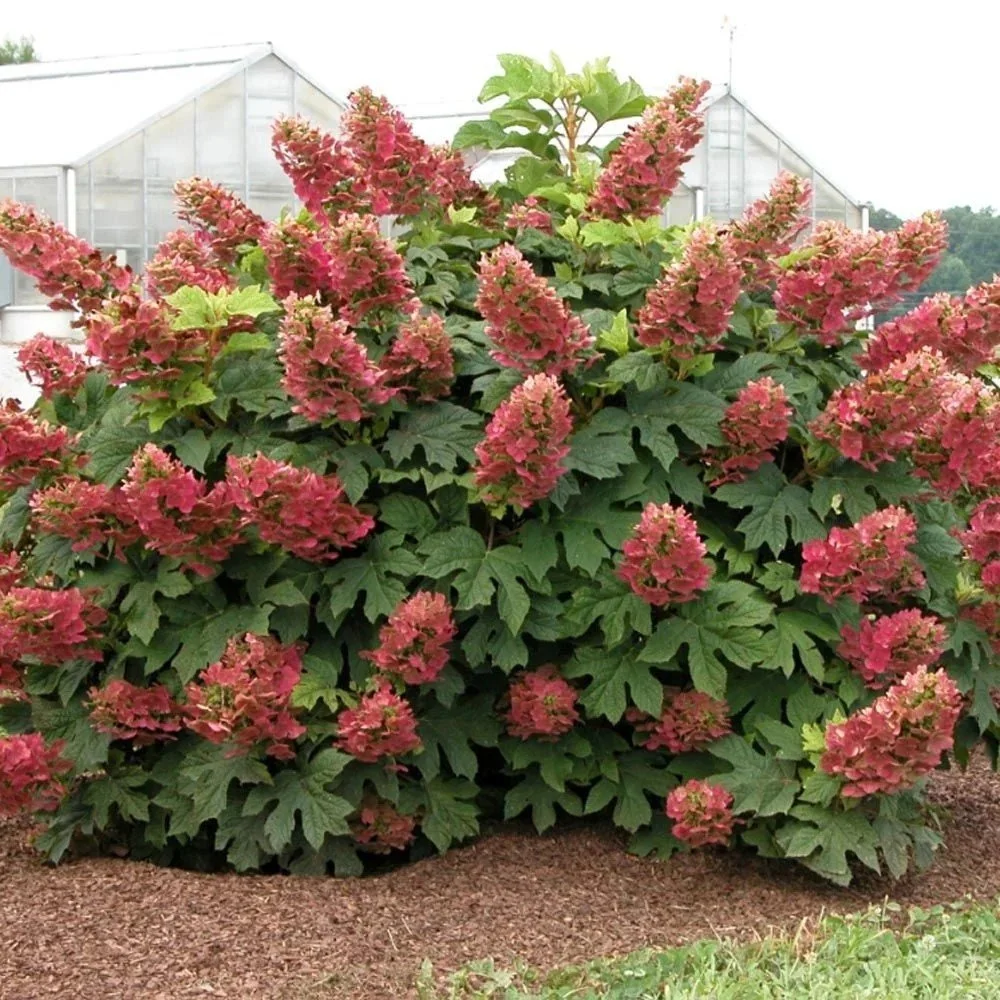 Image 2 of 3
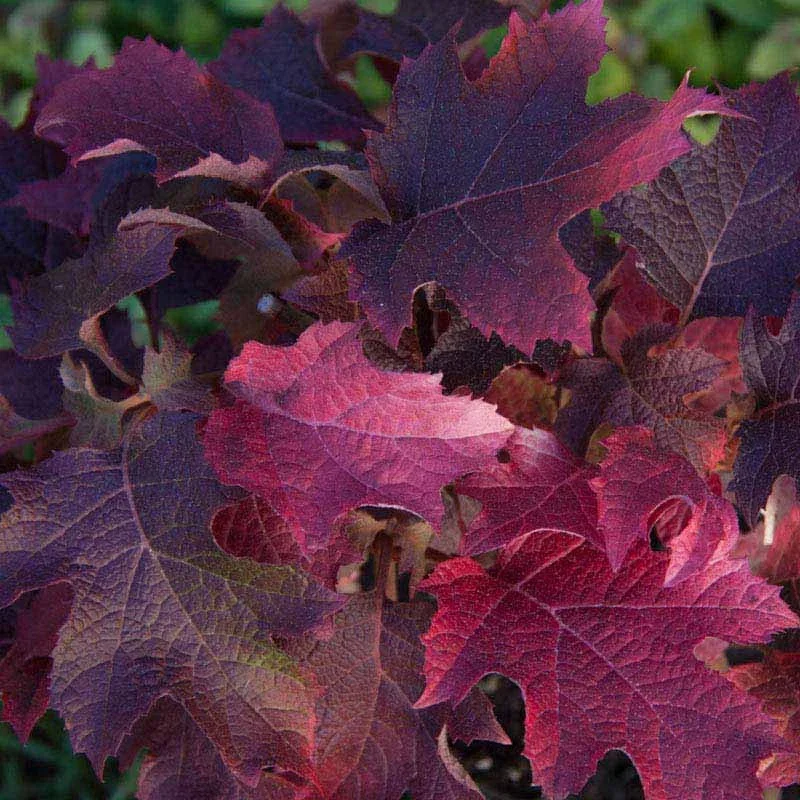 Image 3 of 3
LIGHT: Filtered sun, Partial shade, Partial sun
WATER: Water when top 2 inches of soil is dry.
SIZE: Quickly reaches 3 to 4 ft. tall, 4 to 5 ft. wide.
Native, Deciduous Shrub
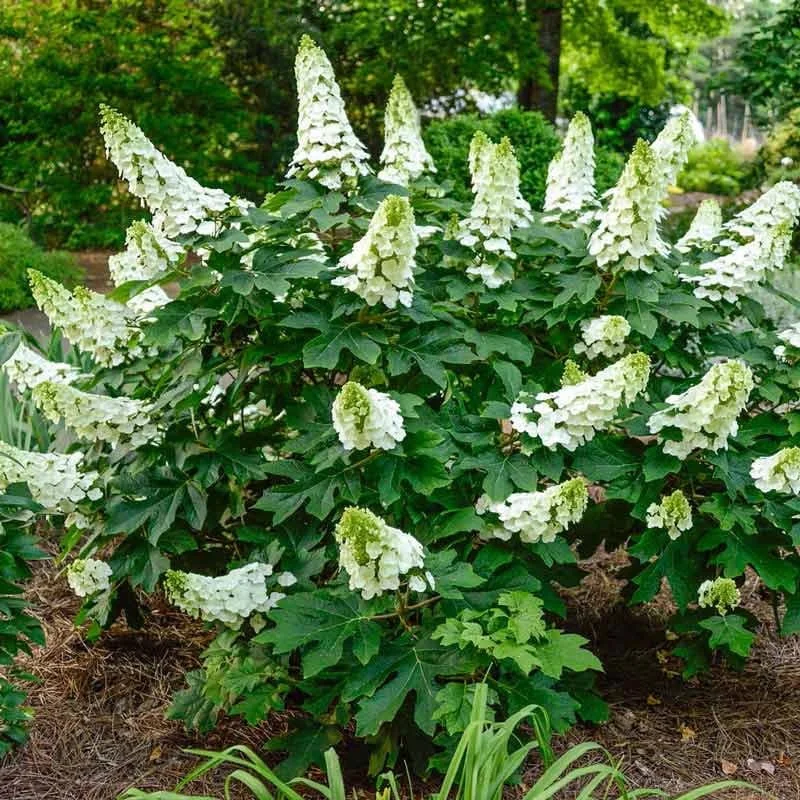
A profusion of exceptionally large white blooms in summer that quickly age to deep pink. Robust blooms remain upright even after heavy rains. Dark green, deeply lobed oak-like foliage turns brilliant mahogany in fall. The compact form works in smaller landscapes and is useful for mass planting, hedges or borders. Deciduous.
Easily grown in organically rich, medium moisture, well-drained soils in full sun to part shade. Thrives in moist soils, and appreciates a summer mulch which helps retain soil moisture. Bloom occurs on old wood. Prune if needed immediately after flowering (little pruning is usually needed). Winter damaged stems may be pruned in early spring.
Hydrangea quercifolia, commonly called oakleaf hydrangea, is an upright, broad-rounded, suckering, multi-stemmed, deciduous shrub that typically grows 4-6' (less frequently to 8') tall. It is native to bluffs, moist woods, ravines and stream banks from Georgia to Florida to Louisiana. It is noted for producing pyramidal panicles of white flowers in summer on exfoliating branches clad with large, 3-7 lobed, oak-like, dark green leaves.
The genus name Hydrangea comes from hydor meaning "water" and aggeion meaning "vessel", in reference to the cup-like capsular fruits.
Specific epithet is in reference to the leaves that look like those of Quercus (oak).
No serious insect or disease problems. Some susceptibility to leaf blight and powdery mildew. Aphids and spider mites are occasional visitors.
Effective as a specimen or accent for foundations or other locations near homes or patios. Group or mass in shrub borders or in open woodland areas. Good informal hedge. Exfoliating mature branches provide interesting color and texture in winter.