

 Image 1 of 2
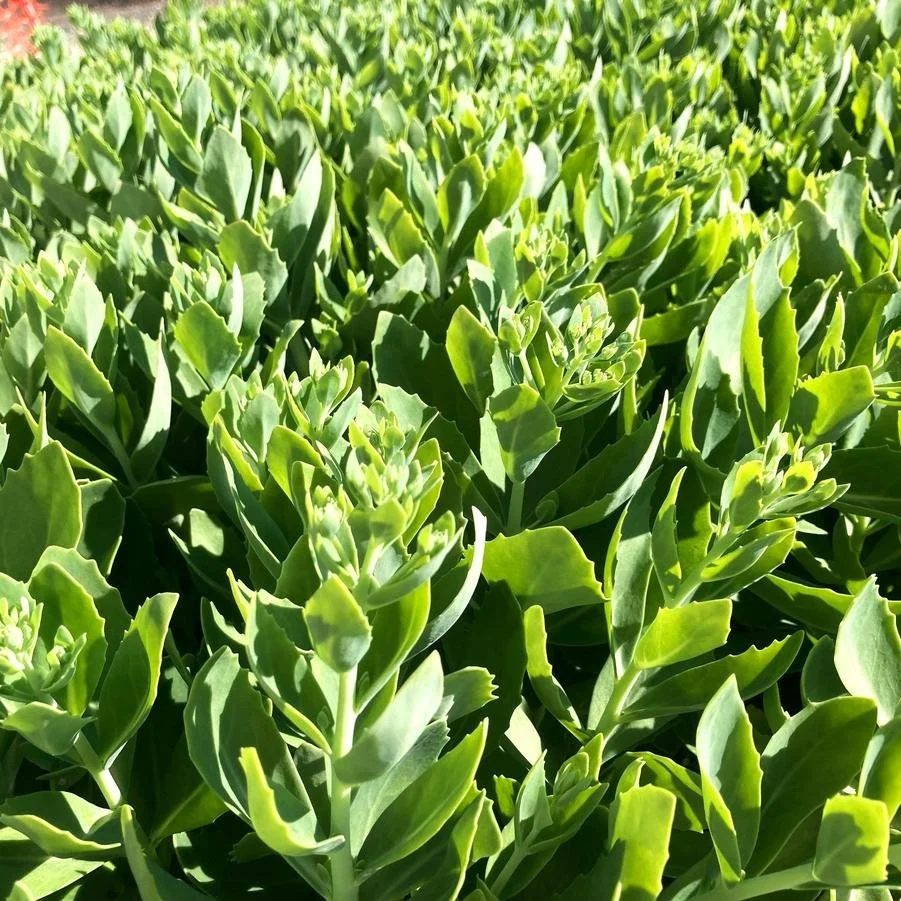 Image 2 of 2
Sedum spectabiles ‘Autumn Fire’
A improved form of S. 'Autumn Joy'
Holds up better against the elements and does not collapse
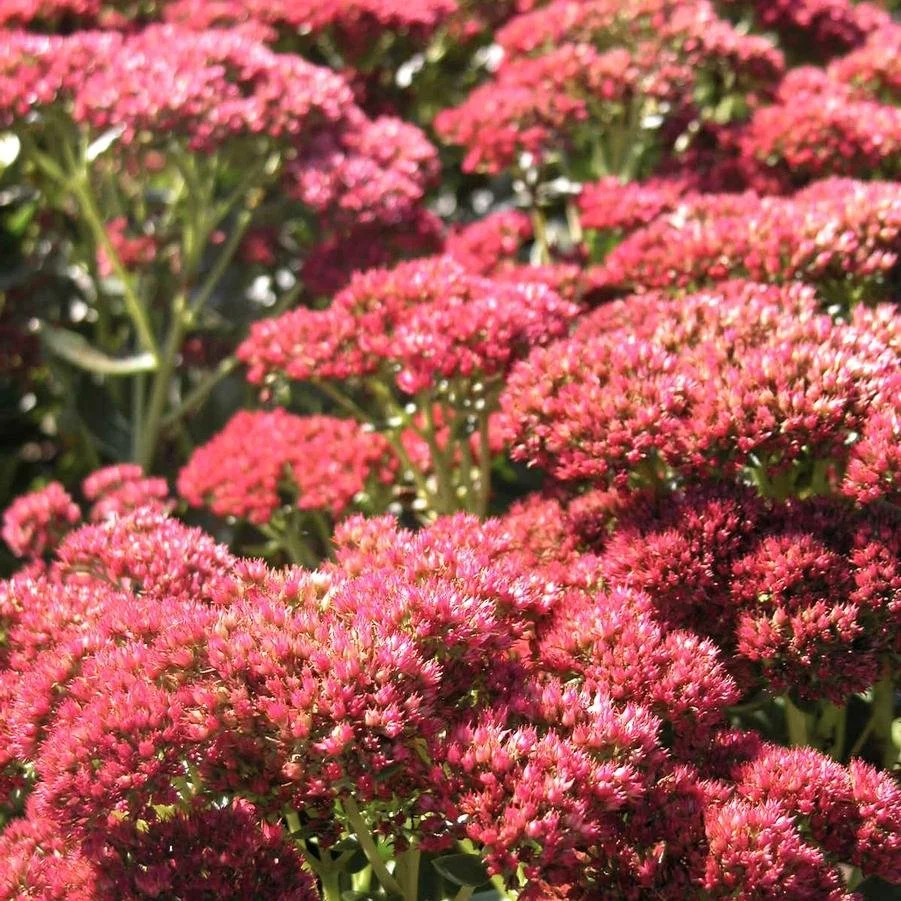
Flowers appear in July and change from pale green to pink to bronze in September
Full sun and well drained soils
Category: Perennials
Height: 20-30 in
Spread: 15-18 in
Foliage Color: Gray-green
Remove spent foliage as desired.
Easily grown in average, dry to medium, well-drained soils in full sun. Thrives in sandy to gravelly soils of moderate to low fertility. Tolerates some light part shade in hot summer climates, but will produce weak floppy growth when grown in too much shade or in overly rich soils. Needs good soil drainage to perform well. Drought tolerant. Propagate by divisions in spring or stem cuttings in summer. Detached leaves can be rooted in soil to form new plants.
‘Autumn Fire’ typically grows in upright to slightly spreading clumps to 15-18” tall, with flowers bringing overall plant height to as much as 24” tall. Dense masses of tiny, star-like, rose pink flowers bloom in large, rounded, flattened heads (cymes to 6” across) atop stout stems clad with dentate, fleshy, rounded, succulent-like, light gray-green leaves. Flowers age to salmon bronze and finally brick red. Long late summer to fall bloom period. May be sold as Sedum spectabile ‘Autumn Fire’.
Genus name probably honor Telephus, King of Mysia and son of Hercules.
Specific epithet from Latin means spectacular or showy.
Common name of stonecrop is in reference to the fact that many hylotelephiums and sedums are typically found in the wild growing on rocky or stony ledges. Common name of live-forever is in reference to the vigorous and persistent characteristics of this plant which is easy to grow (will regenerate from a single leaf) and whose mature foliage will remain for some time on cut stems or uprooted plants without falling off. Common name of orpine comes from the Old French word orpiment in reference to an ancient variety of Sedum.
No serious insect or disease problems. Slugs, scale, mealybugs, nematodes, aphids and weevils may occasionally appear.
Sedum spectabiles ‘Autumn Fire’
A improved form of S. 'Autumn Joy'
Holds up better against the elements and does not collapse
Flowers appear in July and change from pale green to pink to bronze in September
Full sun and well drained soils
Category: Perennials
Height: 20-30 in
Spread: 15-18 in
Foliage Color: Gray-green
Remove spent foliage as desired.
Easily grown in average, dry to medium, well-drained soils in full sun. Thrives in sandy to gravelly soils of moderate to low fertility. Tolerates some light part shade in hot summer climates, but will produce weak floppy growth when grown in too much shade or in overly rich soils. Needs good soil drainage to perform well. Drought tolerant. Propagate by divisions in spring or stem cuttings in summer. Detached leaves can be rooted in soil to form new plants.
‘Autumn Fire’ typically grows in upright to slightly spreading clumps to 15-18” tall, with flowers bringing overall plant height to as much as 24” tall. Dense masses of tiny, star-like, rose pink flowers bloom in large, rounded, flattened heads (cymes to 6” across) atop stout stems clad with dentate, fleshy, rounded, succulent-like, light gray-green leaves. Flowers age to salmon bronze and finally brick red. Long late summer to fall bloom period. May be sold as Sedum spectabile ‘Autumn Fire’.
Genus name probably honor Telephus, King of Mysia and son of Hercules.
Specific epithet from Latin means spectacular or showy.
Common name of stonecrop is in reference to the fact that many hylotelephiums and sedums are typically found in the wild growing on rocky or stony ledges. Common name of live-forever is in reference to the vigorous and persistent characteristics of this plant which is easy to grow (will regenerate from a single leaf) and whose mature foliage will remain for some time on cut stems or uprooted plants without falling off. Common name of orpine comes from the Old French word orpiment in reference to an ancient variety of Sedum.
No serious insect or disease problems. Slugs, scale, mealybugs, nematodes, aphids and weevils may occasionally appear.