

 Image 1 of 2
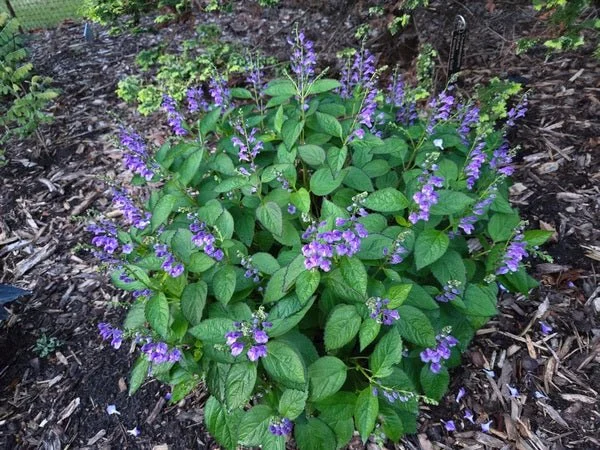 Image 2 of 2
Scutellaria 'Appalachian Blues'
Scutellaria ovata x serrata 'Appalachian Blues.
A new and distinct cultivar of Scutellaria.
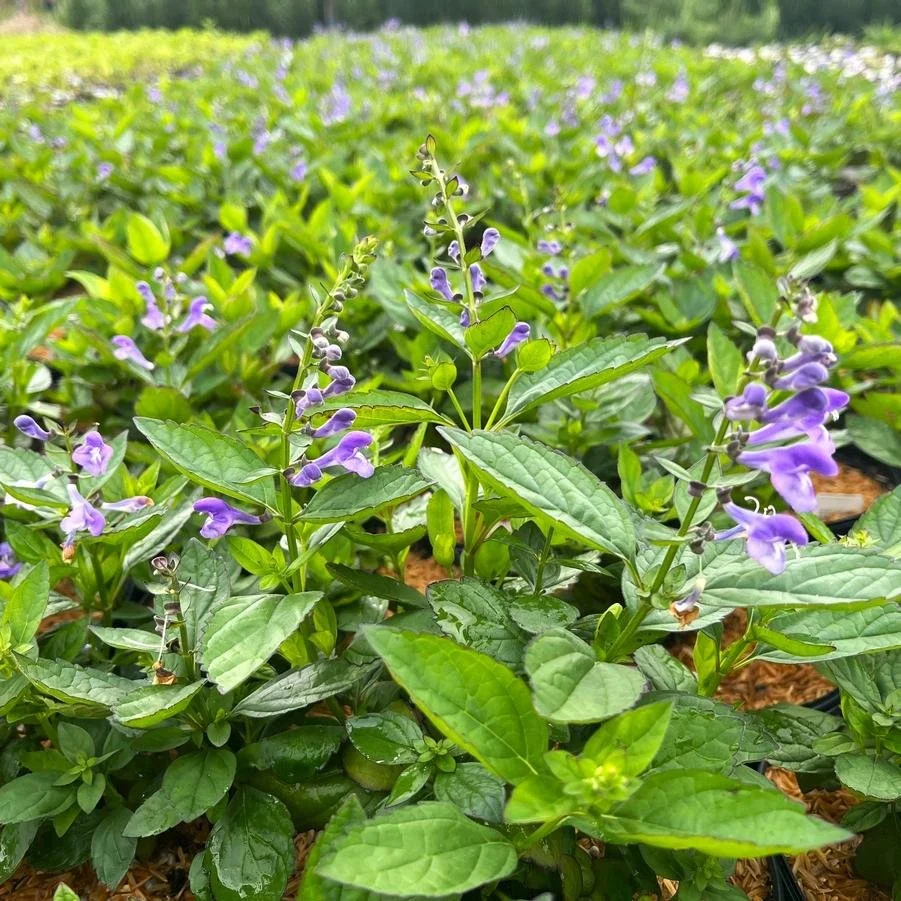
Spikes of small, salvia-like, Bicolored blueish-purple-white flowers in late spring.
Serrated, dark green leaves.
Compact, clumping habit.
This naturally occurring hybrid of 2 North American species of S. ovata and S.serrata was selected by Peter Heus and introduced by Plants Nouveau.
Category: Perennials, Native Selection
Patent: PP34854
Height: 22-24 in
Spread: 20-24 in
Bloom Color: Bicolor violet-blue and white
Foliage Color: Green
Provide part or full shade and dry, average soil. It will also grow in full sun, but may require more water to flourish there.
The leaves of blue skullcap have a history of use in herbal medicines as a sedative and tranquilizer and for treatment of a variety of conditions including insomnia, anxiety, convulsions and certain neurological disorders.
The genus name Scutellaria comes from the Latin word scutella meaning "small dish" or "saucer" in reference to the shape of the persistent calyces. The common name skullcap is given to many members of this genus and also refers to the shape of the persistent calyces which are said to resemble a helmet.
Specific epithet means side-flowering in reference to the one-sided floral racemes.
Common name of skullcap is in reference to the cap-like shape of the flowers and seed capsules which purportedly resemble the military helmets worn by men in the Middle Ages.
No serious insect or disease problems. Powdery mildew and leaf spot may occur. Watch for aphids.
Scutellaria 'Appalachian Blues'
Scutellaria ovata x serrata 'Appalachian Blues.
A new and distinct cultivar of Scutellaria.
Spikes of small, salvia-like, Bicolored blueish-purple-white flowers in late spring.
Serrated, dark green leaves.
Compact, clumping habit.
This naturally occurring hybrid of 2 North American species of S. ovata and S.serrata was selected by Peter Heus and introduced by Plants Nouveau.
Category: Perennials, Native Selection
Patent: PP34854
Height: 22-24 in
Spread: 20-24 in
Bloom Color: Bicolor violet-blue and white
Foliage Color: Green
Provide part or full shade and dry, average soil. It will also grow in full sun, but may require more water to flourish there.
The leaves of blue skullcap have a history of use in herbal medicines as a sedative and tranquilizer and for treatment of a variety of conditions including insomnia, anxiety, convulsions and certain neurological disorders.
The genus name Scutellaria comes from the Latin word scutella meaning "small dish" or "saucer" in reference to the shape of the persistent calyces. The common name skullcap is given to many members of this genus and also refers to the shape of the persistent calyces which are said to resemble a helmet.
Specific epithet means side-flowering in reference to the one-sided floral racemes.
Common name of skullcap is in reference to the cap-like shape of the flowers and seed capsules which purportedly resemble the military helmets worn by men in the Middle Ages.
No serious insect or disease problems. Powdery mildew and leaf spot may occur. Watch for aphids.