

 Image 1 of 2
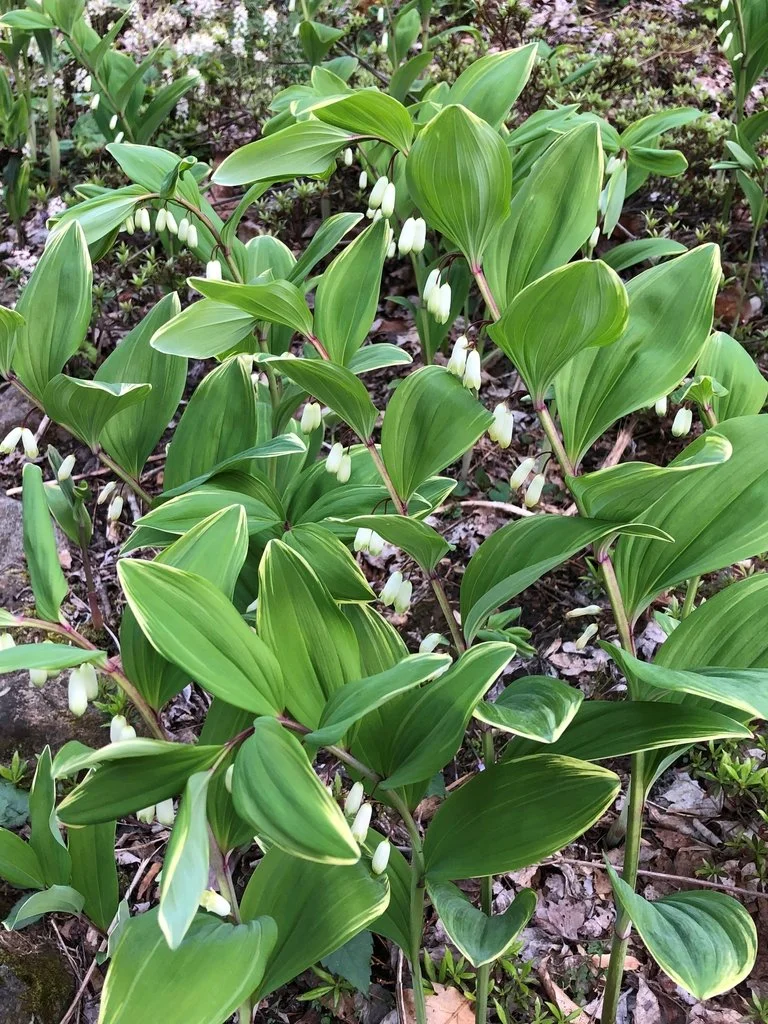 Image 2 of 2
Polygonatum biflorum var. commutatum
Height: 3.00 to 7.00 feet
Spread: 3.00 to 4.00 feet
Bloom Time: May to June
Bloom Description: Greenish-white
Sun: Part shade to full shade
Water: Medium to wet to dry
Maintenance: Low
Flower: Showy
Fruit: Showy
Easily grown in average, medium to wet soils in part shade to full shade. Will tolerate dry shade. Slowly spreads by rhizomes to form colonies in optimum growing conditions. Can be difficult to grow from seed.
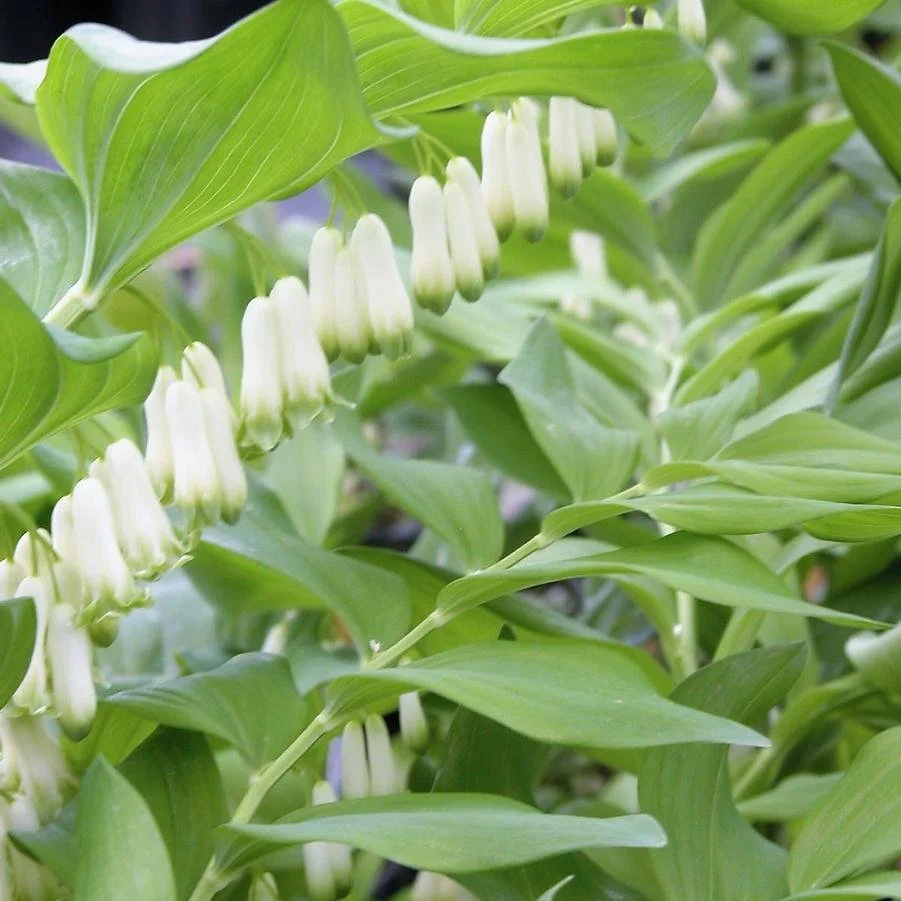
Polygonatum biflorum var. commutatum, commonly called Great Solomon's seal, is native. It is a substantial plant that typically grows 3-5' (occasionally to 7') tall on stout, arching stems. Bell-shaped, greenish-white flowers dangle in spring from the leaf axils along and underneath the arching stems. Flowers appear in clusters of 2-10 per leaf axil. Flowers are followed by inedible but ornamentally attractive blue-black berries which dangle from the stems. Conspicuously parallel-veined, alternate leaves (to 7" long). Starchy, edible rhizomes were formerly used by early Americans as a potato-like food. Common name is usually considered to be in reference to the large, circular seals (leaf stalk scars) located on the rhizomes. However, Edgar Denison suggests that the name actually refers to "wound sealing properties" of the plant. Nomenclature of this plant is somewhat confused. Both a smooth small Solomon's seal (to 3' tall) and a great Solomon's seal (to 7' tall) are native to eastern North America.
Genus name comes from Greek words poly meaning many and gonu meaning knee joint in reference to the jointed plant rhizomes. Early herbalists believed that plants with jointed rhizomes were helpful in treating human joint disorders.
Specific epithet means twin-flowered.
No serious insect or disease problems.
Polygonatum biflorum var. commutatum
Height: 3.00 to 7.00 feet
Spread: 3.00 to 4.00 feet
Bloom Time: May to June
Bloom Description: Greenish-white
Sun: Part shade to full shade
Water: Medium to wet to dry
Maintenance: Low
Flower: Showy
Fruit: Showy
Easily grown in average, medium to wet soils in part shade to full shade. Will tolerate dry shade. Slowly spreads by rhizomes to form colonies in optimum growing conditions. Can be difficult to grow from seed.
Polygonatum biflorum var. commutatum, commonly called Great Solomon's seal, is native. It is a substantial plant that typically grows 3-5' (occasionally to 7') tall on stout, arching stems. Bell-shaped, greenish-white flowers dangle in spring from the leaf axils along and underneath the arching stems. Flowers appear in clusters of 2-10 per leaf axil. Flowers are followed by inedible but ornamentally attractive blue-black berries which dangle from the stems. Conspicuously parallel-veined, alternate leaves (to 7" long). Starchy, edible rhizomes were formerly used by early Americans as a potato-like food. Common name is usually considered to be in reference to the large, circular seals (leaf stalk scars) located on the rhizomes. However, Edgar Denison suggests that the name actually refers to "wound sealing properties" of the plant. Nomenclature of this plant is somewhat confused. Both a smooth small Solomon's seal (to 3' tall) and a great Solomon's seal (to 7' tall) are native to eastern North America.
Genus name comes from Greek words poly meaning many and gonu meaning knee joint in reference to the jointed plant rhizomes. Early herbalists believed that plants with jointed rhizomes were helpful in treating human joint disorders.
Specific epithet means twin-flowered.
No serious insect or disease problems.