

 Image 1 of 2
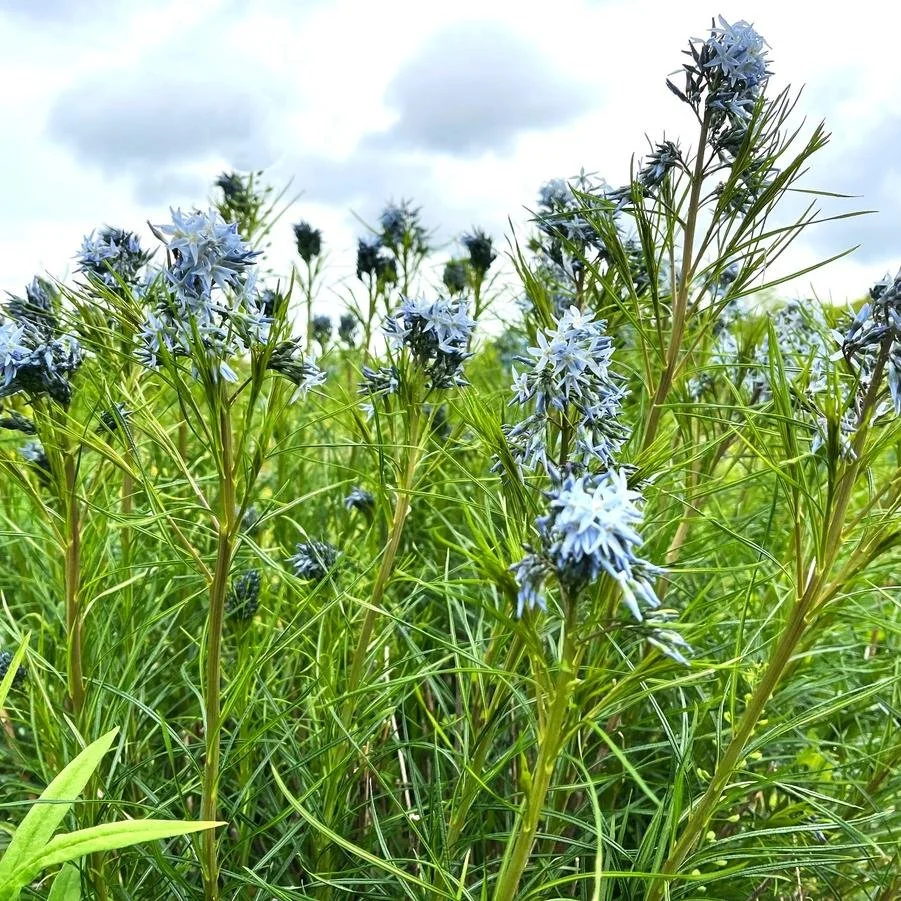 Image 2 of 2
Amsonia hubrichtii
Long lived and graceful native plant
Very fine thread- like foliage
Blue star shaped flowers in May
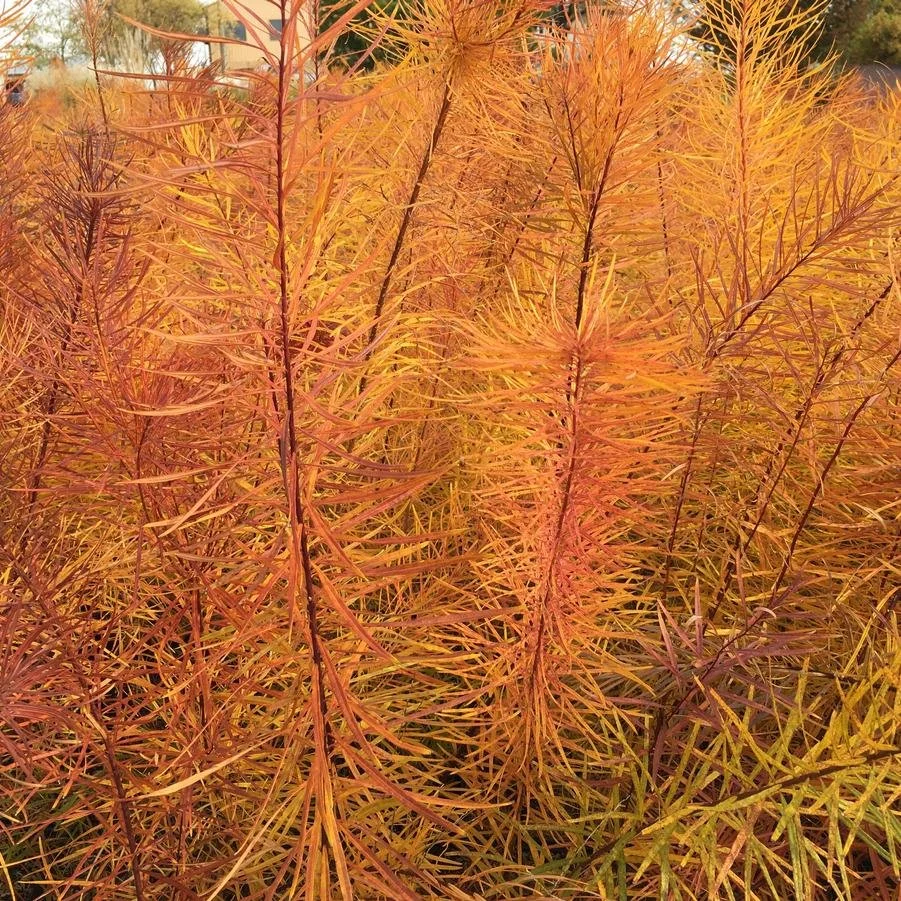
Excellent golden fall foliage
Category: Perennials, Natives
Height: 36-48 in
Spread: 24-36 in
Bloom Color: Blue
Foliage Color: Green
Easily grown in average, medium, well-drained soil in full sun to part shade. Tolerant of a wide range of soil types including clayey soils. Best fall foliage color usually occurs in full sun, but flowers generally last longer if given some afternoon shade in hot sun areas. Stems tend to open up and flop in too much shade, however. Consider cutting back the stems by about 6" after flowering to help keep stems upright and to shape plants into a nice foliage mound.
Amsonia hubrichtii, commonly called threadleaf bluestar or Hubricht's bluestar, is herbaceous perennial that is native to the Ouachita Mountains in central Arkansas. An erect, clump-forming plant that is primarily grown in cultivation for its blue spring flowers, feathery green summer foliage and golden fall color. Powdery blue, 1/2" star-like flowers appear in terminal clusters in late spring atop stems rising to 3' tall. Feathery, soft-textured, needle-like, alternate leaves are bright green in spring and summer, but turn bright gold in autumn. Stems and leaves produce a milky latex when cut or torn which protects the plant from herbivory. The blooms are attractive to butterflies and other insect pollinators.
Genus name honors Dr. John Amson (1698-1765?), an English physician and amateur botanist who lived and worked in Williamsburg, Virginia during the colonial period.
Specific epithet honors Leslie Hubricht (1908-2005), American biologist who first discovered it growing in the wild in the early 1940s.
No serious insect or disease problems. Plants may flop, particularly if not cut back after flowering. Deer tend to avoid this plant.
Amsonia hubrichtii
Long lived and graceful native plant
Very fine thread- like foliage
Blue star shaped flowers in May
Excellent golden fall foliage
Category: Perennials, Natives
Height: 36-48 in
Spread: 24-36 in
Bloom Color: Blue
Foliage Color: Green
Easily grown in average, medium, well-drained soil in full sun to part shade. Tolerant of a wide range of soil types including clayey soils. Best fall foliage color usually occurs in full sun, but flowers generally last longer if given some afternoon shade in hot sun areas. Stems tend to open up and flop in too much shade, however. Consider cutting back the stems by about 6" after flowering to help keep stems upright and to shape plants into a nice foliage mound.
Amsonia hubrichtii, commonly called threadleaf bluestar or Hubricht's bluestar, is herbaceous perennial that is native to the Ouachita Mountains in central Arkansas. An erect, clump-forming plant that is primarily grown in cultivation for its blue spring flowers, feathery green summer foliage and golden fall color. Powdery blue, 1/2" star-like flowers appear in terminal clusters in late spring atop stems rising to 3' tall. Feathery, soft-textured, needle-like, alternate leaves are bright green in spring and summer, but turn bright gold in autumn. Stems and leaves produce a milky latex when cut or torn which protects the plant from herbivory. The blooms are attractive to butterflies and other insect pollinators.
Genus name honors Dr. John Amson (1698-1765?), an English physician and amateur botanist who lived and worked in Williamsburg, Virginia during the colonial period.
Specific epithet honors Leslie Hubricht (1908-2005), American biologist who first discovered it growing in the wild in the early 1940s.
No serious insect or disease problems. Plants may flop, particularly if not cut back after flowering. Deer tend to avoid this plant.