

 Image 1 of 1
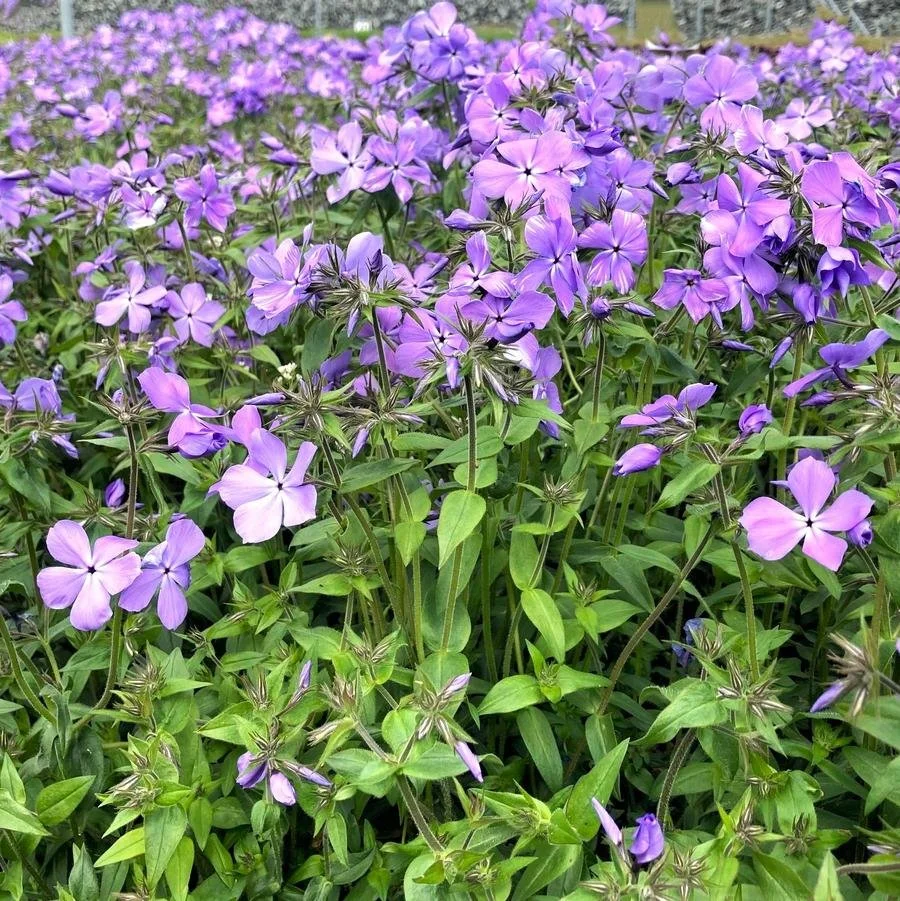
Phlox divaricata ‘Blue Moon’
Violet blue blooms April through May
Prefers rich, humusy, moist well drained soil
Category: Perennials, Native Selection
Height: 12-18 in
Spread: 8-12 in
Bloom Color: Violet- Blue
Best grown in humusy, medium moisture, well-drained soil in part shade to full shade. Prefers rich, organic soils with continuous, even moisture. Appreciates a light summer mulch which helps retain moisture and keep roots cool. If soils dry out, foliage decline will occur and plants may go into dormancy. Self-seeds in optimum growing conditions.
Phlox divaricata, commonly called woodland phlox, is a spreading, native, spring wildflower which forms mats of foliage with stems typically reaching 12-15" tall. As the common name suggests, this is a woodland variety which occurs in rich woods, fields and along streams. Loose clusters of fragrant, tubular, blue-violet flowers (to 1.5" wide) with five, flat, petal-like lobes appear at the stem tips in spring. Stems are both hairy and sticky. Lance-shaped to elliptic leaves (to 2" long). Can form large colonies over time as the leafy shoots spread along the ground rooting at the nodes.
Phlox divaricata is common throughout eastern North America.
The genus name is derived from the Greek word phlox meaning flame in reference to the intense flower colors of some varieties.
Specific epithet means spreading.
Powdery mildew can be a problem as summer humidity kicks in.Spider mites can also be a problem, particularly in hot, dry conditions. Watch out for rabbits.
Phlox divaricata ‘Blue Moon’
Violet blue blooms April through May
Prefers rich, humusy, moist well drained soil
Category: Perennials, Native Selection
Height: 12-18 in
Spread: 8-12 in
Bloom Color: Violet- Blue
Best grown in humusy, medium moisture, well-drained soil in part shade to full shade. Prefers rich, organic soils with continuous, even moisture. Appreciates a light summer mulch which helps retain moisture and keep roots cool. If soils dry out, foliage decline will occur and plants may go into dormancy. Self-seeds in optimum growing conditions.
Phlox divaricata, commonly called woodland phlox, is a spreading, native, spring wildflower which forms mats of foliage with stems typically reaching 12-15" tall. As the common name suggests, this is a woodland variety which occurs in rich woods, fields and along streams. Loose clusters of fragrant, tubular, blue-violet flowers (to 1.5" wide) with five, flat, petal-like lobes appear at the stem tips in spring. Stems are both hairy and sticky. Lance-shaped to elliptic leaves (to 2" long). Can form large colonies over time as the leafy shoots spread along the ground rooting at the nodes.
Phlox divaricata is common throughout eastern North America.
The genus name is derived from the Greek word phlox meaning flame in reference to the intense flower colors of some varieties.
Specific epithet means spreading.
Powdery mildew can be a problem as summer humidity kicks in.Spider mites can also be a problem, particularly in hot, dry conditions. Watch out for rabbits.