

Plant List
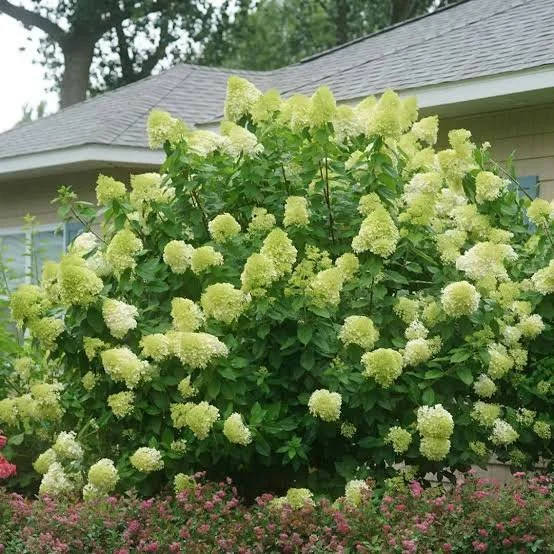
Hydrangea paniculata ‘Jane’
Mature Height:6-8 ft
.Mature Width:6-8 ft.
Sunlight:Partial Shade
Bloom Season(s):Spring Blooming, Summer Blooming, Fall Blooming
Growth Rate:Moderate Growing
Pruning and Care:
When to Prune Panicle Hydrangeas
These types of hydrangeas bloom on new wood. This makes them one of the easiest hydrangeas to prune as they can be pruned almost any time of year, except summer. They usually bloom in late summer so if you prune them at this time of year you’ll end up cutting off most of the flowers.
Many gardeners prefer to prune in late winter – it’s easier to see the branch structure and reach into the interior of the shrub when there are no leaves on the plant.
Panicle hydrangeas do not need to be pruned every year but, as a general rule of thumb, removing about 1/3 of the oldest branches each year will make for a fuller and healthier shrub.
Why to Prune Panicle Hydrangeas
You would normally prune panicle hydrangeas for the following reasons:
to create a more pleasing shape,
to control growth,
to remove dead flowers,
to remove crossing branches, or
to eliminate dead, damaged, or diseased stems.
Culture
Best grown in organically rich, medium moisture, well-drained soils in full sun to part shade. Can be trained as a small single trunk tree, but is best grown as a large, multi-stemmed shrub. It thrives in urban conditions. Bloom occurs on current season’s growth, so prune as needed in late winter to early spring.
Noteworthy Characteristics
Hydrangea paniculata, commonly called panicle hydrangea, is a vigorous, upright, rapid-growing, somewhat coarsely textured, deciduous shrub that is native to China and Japan. It typically grows to 8-15’ (less frequently to 25’) tall, and features oval to ovate dark green leaves and upright, sharply-pointed, conical, terminal flower panicles (to 6-8” long) containing both fertile and sterile flowers (mostly non-showy fertile flowers) that bloom from mid-summer into fall.
The genus name Hydrangea comes from hydor meaning "water" and aggeion meaning "vessel", in reference to the cup-like capsular fruits.
The specific epithet paniculata refers to the arrangement of the flowers in panicles.
Problems
Some susceptibility to bud blight, bacterial wilt, leaf spot, rust and mildew. Aphids and mites are occasional visitors.
Uses
Mass or group in a mixed shrub border or open woodland garden. Also effective as a lawn specimen, accent or hedge. Provides late summer bloom when few other shrubs are in flower.
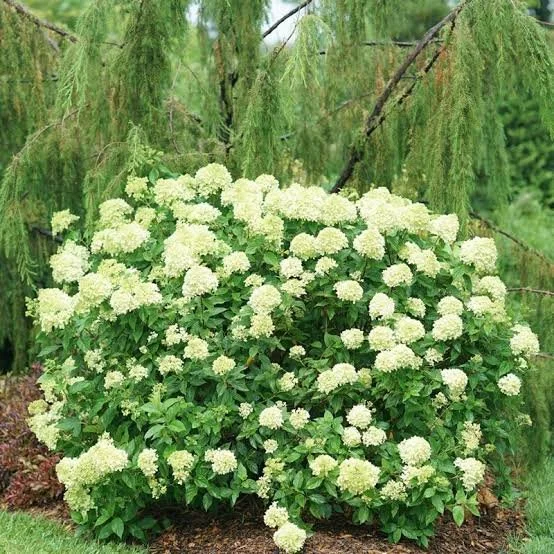
Hydrangea paniculata ‘Jane’
Mature Height:3-4 ft
.Mature Width:3-4 ft.
Sunlight:Partial Shade
Bloom Season(s):Spring Blooming, Summer Blooming, Fall Blooming
Growth Rate:Moderate Growing
Pruning and Care:
When to Prune Panicle Hydrangeas
These types of hydrangeas bloom on new wood. This makes them one of the easiest hydrangeas to prune as they can be pruned almost any time of year, except summer. They usually bloom in late summer so if you prune them at this time of year you’ll end up cutting off most of the flowers.
Many gardeners prefer to prune in late winter – it’s easier to see the branch structure and reach into the interior of the shrub when there are no leaves on the plant.
Panicle hydrangeas do not need to be pruned every year but, as a general rule of thumb, removing about 1/3 of the oldest branches each year will make for a fuller and healthier shrub.
Why to Prune Panicle Hydrangeas
You would normally prune panicle hydrangeas for the following reasons:
to create a more pleasing shape,
to control growth,
to remove dead flowers,
to remove crossing branches, or
to eliminate dead, damaged, or diseased stems.
Culture
Best grown in organically rich, medium moisture, well-drained soils in full sun to part shade. Can be trained as a small single trunk tree, but is best grown as a large, multi-stemmed shrub. It thrives in urban conditions. Bloom occurs on current season’s growth, so prune as needed in late winter to early spring.
Noteworthy Characteristics
Hydrangea paniculata, commonly called panicle hydrangea, is a vigorous, upright, rapid-growing, somewhat coarsely textured, deciduous shrub that is native to China and Japan. It typically grows to 8-15’ (less frequently to 25’) tall, and features oval to ovate dark green leaves and upright, sharply-pointed, conical, terminal flower panicles (to 6-8” long) containing both fertile and sterile flowers (mostly non-showy fertile flowers) that bloom from mid-summer into fall.
The genus name Hydrangea comes from hydor meaning "water" and aggeion meaning "vessel", in reference to the cup-like capsular fruits.
The specific epithet paniculata refers to the arrangement of the flowers in panicles.
Problems
Some susceptibility to bud blight, bacterial wilt, leaf spot, rust and mildew. Aphids and mites are occasional visitors.
Uses
Mass or group in a mixed shrub border or open woodland garden. Also effective as a lawn specimen, accent or hedge. Provides late summer bloom when few other shrubs are in flower.
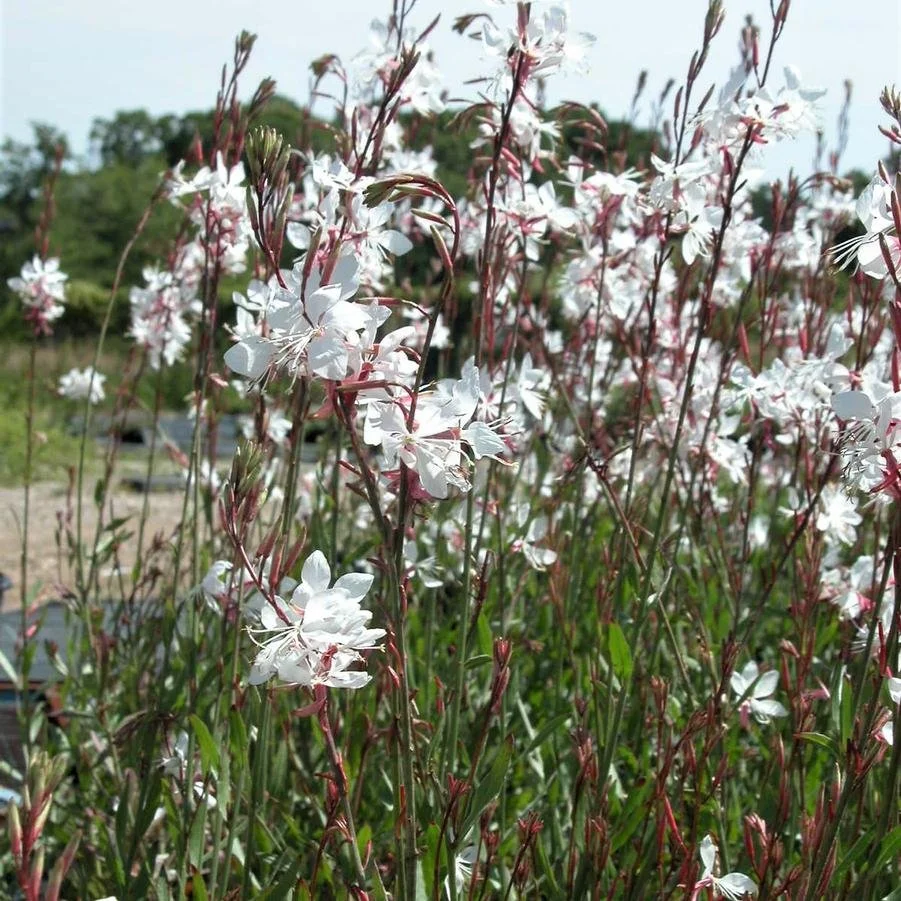
Gaura lindheimeri
Compact, clumping basal green foliage
Flowers are wands that arch delicately with 4 petaled pure white flowers and prominent white stamens
Best in sandy, loamy soil
Category: Perennials, Native Selection
Hardiness Zone: 6-9
Height: 18-24 in
Spread: 12 in
Bloom Color: White and pink
Care:
Do not fertilize - can become leggy.
Culture
Best grown in sandy, loamy, well-drained soils in full sun. Good drainage is essential. A taprooted plant which tolerates heat, humidity and some drought. Remove spent flower spikes to prolong bloom period. Thin flower stems tend to become leggy and flop, particularly when grown in rich soils, and plants can benefit from close planting or support from adjacent perennials. Plants (particularly those which typically grow tall) may be cut back in late spring by 1/2 to control size. May self-seed if spent flower stems are left in place in the fall.
Noteworthy Characteristics
Gaura lindheimeri, commonly called gaura, is a herbaceous clump-forming perennial that is native to Texas and Louisiana. It grows to as much as 5' tall on stems clad with spoon-shaped to lanceolate leaves (to 3" long). Pinkish buds along wiry, erect, wand-like stems open to white flowers which slowly fade to pink. Flowers appear in long, open, terminal panicles and open only a few at a time. Narrow, lance-shaped, stemless leaves (1-3" long) are occasionally spotted with maroon.
The genus name Gaura comes from the Greek gauros meaning "superb" in reference to the beautiful flowers.
Specific epithet honors Ferdinand Jacob Lindheimer (1801-1879), Texas plant collector.
Problems
Root rot may occur in heavy and/or poorly drained soils. Rust and powdery mildew may also occur. Watch for aphids, whitefly and flea beetles.
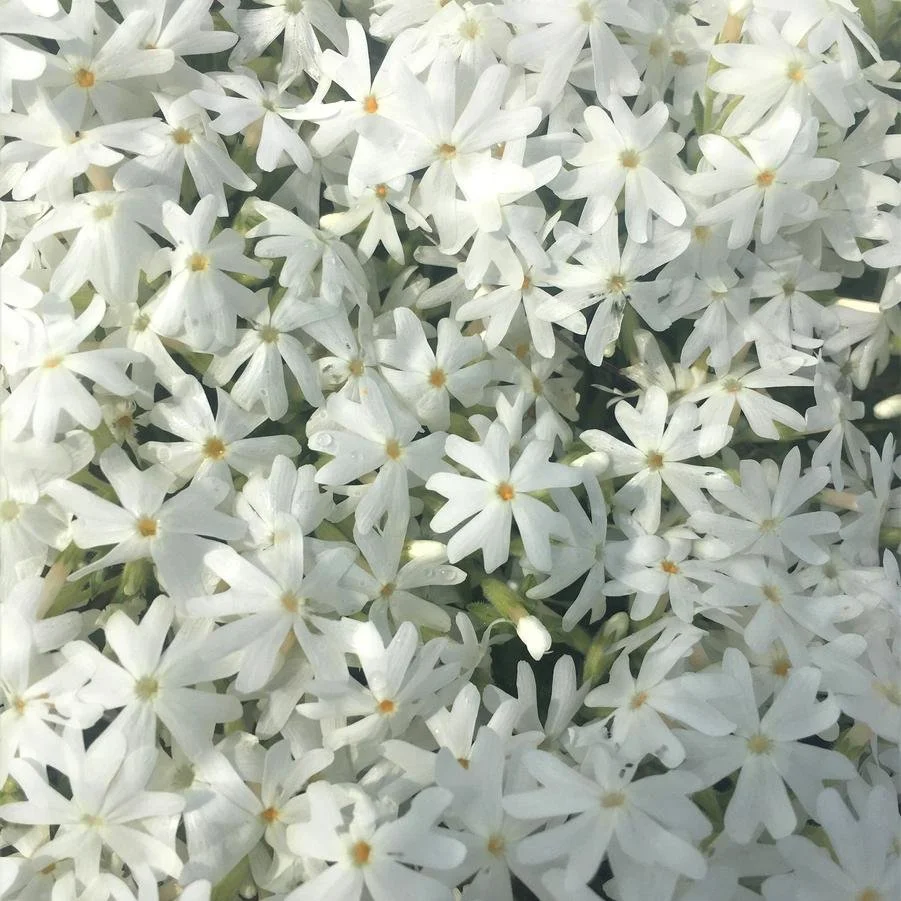
Phlox subulata ‘Snowflake’
Category: Perennials, Native Selection
Height: 4-6 in
Spread: 12-18 in
Bloom Color: White
Foliage Color: Green
Low-growing, evergreen moss-like foliage that is covered with clear white flowers in mid spring
With its dense root system, it is useful in erosion control
Best in poor, sandy soil but will do well with good drainage.
For Front Option #1
Phlox subulata ‘Snowflake’
Category: Perennials, Native Selection
Height: 4-6 in
Spread: 12-18 in
Bloom Color: White
Foliage Color: Green
Low-growing, evergreen moss-like foliage that is covered with clear white flowers in mid spring
With its dense root system, it is useful in erosion control
Best in poor, sandy soil but will do well with good drainage.
Description
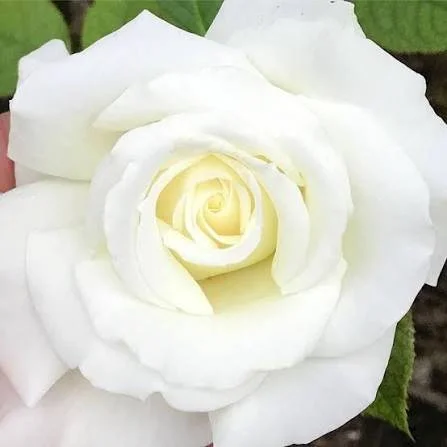
Pristine white blooms and exceptional citrus fragrance make Pope John Paul II™ a remarkable white Hybrid Tea Rose.
Introduced by Jackson & Perkins in 2008, with large 5-inch blooms, approximately 50 petals, vigorous repeat flowering, and excellent disease resistance.
Pope John Paul II™ Hybrid Tea Rose combines pristine white flowers with exceptional citrus fragrance in an elegant rose that appeals to nearly every sense. Large 5-inch blooms open from pointed buds to reveal approximately 50 beautifully arranged pure white petals, carried on long stems above glossy dark green foliage. Vigorous repeat flowering and excellent disease resistance add dependable garden performance to its extraordinary fragrance and classic Hybrid Tea beauty.
Bred by renowned rose hybridizer Dr. Keith Zary and introduced by Jackson & Perkins in 2008, Pope John Paul II™ has become a signature white rose in our collection. The variety was also selected for planting in the Vatican Gardens in honor of Pope John Paul II™. Whether grown as an elegant garden focal point or planted for cutting, it offers a memorable combination of luminous white flowers, powerful fragrance, and reliable performance.
Why You'll Love It
Large 5-inch blooms in luminous pure white
Approximately 50 petals create elegant, classic Hybrid Tea flowers
Exceptionally strong citrus fragrance with fresh lemon notes
Repeat flowering provides multiple flushes from late spring through late fall
Excellent disease resistance supports healthy, glossy dark green foliage
Long stems make the fragrant white flowers excellent for cutting
Introduced by Jackson & Perkins in 2008
Why This Rose Stands Out
White roses can be beautiful but understated. Pope John Paul II™ offers something more memorable by pairing luminous white Hybrid Tea flowers with remarkably powerful citrus fragrance. The contrast of pristine blooms against glossy dark green foliage creates an elegant garden presence, while the fresh lemon-scented perfume makes the flowers especially rewarding when planted near patios, walkways, and other places where their fragrance can be enjoyed.
Jackson & Perkins introduced Pope John Paul II™ in 2008 after it was bred by Dr. Keith Zary. Its combination of flower quality, fragrance, vigorous growth, repeat bloom, and disease resistance gives this rose substance beyond its beauty. Its selection for planting in the Vatican Gardens adds a meaningful connection to the pontiff whose name it carries.
Plant Highlights
Rose Type: Hybrid Tea
Introduction: Introduced by Jackson & Perkins in 2008
Breeder: Dr. Keith Zary
Variety: 'JACsegra'
Bloom Color: Pure white
Bloom Size: Approximately 5 inches
Petal Count: Approximately 50 petals
Flower Form: Double, classic Hybrid Tea form
Fragrance Strength: Exceptionally strong
Fragrance Notes: Citrus with fresh lemon notes
Bloom Season: Late spring through late fall
Growth Habit: Upright
Mature Height: Approximately 4 to 5 feet
Mature Width: Approximately 3 to 4 feet
Sun Exposure: Full sun
USDA Hardiness Zones: 5-9
Disease Resistance: Excellent
Best Garden Uses: Rose gardens, specimen plantings, mixed borders, cutting gardens, and focal landscape plantings
Frequently Asked Questions
What makes Pope John Paul II™ Hybrid Tea Rose special?
Pope John Paul II™ combines large, pure white Hybrid Tea flowers with exceptionally strong citrus fragrance, vigorous repeat flowering, and excellent disease resistance. It offers fragrance, flower quality, and dependable garden performance in one elegant white rose.
How fragrant is Pope John Paul II™ Rose?
Fragrance is one of this rose's defining qualities. The blooms have an exceptionally strong citrus fragrance with fresh lemon notes, making it an excellent choice for gardeners specifically seeking a highly fragrant white rose.
How large are Pope John Paul II™ Rose flowers?
The pure white blooms reach approximately 5 inches across and contain about 50 petals, creating large, substantial flowers with classic Hybrid Tea form.
Is Pope John Paul II™ Rose disease resistant?
Yes. Excellent disease resistance is one of the variety's important garden-performance qualities, complementing its vigorous growth and repeat flowering.
Is Pope John Paul II™ a good rose for cutting?
Yes. Large, elegantly formed flowers on long stems make Pope John Paul II™ an excellent rose for fresh arrangements, while its powerful citrus fragrance brings another dimension to indoor bouquets.
Was Pope John Paul II™ Rose planted at the Vatican?
Yes. Pope John Paul II™ Rose was selected for planting in the Vatican Gardens in honor of Pope John Paul II™.
Care Tips
Plant in full sun in fertile, well-drained soil. Water deeply while the rose becomes established and during dry periods. Remove spent flowers to encourage repeat blooming, and feed during the growing season to support healthy growth and abundant flowers. Prune in late winter or early spring to remove dead or damaged wood, maintain its upright shape, and encourage vigorous new growth.
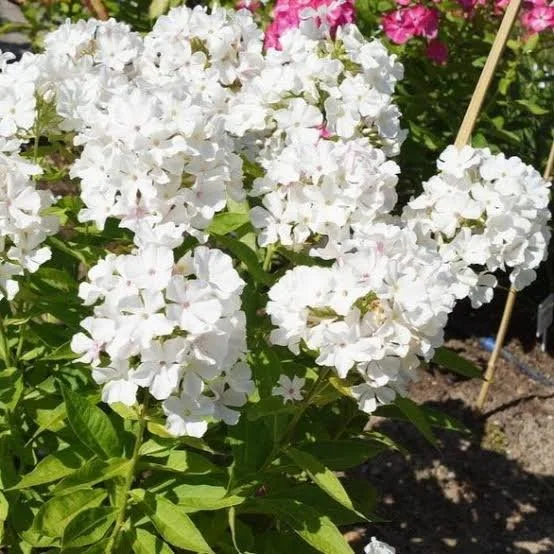
LIGHT: Full sun
WATER: Keep soil moderately moist.
SIZE: Reaches 14 in. tall and wide.
Description
Bring phlox to the front of your borders with this compact variety that forms a rounded mound of blooms. Fragrant summer blooms attract hummingbirds, butterflies and bees. Excellent in mixed containers, or even on its own. Perennial.
Bloom TimeSummer
Special FeaturesAttracts Pollinators
Growth RateModerate
Care InstructionsFollow a regular watering schedule during the first growing season to establish a deep, extensive root system. Keep soil evenly moist for best performance in full sun. For a neat appearance, remove old foliage before new leaves emerge. Divide clumps every 2 to 3 years in early spring.
Phlox subulata ‘Snowflake’
Category: Perennials, Native Selection
Height: 4-6 in
Spread: 12-18 in
Bloom Color: White
Foliage Color: Green
Low-growing, evergreen moss-like foliage that is covered with clear white flowers in mid spring
With its dense root system, it is useful in erosion control
Best in poor, sandy soil but will do well with good drainage.